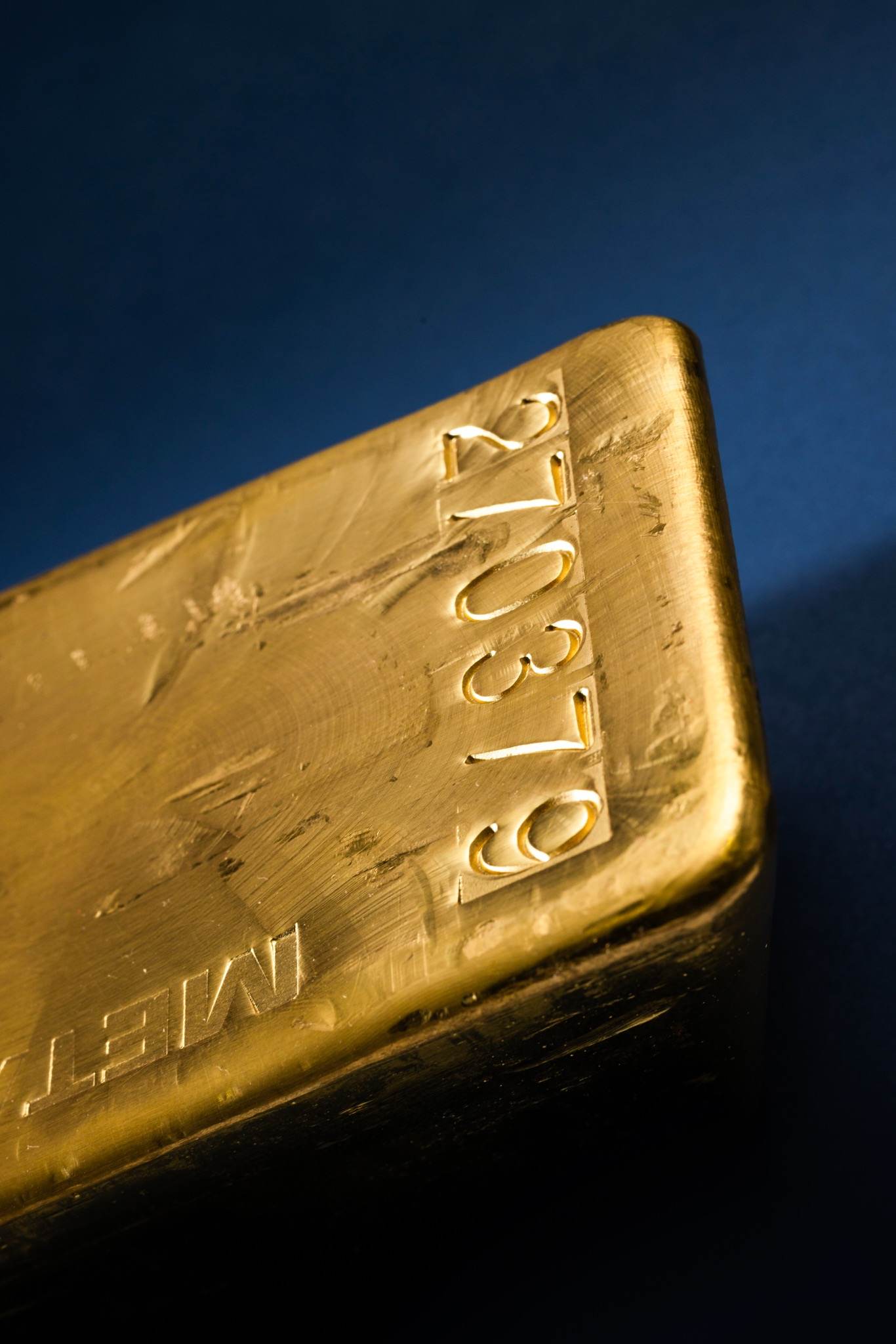


Gold and silver are undeniably going through a difficult period. Last week, for example, the gold price lost almost 5 per cent, and the precious metal once again fell through the key support level of around $4,000. All of this happened after two hotter-than-expected inflation reports from the United States.
Because the October inflation figures came in higher than expected, bond yields rose and expectations about the US central bank's interest rate policy became tighter. The result? A rise in the US dollar to its highest level since April 2025.
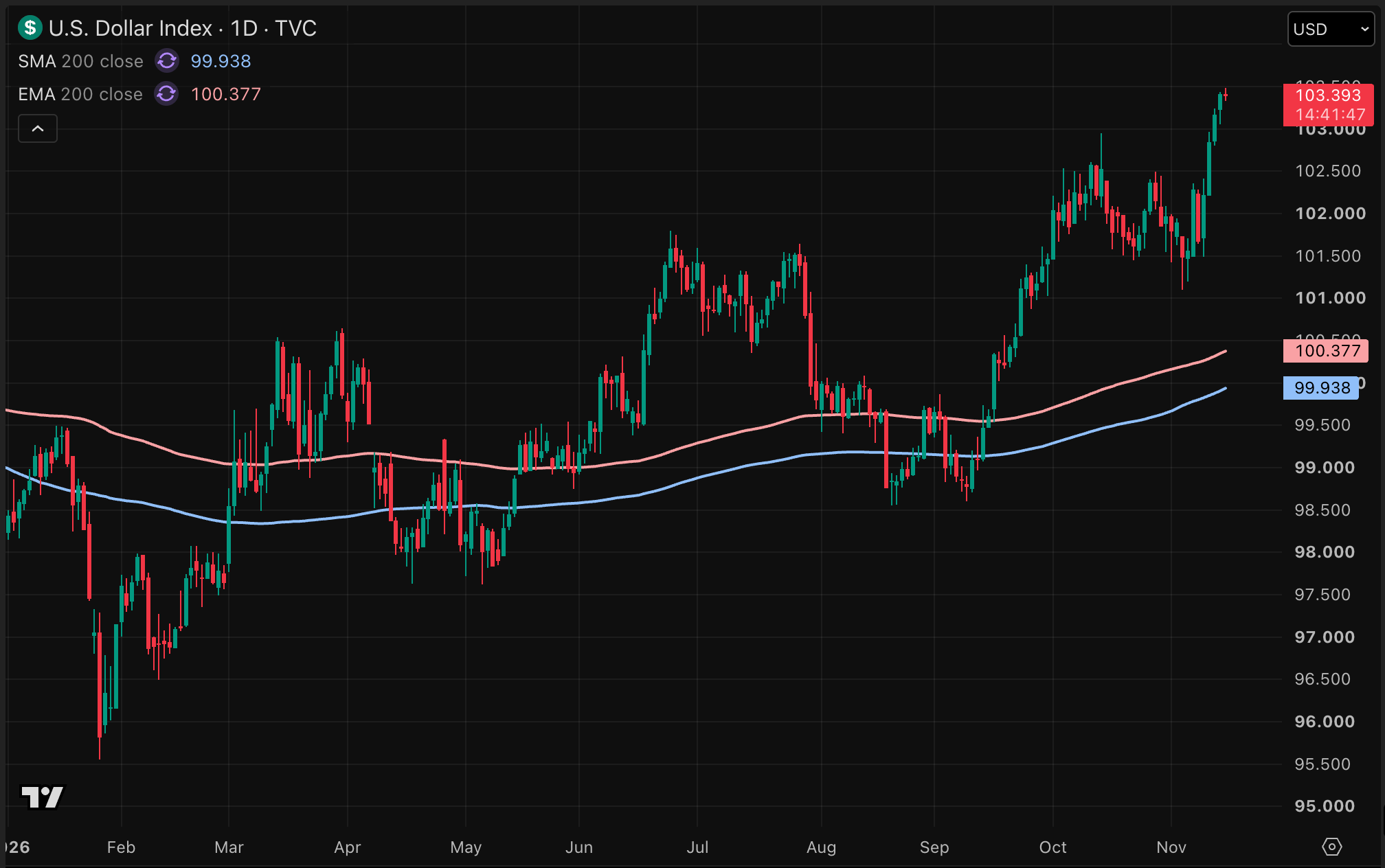
The US dollar ploughs through the market like a wrecking ball
You could see the US dollar as the natural counterpart to gold. Although inflation erodes the dollar's purchasing power every year, the currency continues to play an important role on the world financial stage. It is no coincidence that it is the world's reserve currency.
Roughly 40 per cent of international trade is conducted in US dollars, while well over 50 per cent of global debt is denominated in the world's reserve currency.
When uncertainty rises, people therefore often flee to the US dollar first. After all, it is the currency in which the bills have to be paid. Only later, once central banks step in to pull the economy out of a potential recession, does the flight to gold often begin.
At the same time, a more expensive US dollar makes repaying debt more difficult. The rise in the dollar index could be seen as a kind of noose around the global economy, being pulled a little tighter.
As a result, the pace of credit creation slows. Less liquidity flows through the financial system. The stronger US dollar and rising bond yields are also reflected in tightening financial conditions.
The chart below shows the NFCI, an index from the US central bank made up of more than 100 indicators relating to financial conditions. When this index rises, the financial climate is becoming tighter.
A climate in which capital is less abundantly available and becomes more expensive. That slows the economy. That slows money creation. And that usually slows the gold price too.
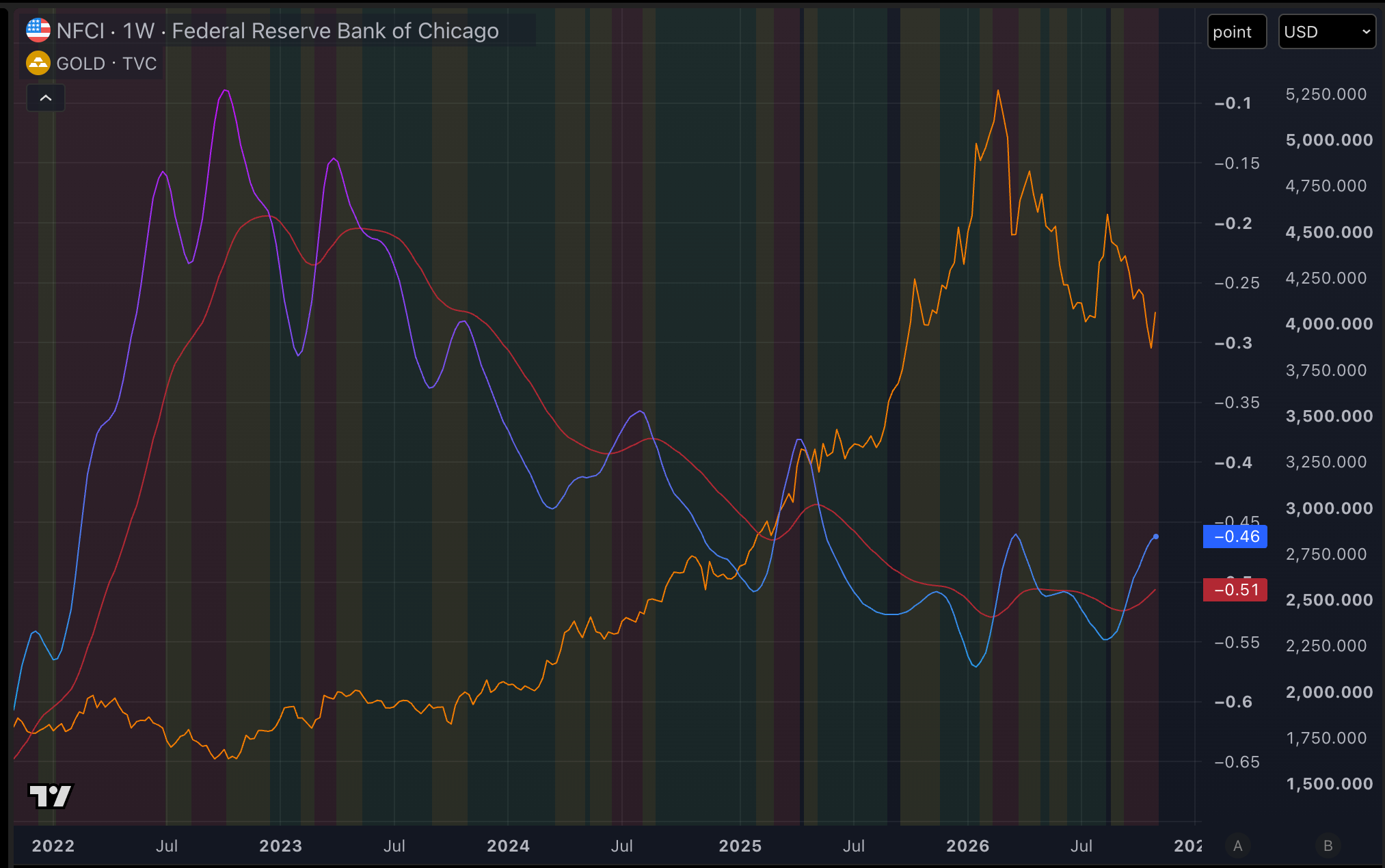
We can clearly see this in the chart above. The NFCI has recently risen sharply, the chart's background has turned red and the gold price has come under pressure. From the end of 2022, we see the exact opposite picture. The NFCI entered a downward trend and the gold price flourished from that point on.
So we are undeniably in a more difficult phase for gold. Global liquidity growth is declining. Credit creation is running less smoothly. There is a great deal of uncertainty, volatility and doubt in the financial system.
In the short term, that is often a negative force for gold, whereas in the long term it is actually a positive one.
After all, a point will come at which, for example, the AI investment cycle breaks. The chance is then very high that the US economy will enter a difficult phase, possibly with a recession. That is the moment when central banks will step in and the liquidity situation will improve again.
For now, however, it is a matter of patience. And the beauty of it is that, in hindsight, these market phases were often very attractive moments to expand your gold positions. Anyone can buy at the top when sentiment is euphoric. The real skill is buying when it feels as if nobody is interested.
But that is easier said than done. At times like these, it feels very unappealing to step in. Buying assets whose prices are falling is perhaps the hardest thing there is in the financial markets.
And yet prices are now falling for reasons that actually make the investment case for gold more attractive in the longer term.
The US dollar is rising to its highest level since April 2025. Find out why the strong dollar and higher interest rates are putting pressure on gold and silver.

Thom Derks writes for GoldRepublic on gold, macro-economics and geopolitics. He studied Law in Leiden and Economics in Amsterdam. His personal fascination with scarcity and store of value through both bitcoin and gold brought him into the world of financial journalism. Through his own newsletter De Geldpers on Substack, he reaches over 5,800 subscribers with analyses on markets, geopolitics and the monetary system.