

Can gold benefit from a possible tipping point for the US dollar?
The gold price took a hit last week following the hawkish interest rate decision by the US Federal Reserve. This is notable, as the oil price has fallen 30 percent since March. Yet over that same period, the rate-setting committee has shifted from a preference for rate cuts to an expectation of rate hikes.
As a result, the US dollar surged and the gold price once again had to find support between $4,000 and $4,200 per ounce. Gold managed to hold that level, which has cautiously restored a more positive outlook.
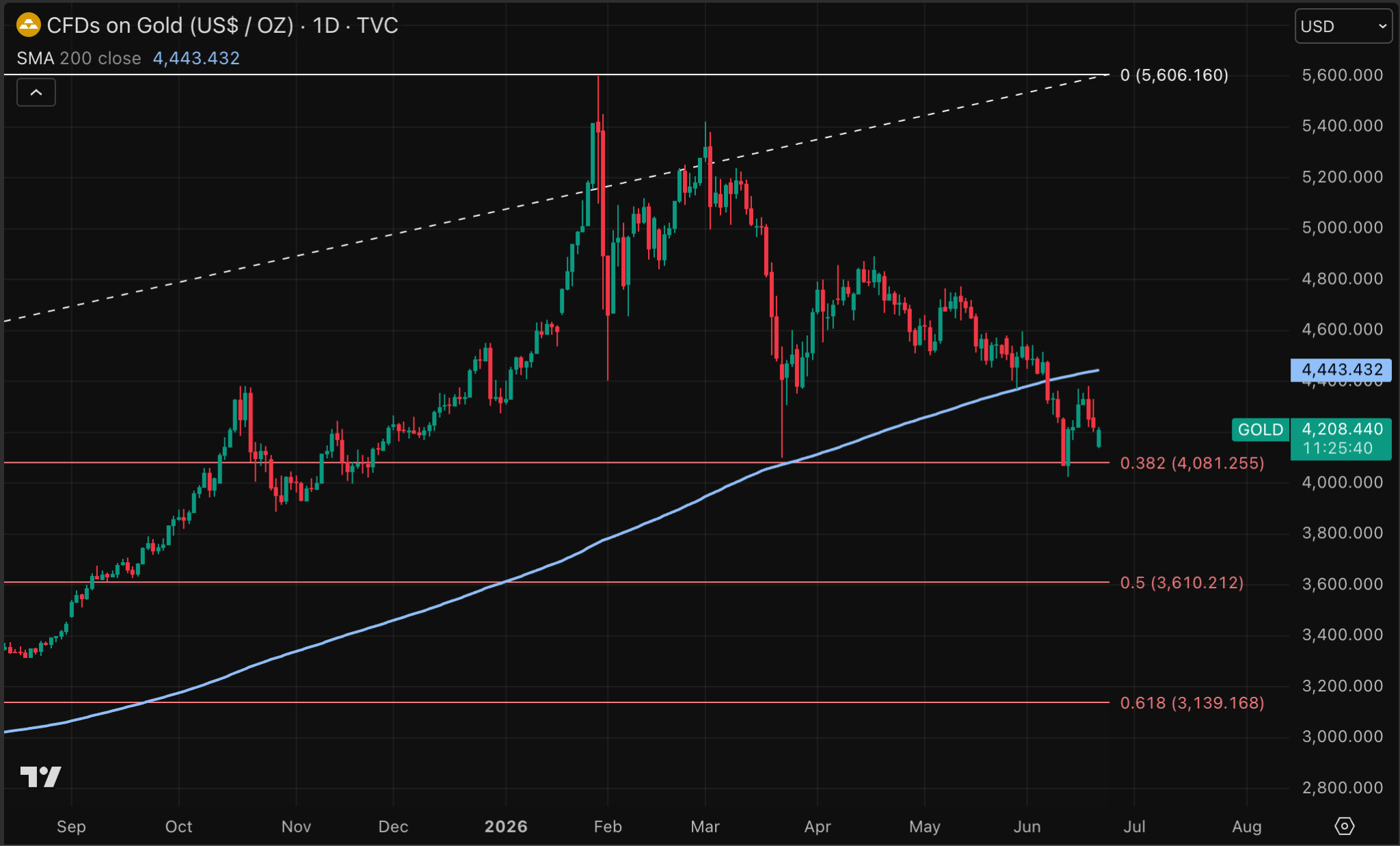
So far, gold has only given back 38 percent of its rally from the 2022 low to the 2026 peak. Around the $4,081 per ounce level, the gold price appears to be finding sufficient support for now.
If gold then also manages to reclaim the 200-day moving average around $4,443 per ounce, that could signal that the correction is behind us.
Positive contrarian signals for gold
Financial markets have a tendency to take developments to extremes. During the precious metals frenzy, which reached a preliminary peak in January, an increasing number of stories emerged about the end of the US dollar. Many AI stocks also appear to be priced as though the technology has already completely transformed the world.
Often, the moments when conviction is at its greatest are precisely the moments when a tipping point is approaching.
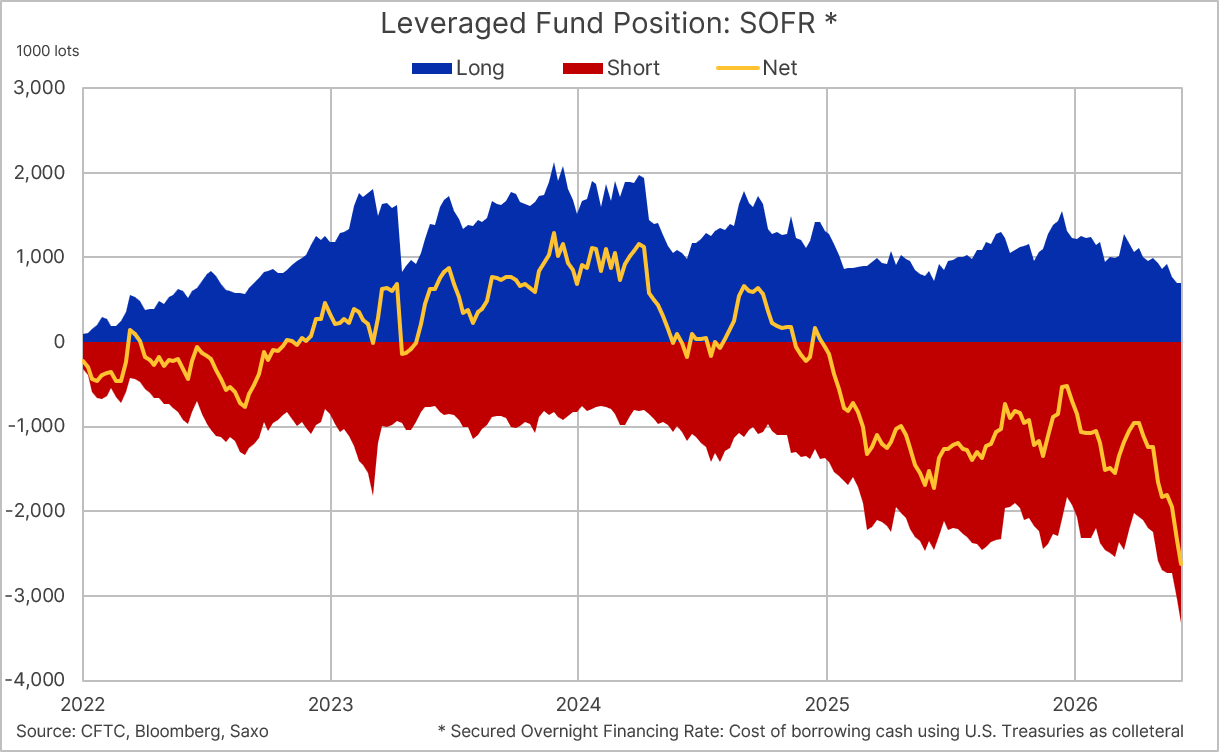
We may now be seeing that same pattern with the US dollar and bond yields. Even before the Federal Reserve took a hawkish stance last week, investment funds had already positioned themselves fairly aggressively in the rates market.
They were collectively betting on a further rise in bond yields and indirectly on a stronger dollar.
The US dollar also rose against the Japanese yen, despite a rare rate hike by the Bank of Japan. Real yields also climbed sharply, as inflation expectations have fallen and the market is now pricing in roughly one and a half rate hikes from the Fed for 2026.
Of course, the US dollar could still make one final move higher. You never know exactly how or when these kinds of moves end. Nevertheless, positioning is starting to look quite extreme.
Especially when you consider that oil is now trading below $80 again, back to pre-Iran-war levels. The biggest inflation threat appears to be fading into the background, at least if the United States and Iran manage to reach a definitive peace agreement.
If they do, it becomes very unlikely that the Federal Reserve will raise rates at all this year. In that scenario, market expectations could quickly shift from rate hikes to a more neutral rate path.
That would put the US dollar under pressure and give gold support at exactly the right moment. For now, the gold price is holding up remarkably well around the support zone of approximately $4,100. If rate and dollar stress then eases, gold could find the wind back in its sails and potentially reclaim the 200-day moving average.
Rate hikes unlikely
Even if inflation remains somewhat elevated, it is still an open question whether the central bank would actually dare to raise rates. The economy does not respond as a single unit to higher interest rates.
Looking only at the headline numbers, you see robust growth and inflation that remains too high. In theory, that makes a rate hike logical. But beneath the surface, the picture is less clear-cut.
A significant portion of the current strength is coming from the construction of data centers for AI. These investments are large, strategic, and are primarily being driven by well-capitalised technology companies. A slightly higher interest rate is unlikely to bring them to a halt.
The wealthier consumer is also relatively insensitive to higher rates. Those with assets in equities, real estate, or savings do not need to immediately cut their spending. Higher rates can even generate additional income for this group.
The pain is felt most by the middle class and lower-income households. It is precisely there that the strain is already visible. Higher rates therefore hit the most vulnerable parts of the economy hardest, while doing little to curb the actual drivers of growth.
This makes the interest rate tool blunt. To truly slow the AI-driven economy, the Federal Reserve would likely need to intervene far more aggressively. But that scenario seems unlikely. An aggressive rate hike cycle would not only damage the broader economy, it could also weaken the US position in the technological race with China.
Taken together, it seems unlikely that the Federal Reserve will be able to deliver on the hawkish rate path the market currently anticipates. That means the US dollar may well be close to a peak, and for gold, that could provide exactly the support it needs.
The dollar is rising on higher rate expectations, but a tipping point appears to be drawing closer. What does that mean for the gold price?

Thom Derks writes for GoldRepublic on gold, macro-economics and geopolitics. He studied Law in Leiden and Economics in Amsterdam. His personal fascination with scarcity and store of value through both bitcoin and gold brought him into the world of financial journalism. Through his own newsletter De Geldpers on Substack, he reaches over 5,800 subscribers with analyses on markets, geopolitics and the monetary system.