
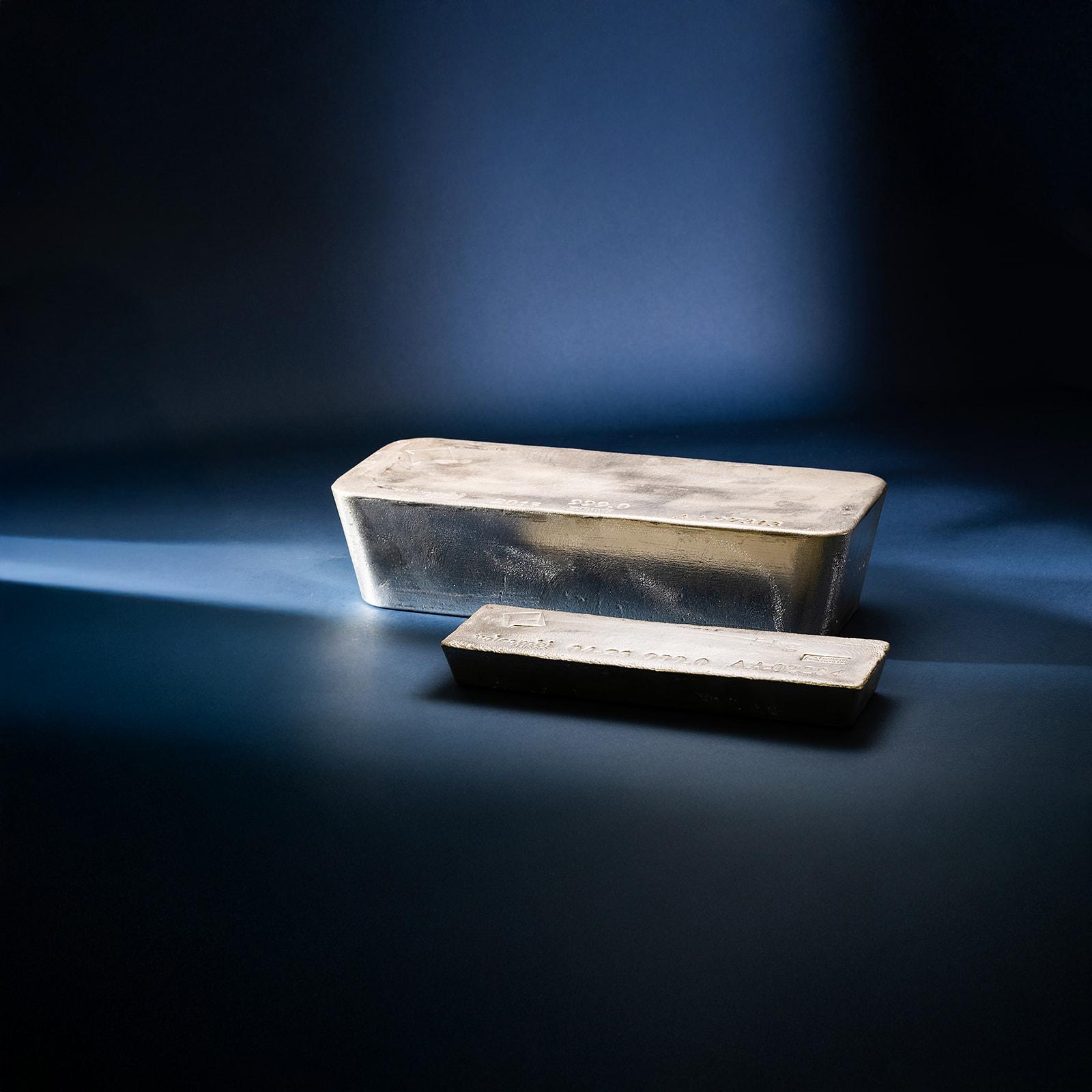


Silver under pressure due to rising oil prices and stronger dollar
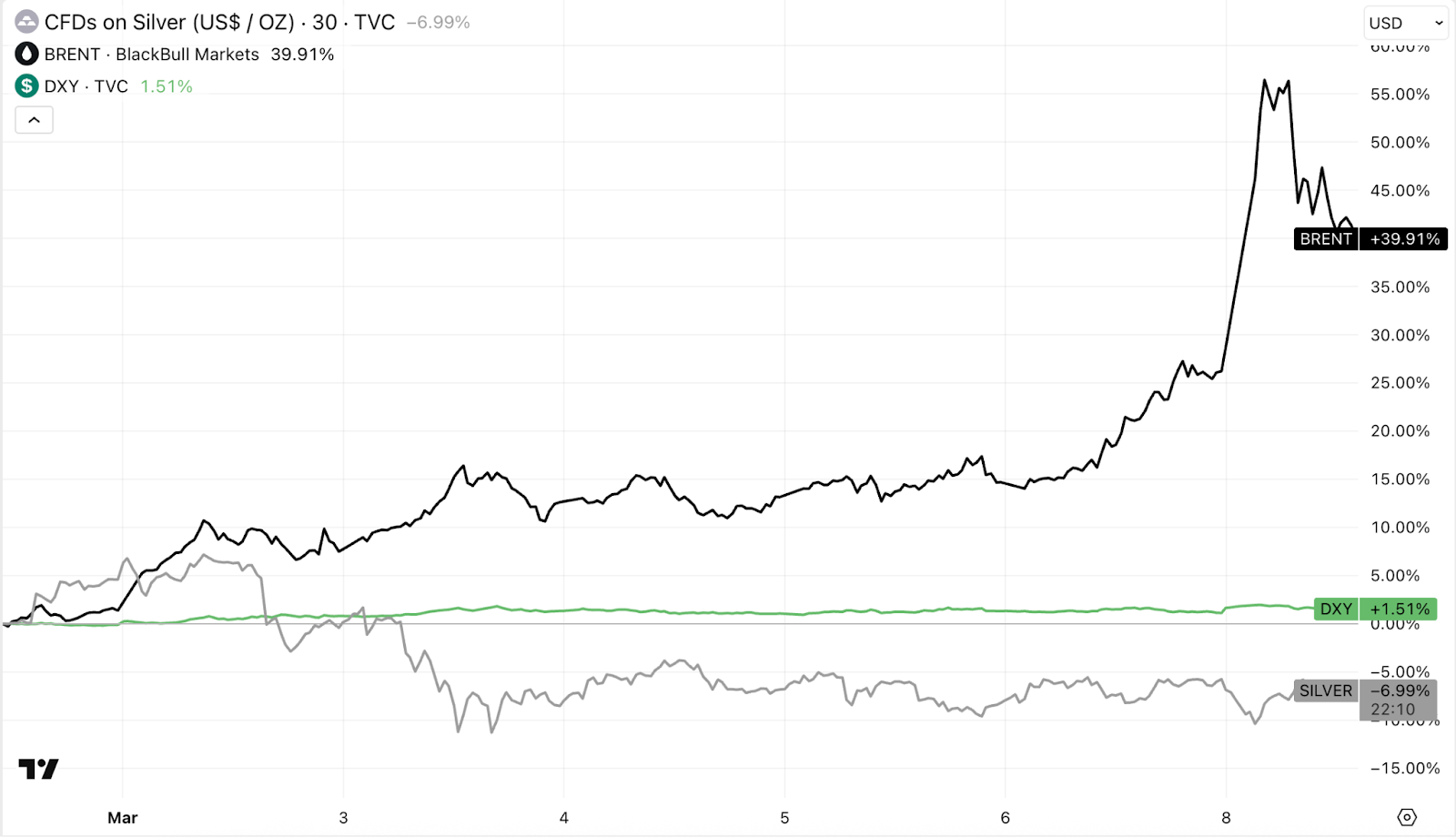
The silver price is under pressure, despite the enormous geopolitical turmoil in the Middle East. At first glance, this seems contradictory, because precious metals traditionally benefit from uncertainty. The explanation lies mainly in the strong increase in oil prices, which reached its highest level since 2022, and the financial markets' response to it.
By the higher oil price inflationary pressure is increasing, interest rates are rising, the US central bank is getting less room for interest rate cuts and we are seeing a stronger dollar. We will examine that dynamic and then answer the question whether this marks the end of the bull run for silver.
Higher oil prices, higher inflation, higher interest rates
When energy prices rise rapidly, inflation concerns increase almost automatically. After all, energy is an important cost for companies and consumers. Higher oil prices could therefore lead to higher inflation rates in the coming months.
An important question, therefore, is how long the conflict will last. Will it be a matter of weeks? Then the chance of permanent damage in the form of higher inflation and lower economic growth is small. Will the duration of the conflict escalate? Then it can be a different story.
For the time being, the conflict means that there is less room for central banks to lower interest rates. In recent days, the market has therefore started counting on fewer interest rate cuts than previously expected. These shifts are currently causing strength in the US dollar and weakness in silver and gold.
Why silver is affected by a strong dollar
Silver, like gold, is traded in U.S. dollars worldwide. When the dollar strengthens, silver automatically becomes more expensive for buyers who pay in other currencies. As a result, international demand is often declining.
At the same time, interest rates also play a role. Precious metals do not earn interest or dividends. When bond yields rise, it becomes more attractive for investors to park their money in interest-bearing investments. This increases the so-called opportunity costs of holding silver.
As a result, investors sometimes sell precious metals in the short term, even during geopolitical tensions.
Silver moves differently than gold
There is an additional factor when it comes to silver. In contrast to gold, silver also has an important industrial application, for example in electronics, solar panels and technology.
As a result, silver responds not only to financial factors such as interest rates and the dollar, but also to expectations of economic growth. In periods of uncertainty, silver can therefore be more volatile than gold.
This works the way prices fall, but this is often also the case with rising prices. So now, this dynamic works to the disadvantage of silver. Also because higher oil prices could cause problems with the huge investments in AI infrastructure, which will now also become more expensive.
Is silver's bull run over?
Now, of course, the question is: is investing in silver still useful? The honest answer is that it is too early to draw conclusions for now. The price movements we are currently seeing are all a first reaction to a geopolitical conflict.
It is currently not clear whether the conflict will last weeks, months or years. Of course, everyone hopes that it will be over soon, but we have no guarantee. However, the United States will do a lot to end the conflict quickly, because high oil prices can seriously damage the economy and stock market.
At the same time, we must remember that the rise in the US dollar and interest rates is a first reaction from the market. If this conflict actually causes permanent damage, there is a good chance that the central bank will intervene. That means: supporting the economy with the proverbial money printer.
Wars are expensive and destroy more than they produce. In any case, this will not reduce governments' debt problems. In theory, this is a plus for precious metals, which naturally offer protection against inflation, but that doesn't count in the short term.
Even from a technical perspective, there is still little reason for major concerns. After January's massive price explosion to $120, silver found support at the 100-day and 55-day exponential price averages. That also seems to be the case now.
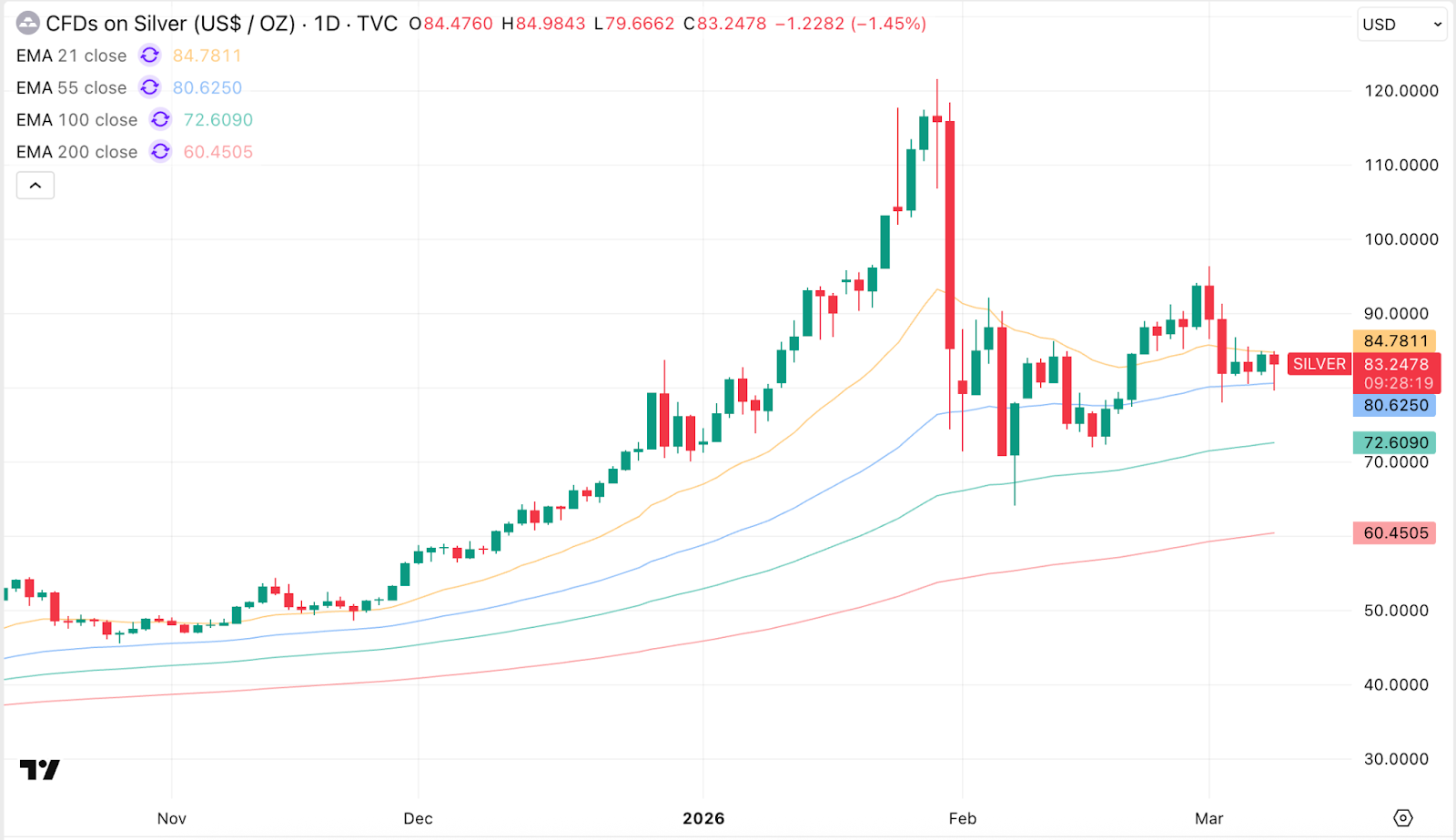
As a result, there is no clear trend reversal for now, and it is too early to draw negative conclusions about silver's bull run. After the huge increases in the past year, it is also not surprising that the market needs to take a breather. In principle, that is only normal.
In any case, this is not enough to say that it is logical to expect much lower prices for silver.
Despite the turmoil in the Middle East, silver is falling due to a rising oil price and a stronger dollar. Still, the bull market remains intact for now, while technical support levels hold.

Thom Derks writes for GoldRepublic on gold, macro-economics and geopolitics. He studied Law in Leiden and Economics in Amsterdam. His personal fascination with scarcity and store of value through both bitcoin and gold brought him into the world of financial journalism. Through his own newsletter De Geldpers on Substack, he reaches over 5,800 subscribers with analyses on markets, geopolitics and the monetary system.


.jpg.jpg)


