

World's biggest fund managers are buying gold again
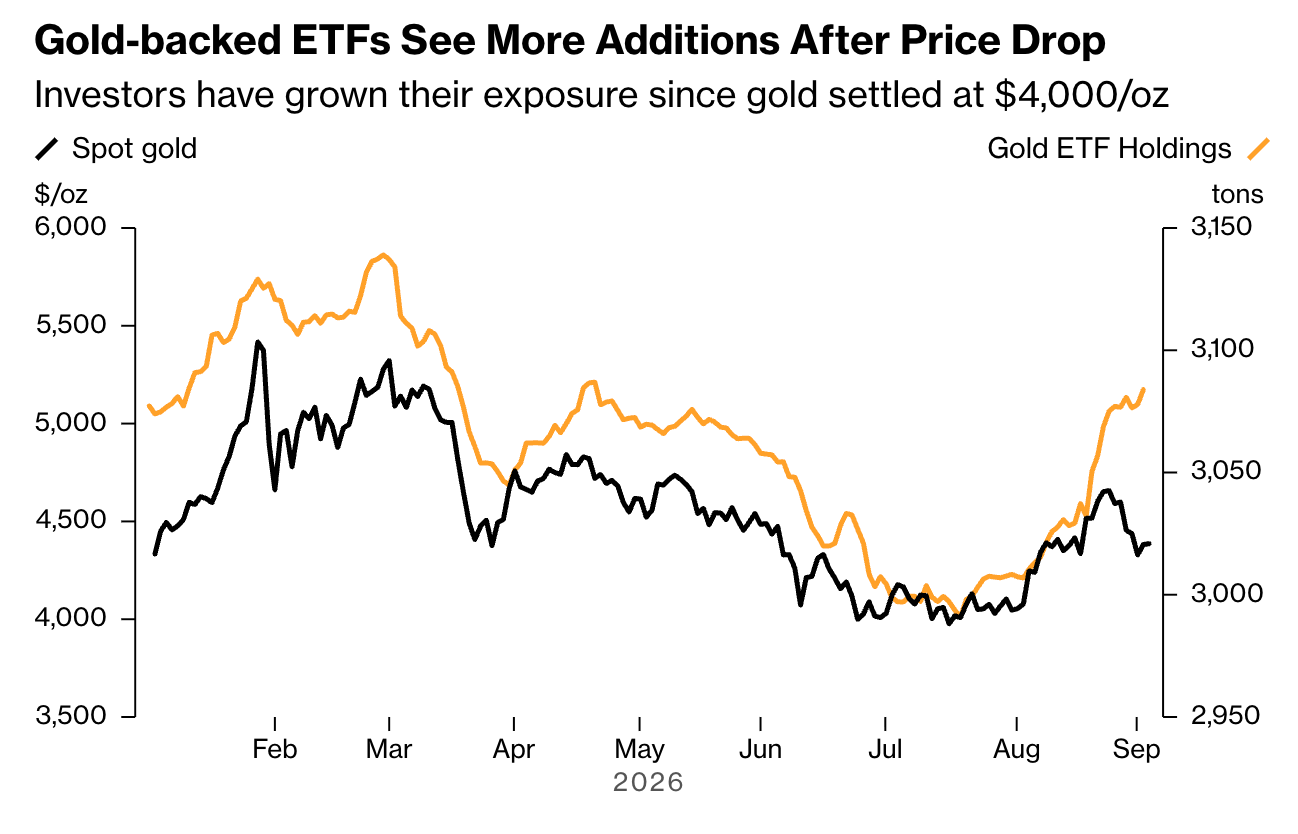
Gold is popular again among the world's biggest fund managers. During the decline from the all-time high, which ended around $4,000 per ounce, large funds started buying gold again. Among others, Amundi SA, Europe's largest, moved in with an expectation of a gold price of $5,000 per ounce by the end of 2026.
"Gold is an asset we see as cheap, a good hedge and sufficiently liquid," said Lorenzo Portelli of Amundi.
Interestingly, it isn't just large funds getting in. Gold-backed ETFs are also seeing significant inflows. That trend even continued after the gold price took a disappointing hit last week.
Amundi isn't the only major fund that sees gold as attractive. Interesting statements are also coming from the Dutch firm Robeco, which manages $464 billion in assets.
"It has become a much more accepted asset. By now, it's a standard part of almost every regular portfolio," said Arnout van Rijn, portfolio manager for multi-asset and equity solutions at Robeco.
Statements like these are an important signal for gold. More and more investors understand that the precious metal is a very good addition to a broad investment portfolio.
Why gold is attractive again
Gold's natural scarcity offers protection against the problem of ever-growing government debt, for which inflation appears to be the only solution.
At the same time, gold could well be the ideal protection, or insurance, against a future bear market for AI stocks. In that scenario, a recession isn't unlikely, and demand for capital would fall sharply as the enormous AI investments dry up.
That would push rates down and thereby reduce the competition for gold, while at the same time governments and central banks would step in to counter the recession. For many investors, this too would be a reason to build up or expand their gold position.
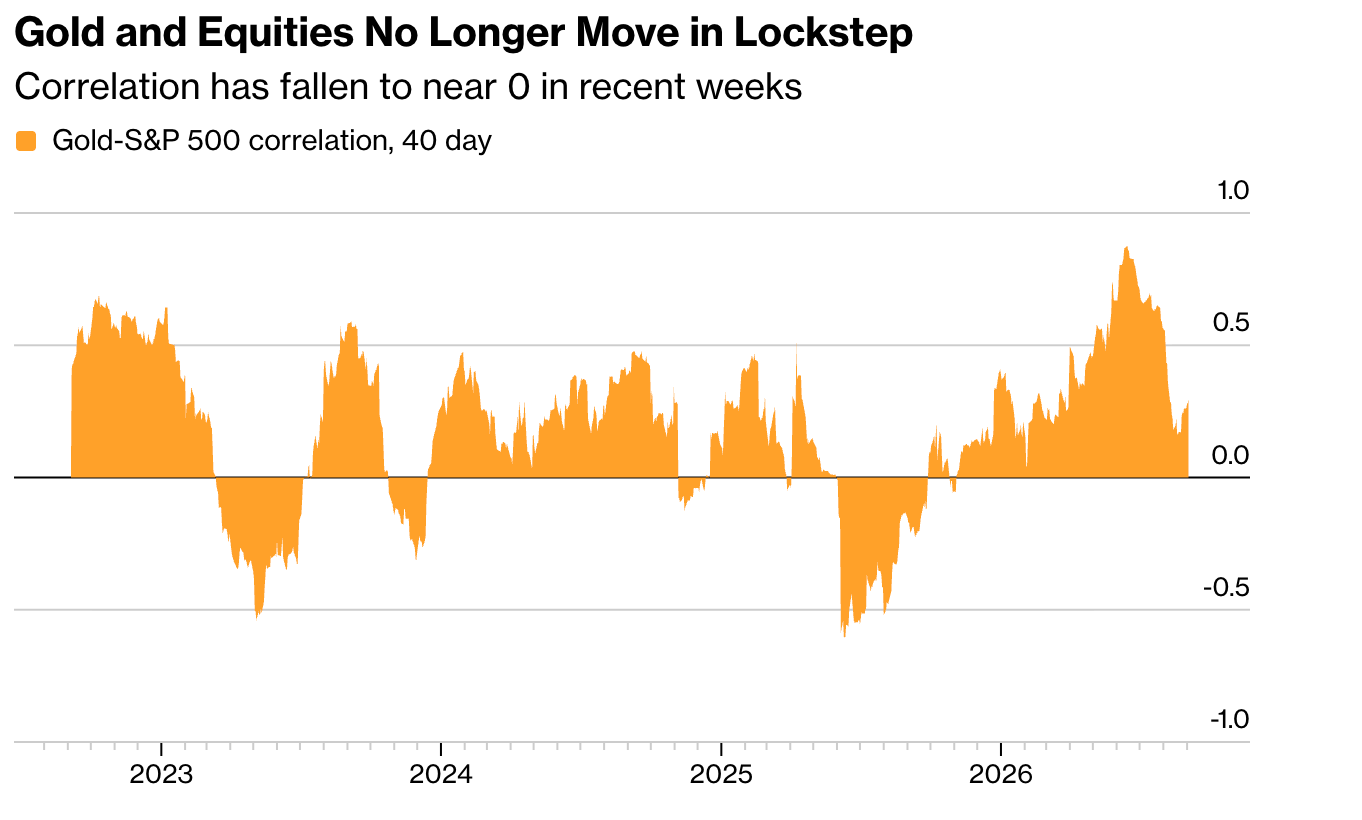
We're also seeing the 40-day correlation between gold and the US S&P 500 heading toward zero. That means they're increasingly moving in different directions, whereas that wasn't the case earlier in 2026. Gold is once again starting to behave more like an independent asset.
What this means for investors
That matters, because that independence is an important reason for many investors to add gold. If the gold price always moved exactly in step with equities, the precious metal wouldn't be much of an addition to a portfolio.
While January 2026's gold fever has completely disappeared, we're seeing positive changes for gold once again at the fundamental level. Confidence in governments' ability to keep their debts under control is fading, which is increasing interest in alternatives.
Although there's no obvious alternative to the US dollar, gold does offer a way to buy some protection. Interestingly, gold still makes up a relatively small share of Western wealth, especially after years of extreme gains in the US stock market.
That means even a small amount of diversification has the potential to boost the gold price significantly. That's exactly what ETF investors and large fund managers now seem to be betting on.
Major fund managers are rebuilding their gold positions, and gold ETFs are attracting fresh capital too. Why is interest in gold coming back?

Thom Derks writes for GoldRepublic on gold, macro-economics and geopolitics. He studied Law in Leiden and Economics in Amsterdam. His personal fascination with scarcity and store of value through both bitcoin and gold brought him into the world of financial journalism. Through his own newsletter De Geldpers on Substack, he reaches over 5,800 subscribers with analyses on markets, geopolitics and the monetary system.