

Kevin Warsh turns hawkish as Hormuz risk returns
The gold price ended last week lower, after Kevin Warsh, chair of the US central bank, delivered a speech at the Jackson Hole symposium that the market interpreted as "hawkish".
As a result, the odds of a US interest rate hike in September rose from 40 to 60 percent according to the futures market. Bond yields and the US dollar also climbed, pushing gold a step back.
At the same time, the conflict between the United States and Iran flared up again, sending the Brent oil price above 90 dollars. This is adding to inflationary pressure, which in turn pushes rates higher and creates a modest headwind for precious metals.
Still, it remains an open question how far Warsh's hawkish-sounding speech will actually translate into a rate hike in September. For now, the focus is squarely on the US dollar and bond yields, while the United States' 40-trillion-dollar debt problem hasn't suddenly disappeared.
Gold price at a technically interesting point
With the price decline that followed Warsh's Jackson Hole speech, the gold price has reached a technically interesting point. At the time of writing, gold is trading around the 0.50 Fibonacci level of the rally that began in the second half of 2025 and ended with the provisional record high of January 2026.
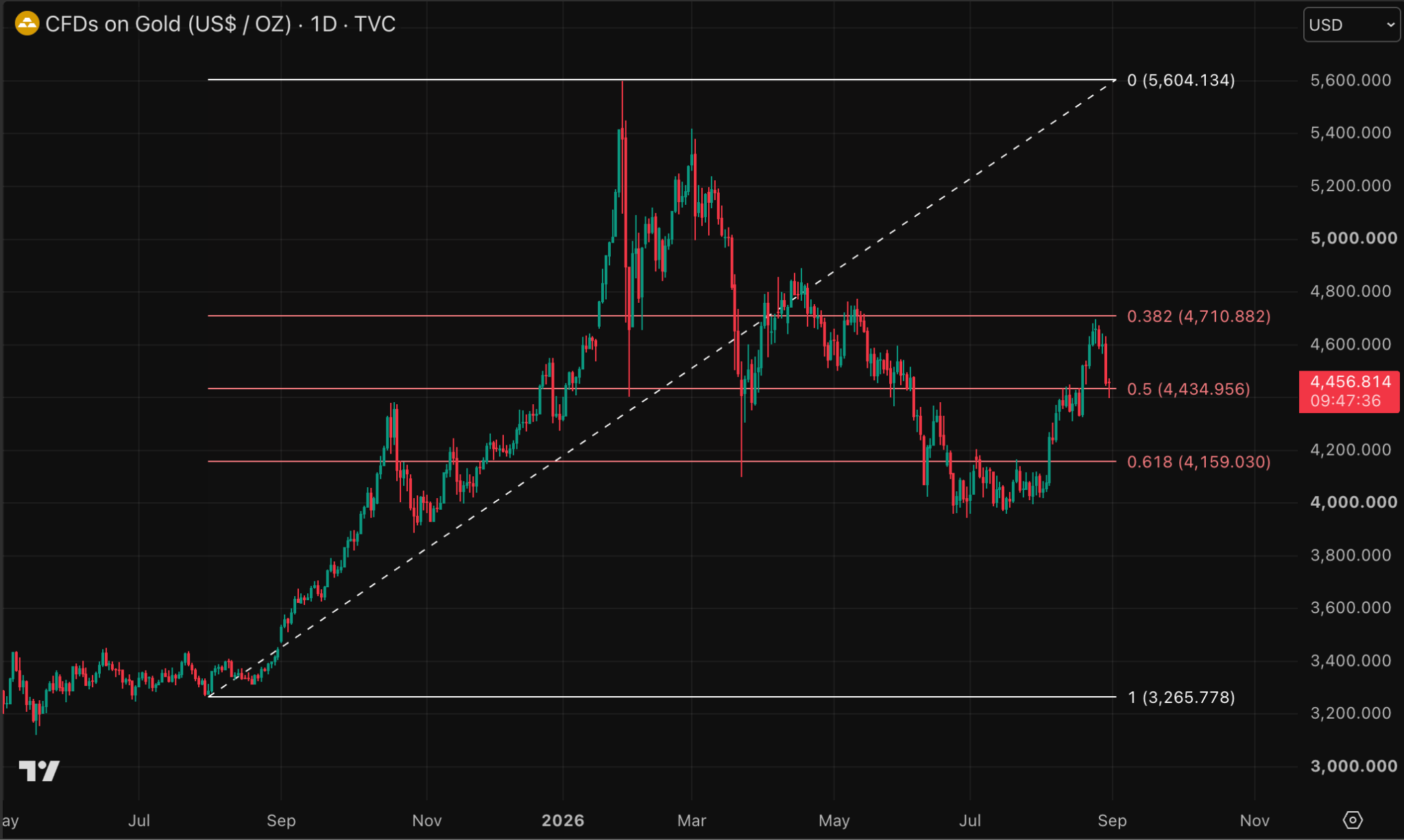
That may sound technical, but it means the gold price has now given back 50 percent of that rally. This is typically a level where the price of a financial asset finds support again. It works that way because many traders use the same tools and are therefore watching the same things. It doesn't mean it's some kind of law of nature.
Should the gold price manage to hold this level despite the cautious macroeconomic headwind from rising bond yields and a stronger dollar, that would be a positive signal. Either way, it's a development worth watching this week.
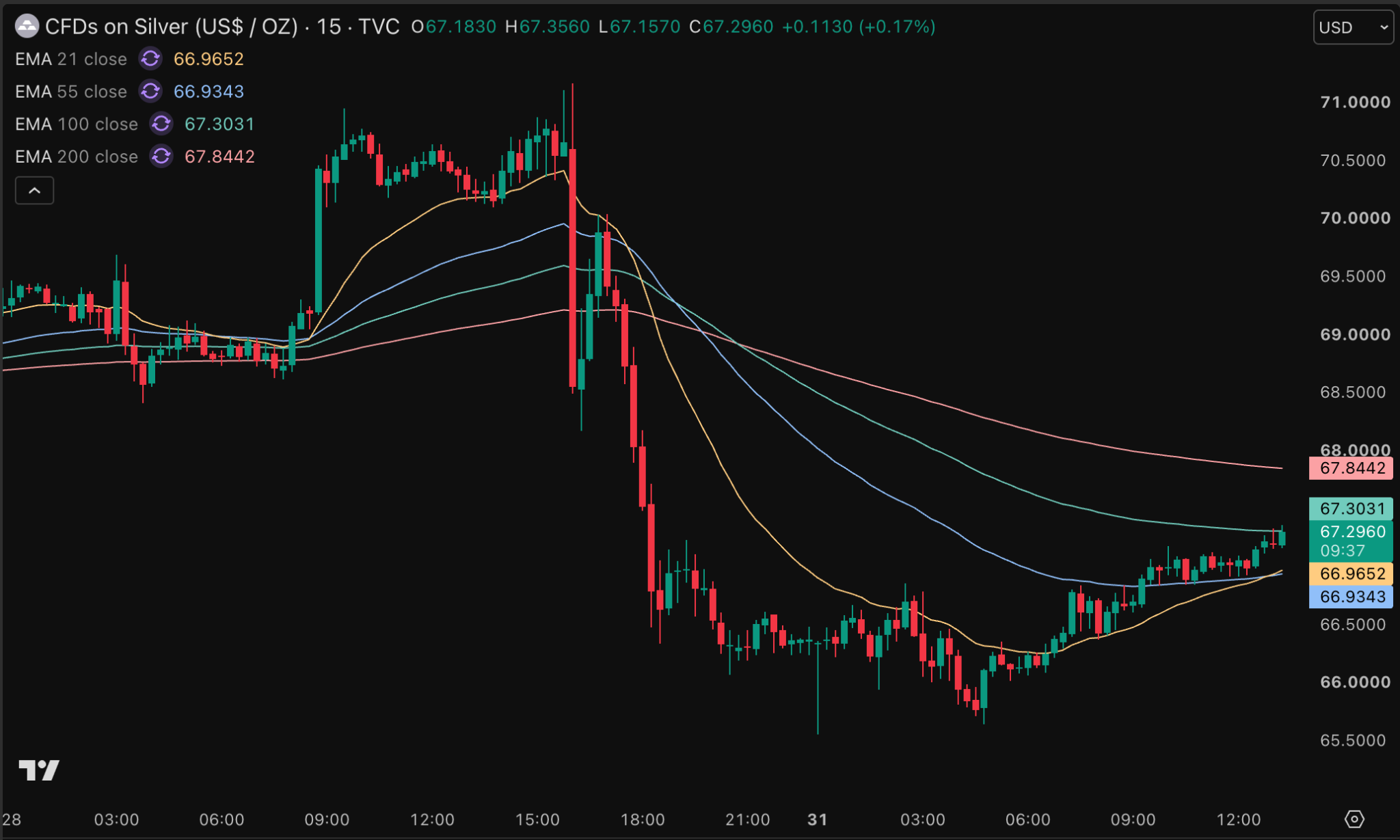
For now, prices seem to be recovering somewhat. In particular, the silver price has made a strong start to the new trading week. While silver was still trading at 71 dollars per ounce on Friday, today it's already showing a gain of over 1 percent.
In the bigger picture, little has changed since Warsh's speech. The United States' debt problem remains the key theme for gold and silver. While the relatively high, and now once again rising, bond yields form a headwind in the short term, over the long term they mean the US national debt becomes less sustainable.
Warsh's speech has pushed that theme somewhat into the background for now, even as it keeps quietly knocking at the door. It seems only a matter of time before it takes over the market's full attention.
At moments like this, when a US central bank chair insists that controlling inflation remains a key task, the market has a tendency to forget that. For now, though, this development is not causing any fundamental change to the investment case for precious metals.
It's more likely to be a small bump in the road, of the kind that occurs in every market and for every asset.
Kevin Warsh's hawkish speech at Jackson Hole and fresh clashes between the US and Iran are pushing up interest rates, strengthening the dollar, and weighing on precious metals.

Thom Derks writes for GoldRepublic on gold, macro-economics and geopolitics. He studied Law in Leiden and Economics in Amsterdam. His personal fascination with scarcity and store of value through both bitcoin and gold brought him into the world of financial journalism. Through his own newsletter De Geldpers on Substack, he reaches over 5,800 subscribers with analyses on markets, geopolitics and the monetary system.