Market Update
Dear reader, welcome to the latest GoldRepublic newsletter! In just five minutes, we will fully inform you of current precious metal prices and the most relevant news that affects your investment in precious metals. Don't miss out on these valuable insights!
1. Threat around the Strait of Hormuz remains decisive
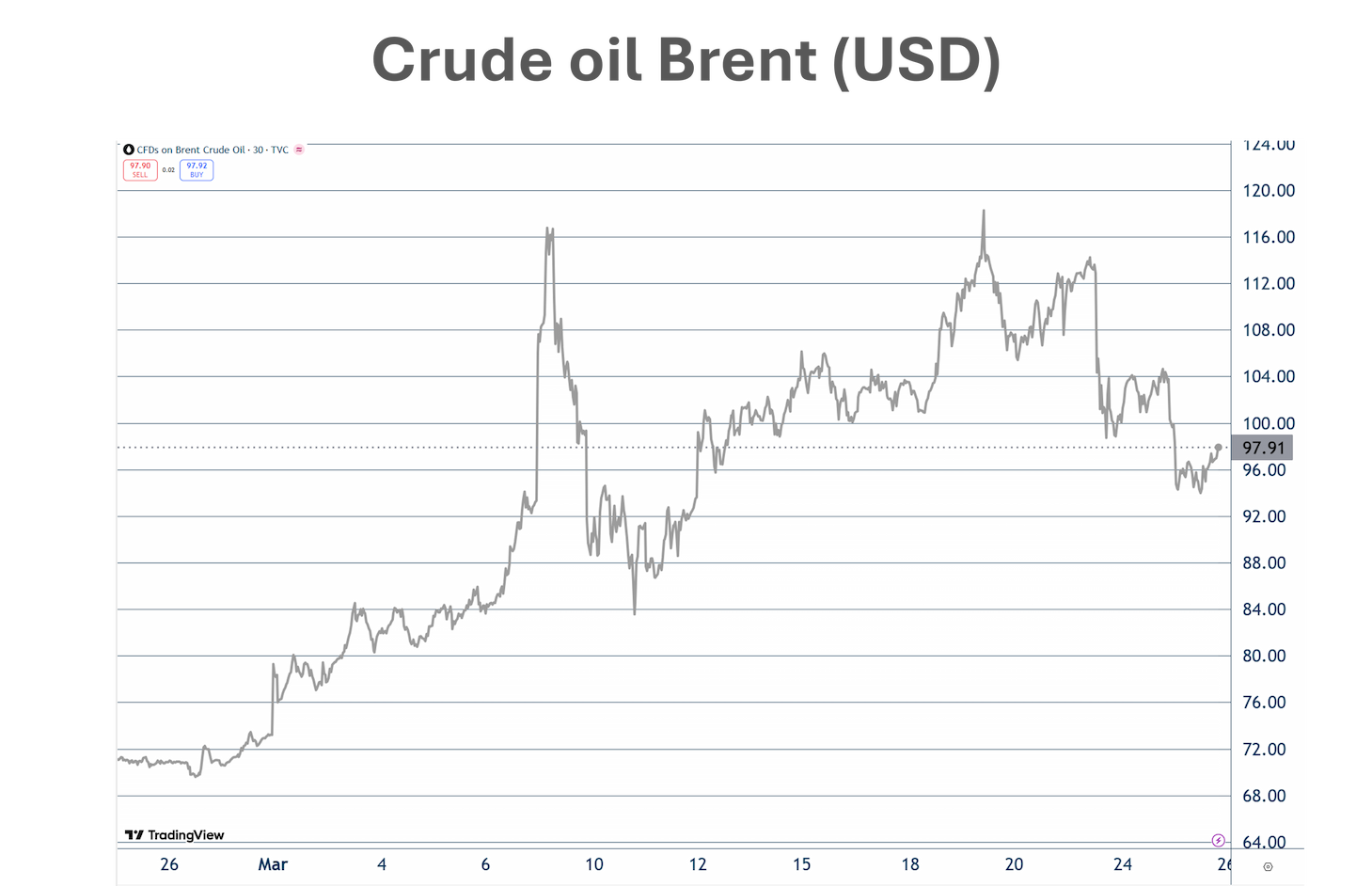
Earlier this week, Trump further increased pressure on Iran by issuing an ultimatum: within 48 hours, the Strait of Hormuz had to be fully reopened or Iranian power plants would be bombed. Iran immediately responded that an attack on energy infrastructure would result in a complete closure of the passage.
That would be an extreme scenario. Around a fifth of global oil trade runs via this route. The markets reacted nervously because a complete shutdown would mean another shock to energy prices and inflation.
However, a turn followed shortly afterwards. Trump gave Iran an extra five days to negotiate, partly due to pressure from allies and countries in the region. They warned that large-scale destruction of Iranian infrastructure could destabilize the country and cause a protracted conflict. The markets reacted immediately: oil fell and stocks recovered.
2. Negotiations, but battles continue
Despite possible talks between the US and Iran, the fight continued. Iran carried out attacks on Israeli cities and U.S. bases in the region. Saudi Arabia and Kuwait also reported intercepted drones and damage to energy infrastructure.
The US is now working on a 15-point plan to end the conflict, including agreements on nuclear activities, sanctions relief and free passage through the Strait of Hormuz. However, Iran rejected a ceasefire, calling talks “illogical.”
3. Gold under pressure due to liquidity stress and interest rate expectations
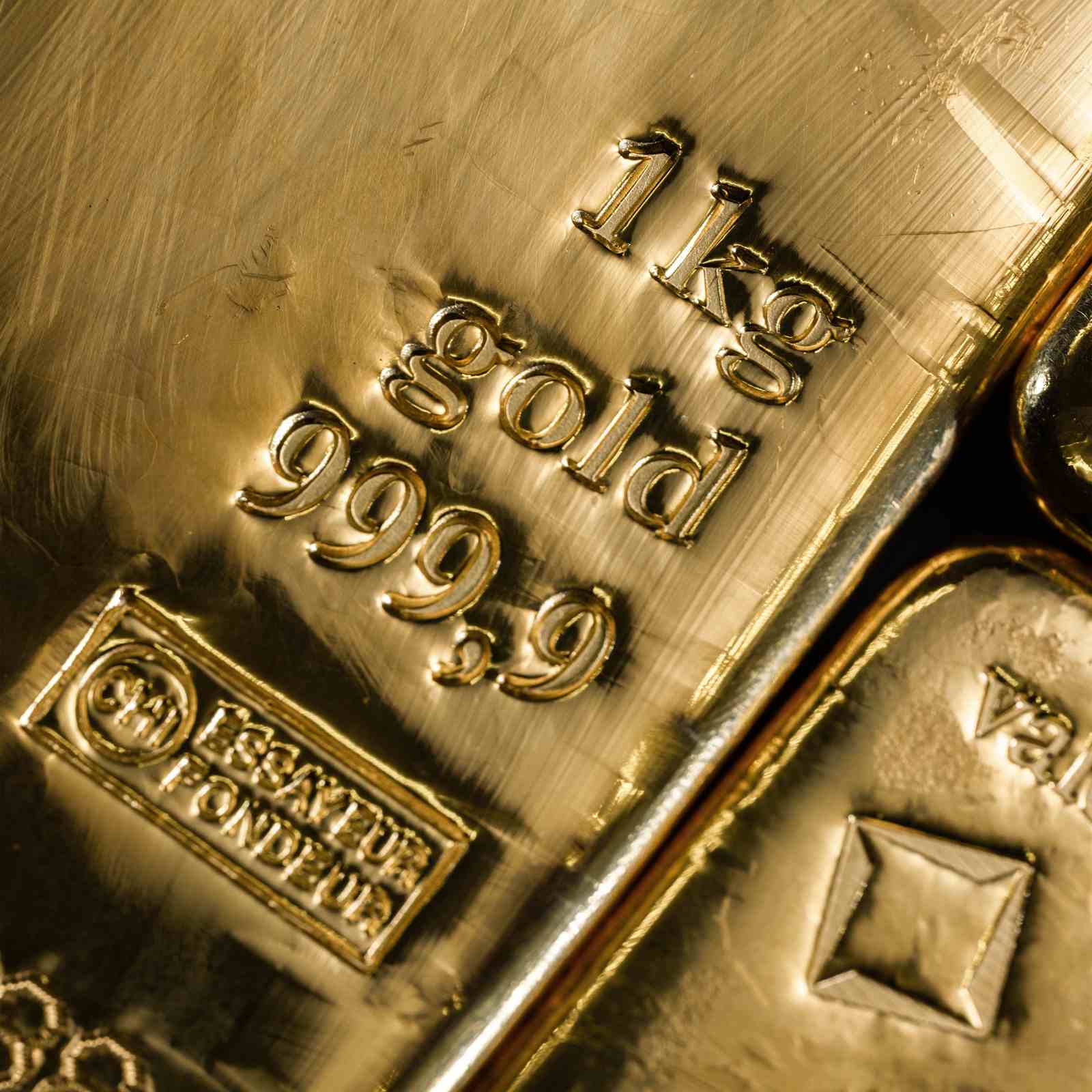
It is remarkable that gold is under heavy pressure. Since the beginning of the conflict, the precious metal has lost more than 20% and recorded its biggest weekly decline since 1983.
This seems counter intuitive in a geopolitical crisis, but fits a pattern that is more common. When markets come under pressure and liquidity dries up, safe havens are even sold. At the same time, rising energy prices are causing higher inflation expectations and thus higher interest rate expectations, which is negative for gold.
The combination of a stronger dollar, higher interest rate expectations and liquidity pressure is currently putting heavy pressure on gold.
4. Central banks are in trouble again
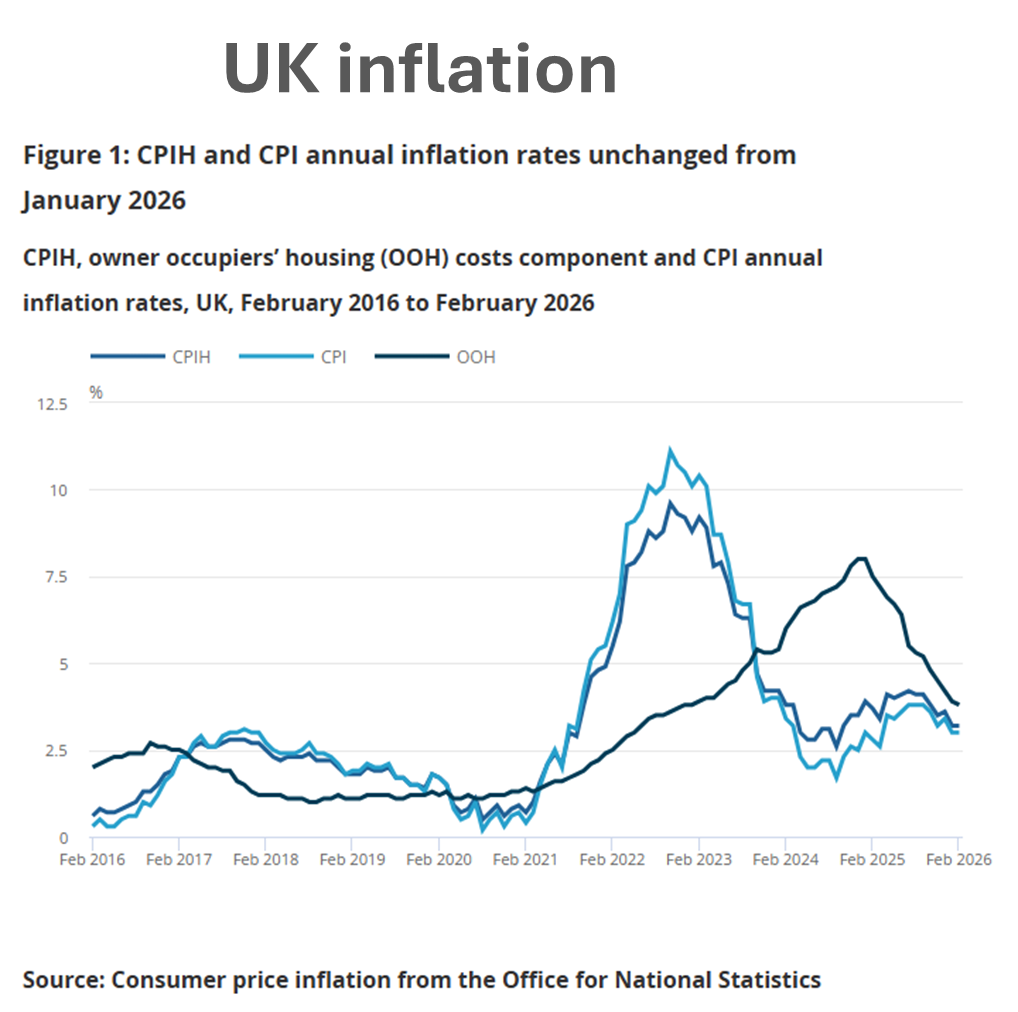
Inflation in the United Kingdom remained at 3% in February, but the outlook has deteriorated rapidly due to the war in the Middle East. Analysts expect inflation to be about one percentage point higher by the end of the year due to rising energy prices.
The ECB is also in a difficult position. The interest rate remained unchanged, but the picture has clearly changed. Higher commodity prices increase inflation risks, while economic growth is actually coming under pressure.
This brings central banks into the familiar dilemma again: higher inflation, but at the same time weaker growth. The markets are already starting to take into account possible interest rate hikes, while central banks remain cautious for now.
5. European economy slows, confidence falls
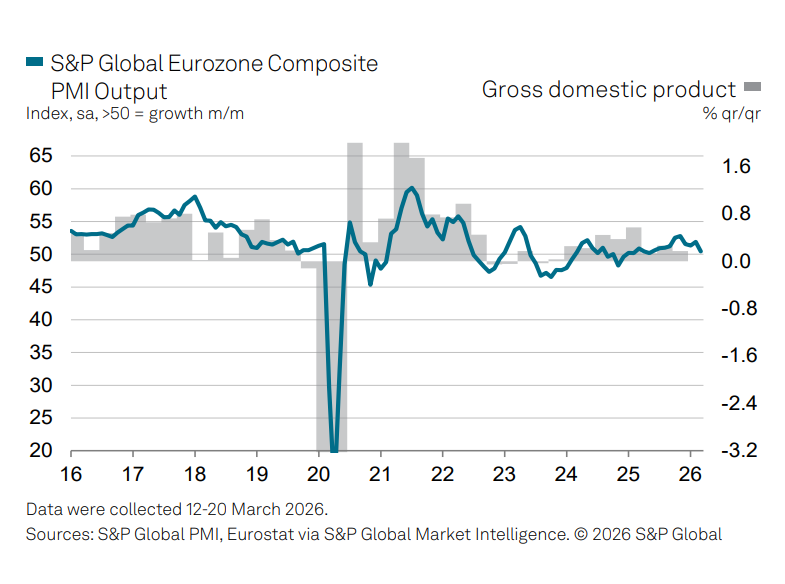
The euro zone is now showing signs of economic slowdown. The composite PMI index shows a clear weakening, particularly in the service sector. Companies report that uncertainty and geopolitical tensions are squeezing investment and demand.
6. Dutch house prices rise but confidence falls
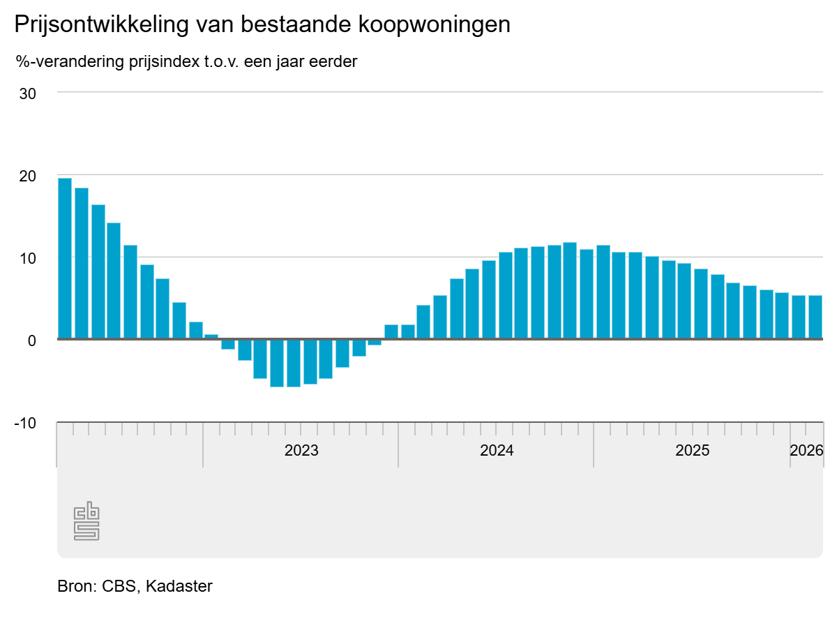
In the Netherlands, we see a similar picture. House prices continue to rise, at an annual rate of 5.4% in February, but consumer confidence fell sharply from -24 to -30, the biggest drop in almost four years and is well below the average of the past twenty years.
The combination of rising energy prices, geopolitical uncertainty and weaker growth is causing the economic outlook to deteriorate again. The coming weeks will therefore mainly revolve around one question: will this conflict remain limited, or will it again be the start of a prolonged energy and inflation shock, such as in 2022.
Geopolitical tensions and uncertainty around the Strait of Hormuz are causing market turmoil and pressure on gold. Learn what rising inflation, interest rate expectations and economic slowdown mean for your precious metal investments.

Jeroen Blokland has over 20 years of experience as a professional investor and was formerly Head of Multi-Asset at Robeco, where he was responsible for a client portfolio of over five billion euros. After leaving Robeco he founded True Insights, an independent investment research platform, and has since built a following as a columnist, YouTuber and sought-after speaker. With over 100,000 followers on X, he is one of the most prominent voices in Dutch finance. For GoldRepublic he writes on macro-economics, markets and the role of gold in a diversified portfolio.