Market Update
Dear reader, welcome to the latest GoldRepublic newsletter! In just five minutes, we will fully inform you of current precious metal prices and the most relevant news that affects your investment in precious metals. Don't miss out on these valuable insights!
1. Fed holds interest rates but divisions grow
As expected, the Federal Reserve left the interest rate unchanged at 3.5% to 3.75%. However, the vote within the committee was not unanimous: two directors, Waller and Miran, voted for a 25 basis point rate cut.
weaver, the vote within the committee was not unanimous: two directors, Waller and Miran, voted in favour of a 25 basis point rate cut.

The Fed noted that economic activity continues to grow “at a strong pace.” At the same time, the labor market was described somewhat more optimistically than before: the number of new jobs is low, but unemployment seems to be stabilizing. The phrase about “increased downside risks to employment” has been deleted.
The message is clear: interest rate cuts are not over yet, but for now, the pause button is on, in principle even if the Trump camp increases the pressure. The choice of the new Fed chair will of course be an important factor here.
2. US consumer confidence at low point
However, not everything looks equally great. US consumer confidence fell to 84.5 in January, the lowest level since 2014, with concerns about the labor market and the economic outlook in particular weighing on sentiment.
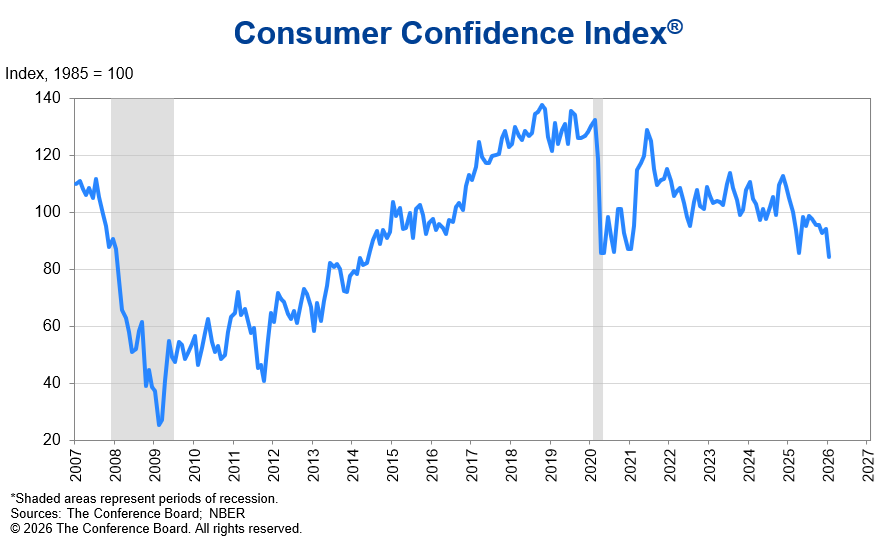
According to the Conference Board, fewer and fewer Americans think there are enough jobs. The difference between “plenty of jobs” and “jobs hard to get,” a commonly used labor market meter, has fallen to the worst level in years. Possible result: less spending on vacations, cars and other major expenses and consumers keeping their hands on the cut.
3. The Netherlands: trust has fallen further
Consumer confidence in the Netherlands has also fallen again: from -21 in December to -23 in January, reports the CBS. In particular, the opinion about the economic climate worsened.
Confidence is therefore far below the long-term average of -11. The bottom (-59) in 2022 has not yet been reached, but it is not exactly rosy.
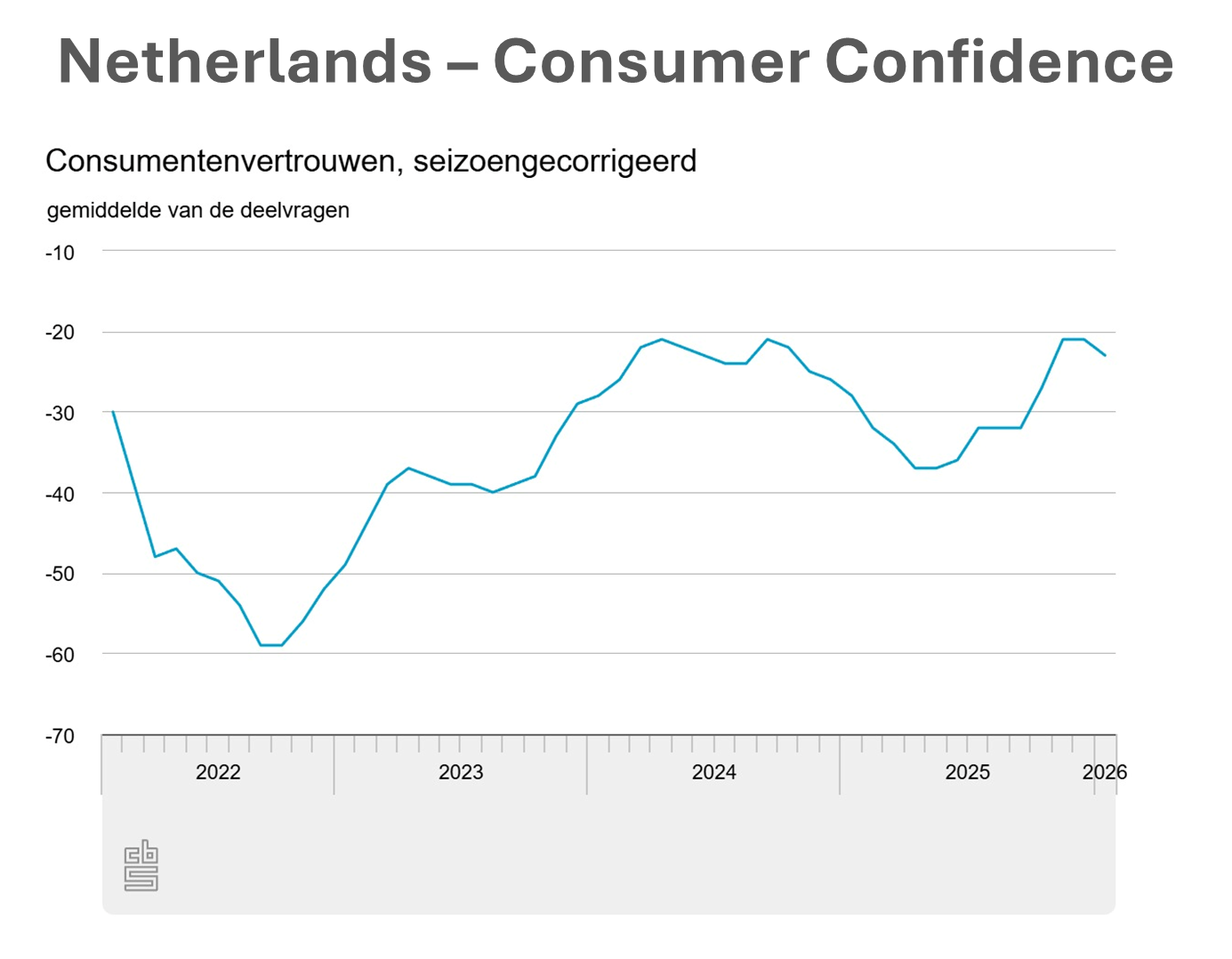
The decline underlines that uncertainty is widely supported not only in the US, but also in Europe.
4. Euro rises — and the ECB doesn't like it
The euro is trading stronger against the dollar, but that is rather the result of weakness on the other side of the ocean.
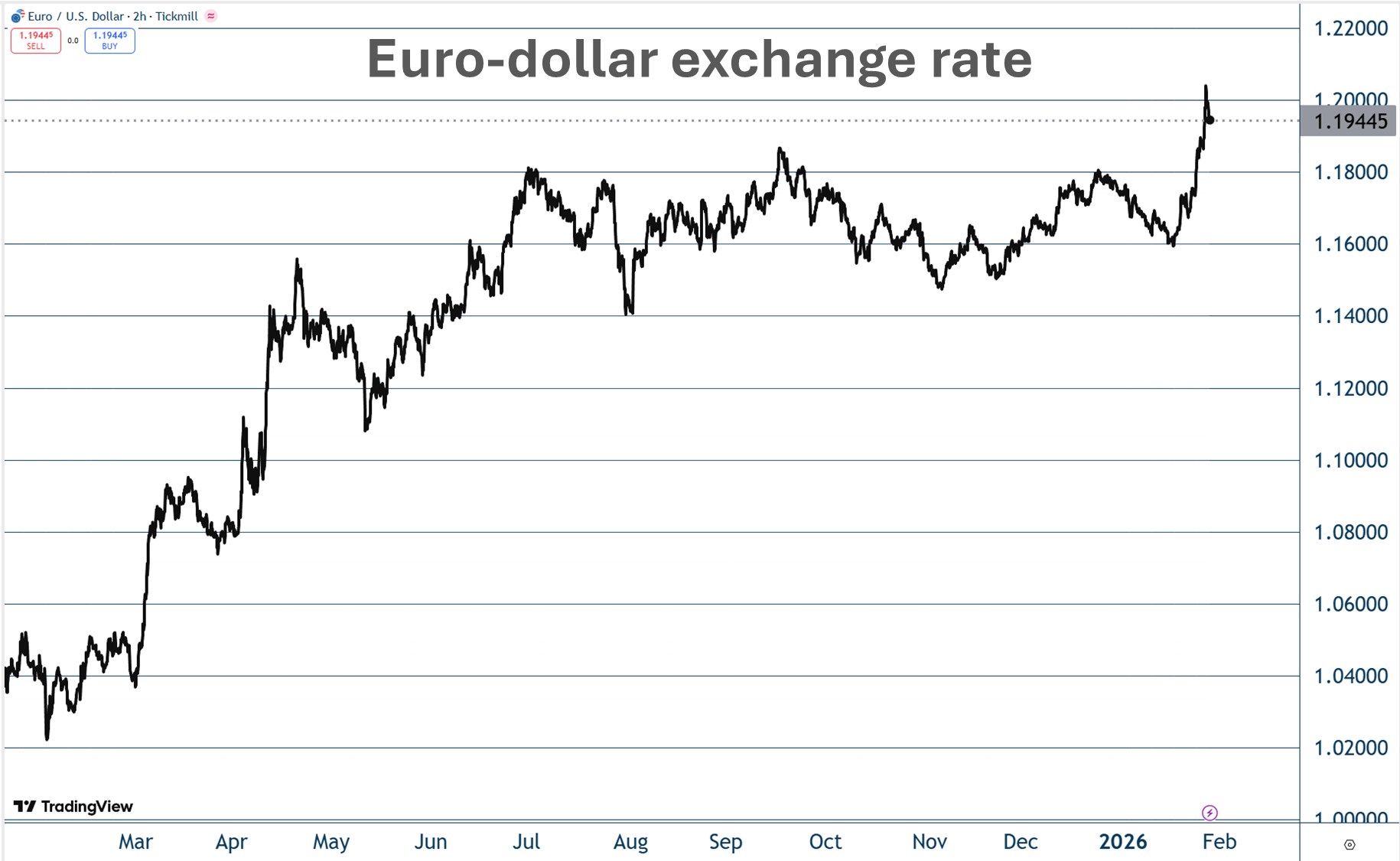
ECB executives, including Villeroy de Galhau, express concerns: if the euro becomes too strong, it will further lower inflation. With inflation already below the 2% target, there is room, and perhaps even pressure, for interest rate cuts in Frankfurt.
5. Trump & Bessent are sending dollars in all directions
Trump added fuel to the fire by saying that the dollar is not too weak and that development did not cause any concern to me. That led to the dollar's biggest fall since the previous round of tariffs.
But a day later, Treasury Secretary Bessent tried to limit the damage: “The U.S. always has a strong dollar policy.” He emphasized that there is no active intervention, not even against the yen. So the market knows one thing for sure: there is no consistent policy.
The Fed is keeping interest rates stable for now, but internal divisions and increasing uncertainty still make rate cuts possible later this year. Meanwhile, consumer confidence in the US and the Netherlands is plummeting, while currency turmoil around the dollar and euro keeps the markets extra exciting.

Jeroen Blokland has over 20 years of experience as a professional investor and was formerly Head of Multi-Asset at Robeco, where he was responsible for a client portfolio of over five billion euros. After leaving Robeco he founded True Insights, an independent investment research platform, and has since built a following as a columnist, YouTuber and sought-after speaker. With over 100,000 followers on X, he is one of the most prominent voices in Dutch finance. For GoldRepublic he writes on macro-economics, markets and the role of gold in a diversified portfolio.

.jpg.jpg)