


Buying gold for the first time: what should you look out for?
When you decide to buy gold for the first time, questions are bound to come up. Which form of gold do you choose? How much gold do you buy? And do you need to store the gold yourself? In this article, we explain the choices you'll face, how the purchasing process works in practice and what to look out for.
Important to start with: why are you buying gold?
Before you invest in gold, the most important question to ask yourself is: why do you actually want to buy physical gold?
Investors usually buy gold for three main reasons:
- Protection against inflation: When life gets more expensive, gold often holds its value. Your money in the bank may lose value, but over the long term gold generally retains its purchasing power.
- Financial security: Gold is regarded as a 'safe haven' in times of economic crisis, war or turmoil on the financial markets. It's an asset you hold yourself, independent of banks or governments.
- Spreading risk (diversification): By allocating part of your wealth to gold, you're less dependent on shares, bonds or property. When shares fall in value, gold often remains stable or even rises in value.
Gold is known as a volatile investment. The price can fluctuate considerably. It is therefore very much a long-term investment.
It's also worth realising that gold pays no dividend or interest, unlike savings products and certain shares and bonds.
Buying gold: physical gold or paper gold?
If you've decided that gold is a suitable investment product for you, you then face a choice of how to invest in gold.
1. Physical gold
With physical gold, you buy real, tangible precious metal that you own yourself. Gold bars, gold coins and gold jewellery are the most common forms of physical gold.
Gold bars and gold coins both count as investment gold if they are at least 900/1000 pure. You then pay no VAT in either case anywhere in the EU. That said, the two serve slightly different purposes.
- Gold bars generally have the sharpest price per gram, because manufacturing costs are relatively low. This is generally the most efficient choice if you want to invest in physical gold. You don't have to buy a whole gold bar in one go, but can become a part-owner of a larger bar. At GoldRepublic, you can even buy physical gold from just €50 or 1 gram (a share of a larger gold bar).
If you choose LBMA-certified gold, your gold is also very easy to sell worldwide, without having to be inspected or checked again. - Gold coins (such as the Maple Leaf or Krugerrand) are legal tender, but may also have collector value. Although in theory you could pay at the baker's with gold coins for the amount on the coin, in practice they are traded almost exclusively on the basis of the current gold price (plus possibly a small collector's or production premium).
- Gold jewellery is often worn as decoration or an heirloom, but is sometimes also seen as a form of wealth building. You can actually wear and enjoy what you own, rather than it only sitting in a vault.
At the same time, it's worth realising that you're paying not only for the gold, but also for the design, the craftsmanship and sometimes the brand name. You also pay 21% VAT on gold jewellery in the Netherlands, unlike investment gold, which is exempt from VAT.
When you sell gold jewellery, you may also only get back the current scrap gold price, which is considerably lower than the original purchase price.
2. Paper gold (ETFs, gold funds and shares)
With paper gold, you don't buy physical gold, but invest through the stock exchange in 'gold on paper'. Examples are gold ETFs or gold (mining) shares.
You can easily buy gold ETFs and gold shares through a broker. The transaction costs are generally low and an important advantage of gold ETFs. The costs are generally lower than the storage and transaction costs involved in buying physical gold.
Yet with paper gold, you never hold physical gold. If the financial market or the issuing party were to get into serious trouble, you would depend on the counterparty.
It's also worth realising that with gold mining shares, other factors also influence the price, such as company-specific factors and geopolitical risks.
Paper gold can also only be traded during stock exchange opening hours, whereas physical gold can be traded 24/7.
Purity and hallmarks of physical gold
If you choose physical gold, it's also important to pay attention to the quality and any hallmarks of the gold.
Purity indicates how much pure gold the object contains. It is expressed in carats or in a number indicating the fineness (in thousandths).
24-carat gold, for example, equals a purity of 999.9/1000 or 99.99%: this is virtually pure gold. The gold you buy through GoldRepublic, for example, always has a purity of 99.99%.
Not all gold on the market is equally easy to trade. To ensure you can later sell your gold without problems, choose gold with the right hallmarks:
- LBMA 'Good Delivery' status: The London Bullion Market Association (LBMA) is the most important international organisation for precious metals. Refineries accredited by the LBMA meet the highest requirements for quality, purity and ethical sourcing. Gold bars from LBMA-certified producers (such as Umicore, Heraeus or Valcambi) can be sold worldwide immediately and without additional checks.
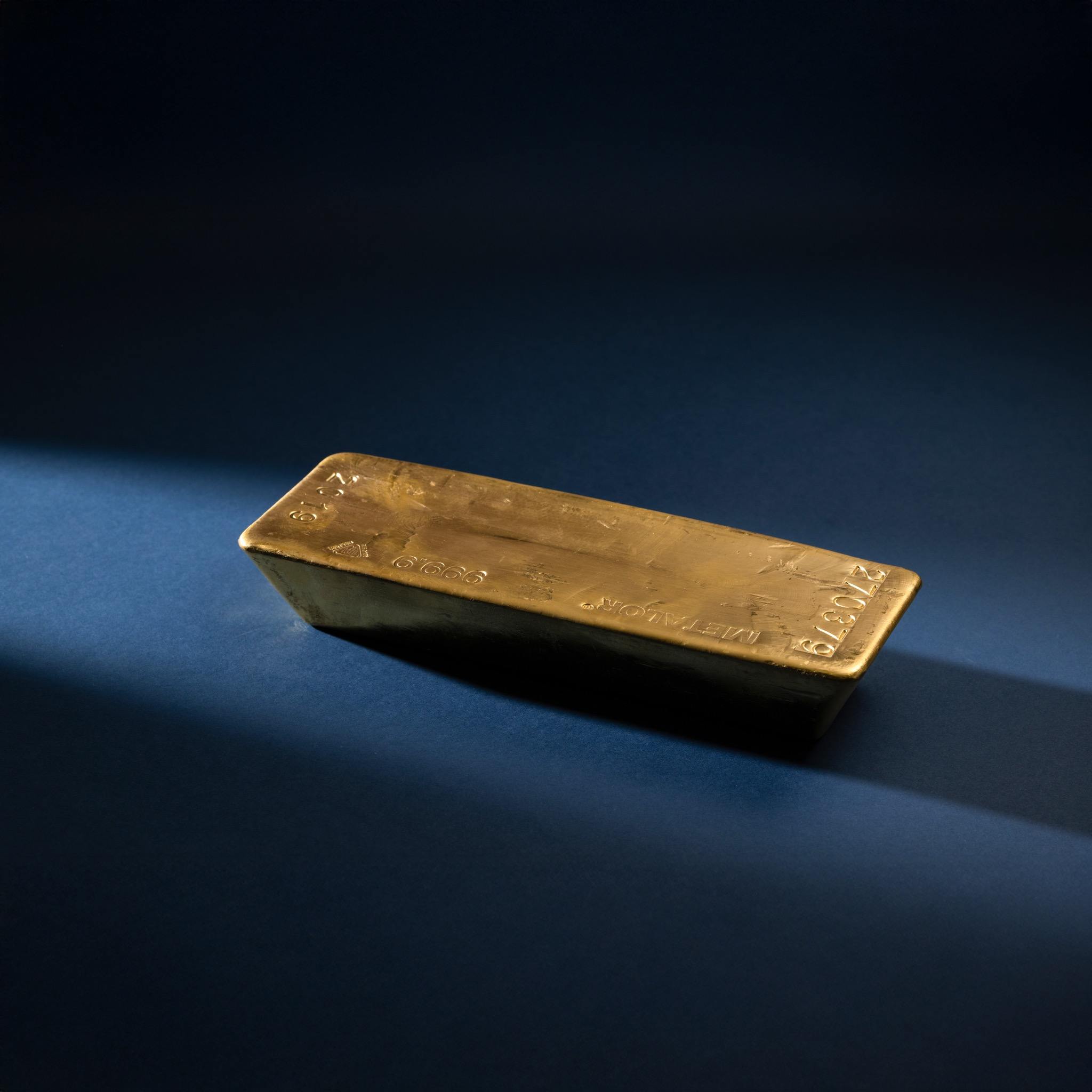
- Assay stamps: Gold bars always carry a stamp showing the producer's logo, the weight, the gold content (e.g. 999.9) and a unique serial number.
Transport, storage and insurance of physical gold
When you buy physical gold, things such as transport, vault storage and insurance also become important.
You can of course have your physical gold delivered to your home, but then you are responsible for secure storage and insurance yourself. Gold you buy through GoldRepublic can be stored in external vaults arranged by us. Gold bars go straight from the refinery into the vault.
As a result, the provenance and chain of custody are unbroken, and GoldRepublic knows the exact quality and purity of the precious metal.
The vaults are heavily secured and managed by professional, external custodians. Your gold is fully insured against theft and damage. In addition, the physical stock is periodically checked by an independent party.
In terms of storage locations, at GoldRepublic you can choose from Amsterdam, Frankfurt, Zurich, Singapore or London. You decide for yourself where your holdings are stored.
Purchase price, transaction costs and storage costs
When buying gold, also pay attention to the price and any additional costs. A reliable provider communicates clearly about buying and selling margins, with no hidden costs afterwards.
Here is an overview of all the cost and price aspects that may be involved in buying gold, and that can vary greatly between providers:
- The spot price vs. the transaction price (the spread): The current gold price (also known as the spot price) is the pure commodity price. Providers apply a difference between the buying and selling price; the spread.
In addition, sellers often charge transaction costs. Sometimes this is a fixed amount and sometimes a percentage of the order value, both when buying and when selling gold. At GoldRepublic, for example, you pay 1% transaction costs when buying gold (0.50% transaction costs on our savings plans). - Storage and insurance costs: Do you choose external vault storage? Then you pay a periodic fee for security, auditing and insurance. This is usually an annual percentage of the total value of your gold (often with a minimum monthly amount). At GoldRepublic, you pay 0.5% storage costs per year, excluding VAT, if you have your gold stored in a vault.
- Transport and delivery costs: Do you want your gold delivered to your home, or physically delivered from the vault later? Then take into account the costs of registered/insured transport and any handling costs for physically withdrawing the bars.
How do you buy physical gold at GoldRepublic?
- Open a personal account: You register securely via our online platform. As a regulated institution, we carry out careful identity verification.
- Choose your preferred storage location: You indicate whether you want to place your precious metal in our heavily secured vaults in Zurich, Frankfurt, Amsterdam, London or Singapore.
- Place your order: You can buy (and sell) gold 24 hours a day, 7 days a week. This can be one-off and manual, but also periodic and fully automatic. With our Gold savings plan, you buy gold for a fixed amount every week, every two weeks or every month.
- Directly allocated ownership: The precious metal you buy is allocated in your name and placed in the vault you've chosen. You are, and remain, 100% the legal owner.
- Easy to sell again: Do you want to (partially) liquidate your position? You can sell your physical gold at any time, with the proceeds added directly to your cash balance. From there, you can easily transfer it to your bank account.
Buying gold for the first time? Read what to look out for with physical gold, such as purity, storage, hallmarks and costs.

GoldRepublic is a leading European platform for physical precious metals, founded in 2010 as the first precious metal dealer licensed by the AFM (Dutch Authority for the Financial Markets). Our articles are written by a team of specialists in macroeconomics, precious metals and geopolitics.


