

Platinum searches for a bottom: hopes pinned on hybrid cars
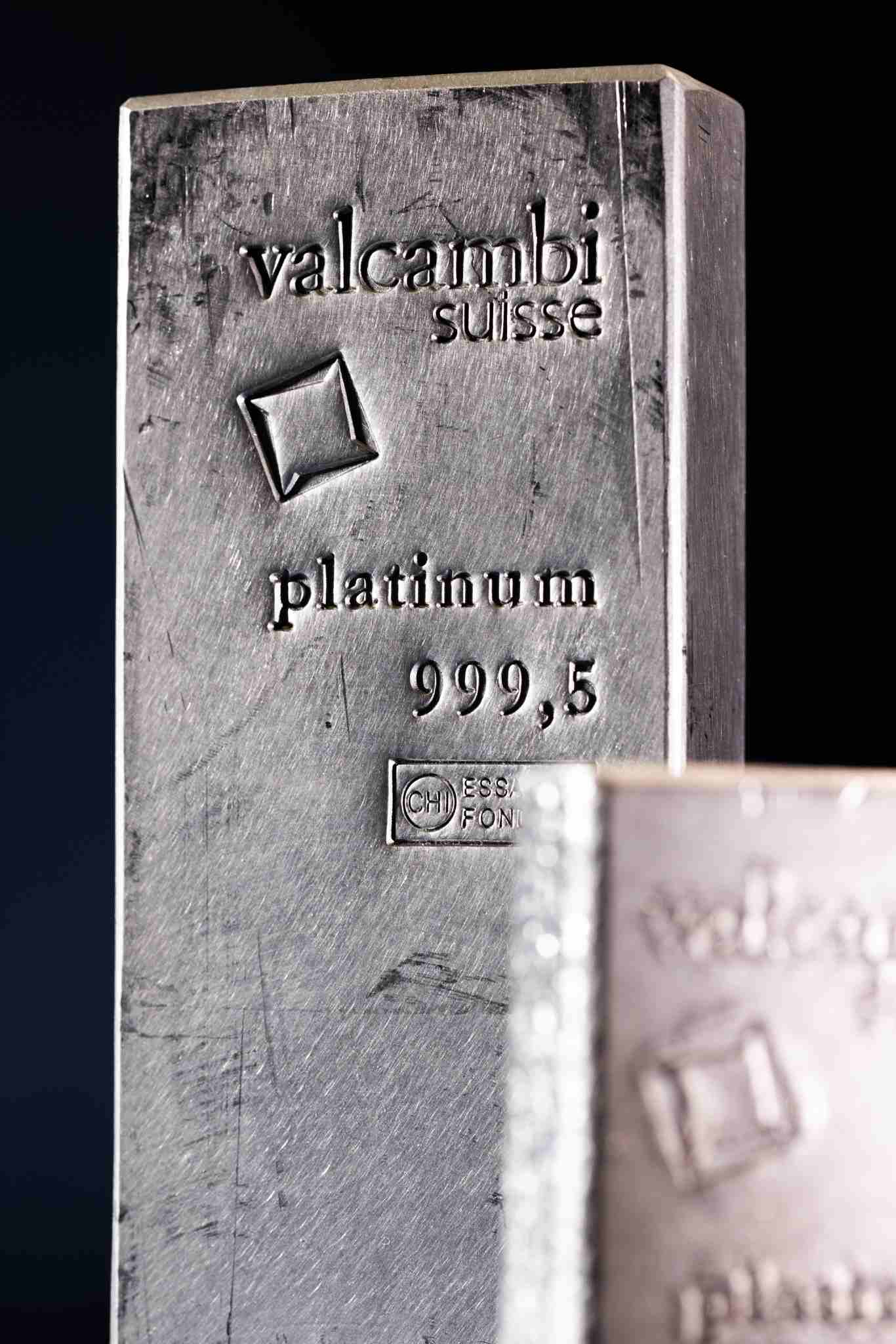
The platinum price has fallen sharply in recent months, alongside gold and silver. Yet the charts are showing more and more signals pointing to the formation of a bottom. The price is currently finding support in a zone that acted as resistance back in October and December 2025.
On top of that, the daily chart is showing a bullish divergence in the Relative Strength Index (RSI). The price set a lower low, while the RSI formed a higher low. That suggests downward momentum is losing strength and selling pressure may be starting to ease.
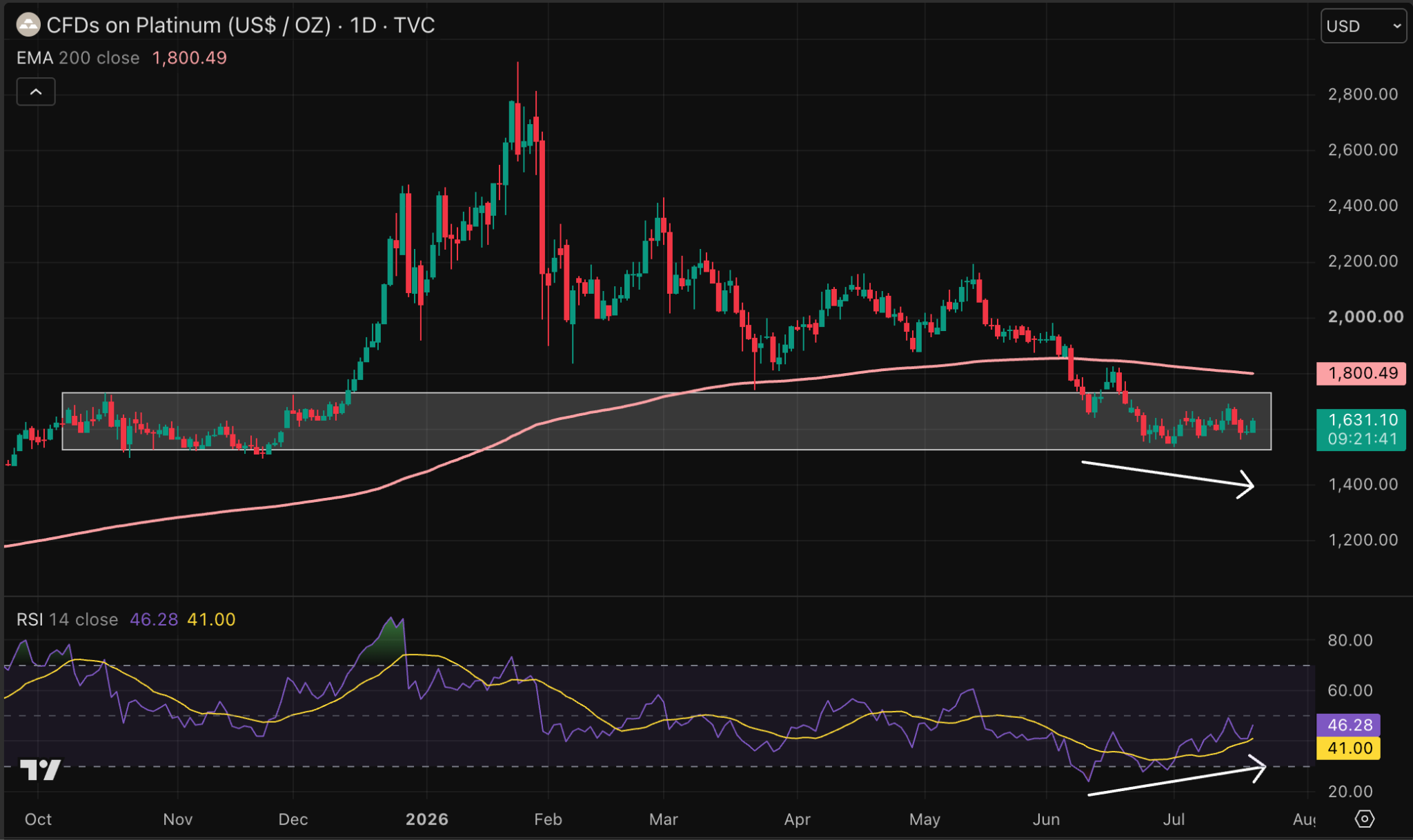
Fundamental support for platinum
The fundamental story behind platinum has actually strengthened recently. For years, investors assumed that demand for platinum would gradually disappear as fully electric cars gained ground. A battery-electric car has no exhaust and therefore needs no catalytic converter.
That was a key reason why platinum was less popular than gold and silver for a long time. But the energy transition in the car industry is proving less straightforward than expected. Especially in the United States and Europe, consumers don't seem to be switching to fully electric driving all at once.
Instead, hybrid cars are gaining ground. That matters for platinum, because hybrids do have a combustion engine and therefore still need catalytic converters. As a result, demand for platinum is holding up longer than the most aggressive electrification scenarios assumed.
Hybrids extend the lifespan of catalytic converters
Platinum is used in catalytic converters to convert harmful exhaust gases into less harmful substances. As long as cars with combustion engines are being sold, that remains an important source of demand.
Hybrid cars form an in-between category here. They're cleaner than traditional petrol or diesel cars, but they're not fully electric. As a result, they remain part of platinum demand.
The question isn't whether electric driving will eventually grow — it will. The real question is how long the transitional phase lasts. If hybrids remain dominant for longer than expected, demand for platinum will be scaled back more slowly than assumed. That changes how the metal is valued.
The platinum market remains tight
On top of that, the platinum market remains fundamentally tight. According to Johnson Matthey, all platinum group metals were in deficit in 2025. Production of combustion-engine vehicles proved resilient, while adoption of electric cars outside China moved slower than previously expected.
Johnson Matthey also expects platinum to remain in deficit through the rest of 2026. That's because the metal has a broader demand base than some of the other platinum group metals.
Besides the automotive sector, platinum is used in chemical processes, refining, glass production, electronics, and hydrogen technology. As a result, platinum is less dependent on a single end market than, for example, palladium, which leans much more heavily on the automotive sector.
Supply is slow to respond
Another important point is supply. A large share of platinum comes from South Africa. New mining capacity is expensive, technically complex, and takes years to develop. Higher prices therefore don't automatically translate quickly into extra supply.
That makes the market more sensitive to shortages. If demand for hybrid cars stays strong for longer, while industrial demand remains robust and recycling only picks up gradually, the market could stay tight for longer than investors previously thought.
That explains why platinum remains fundamentally interesting, while the charts are also starting to show positive signals.
There are clear risks too
Still, caution is always important when investing. If fully electric cars gain market share faster than expected, demand for catalytic converters could fall faster. China remains particularly important here, since electrification is much further along there than in the United States and Europe.
A weaker global economy could also hit car sales. Higher oil prices could support demand for more fuel-efficient hybrids, but they could also erode consumers' purchasing power.
Bottom line: platinum remains an interesting metal within a diversified portfolio of precious metals — especially now that hybrid cars are gaining popularity again.
The platinum price is showing early signs of bottoming out. Discover why the rise of hybrid cars and a tight market could work in platinum's favor.

Thom Derks writes for GoldRepublic on gold, macro-economics and geopolitics. He studied Law in Leiden and Economics in Amsterdam. His personal fascination with scarcity and store of value through both bitcoin and gold brought him into the world of financial journalism. Through his own newsletter De Geldpers on Substack, he reaches over 5,800 subscribers with analyses on markets, geopolitics and the monetary system.


.jpg.jpg)