

Gold is building a solid foundation for the next bull market
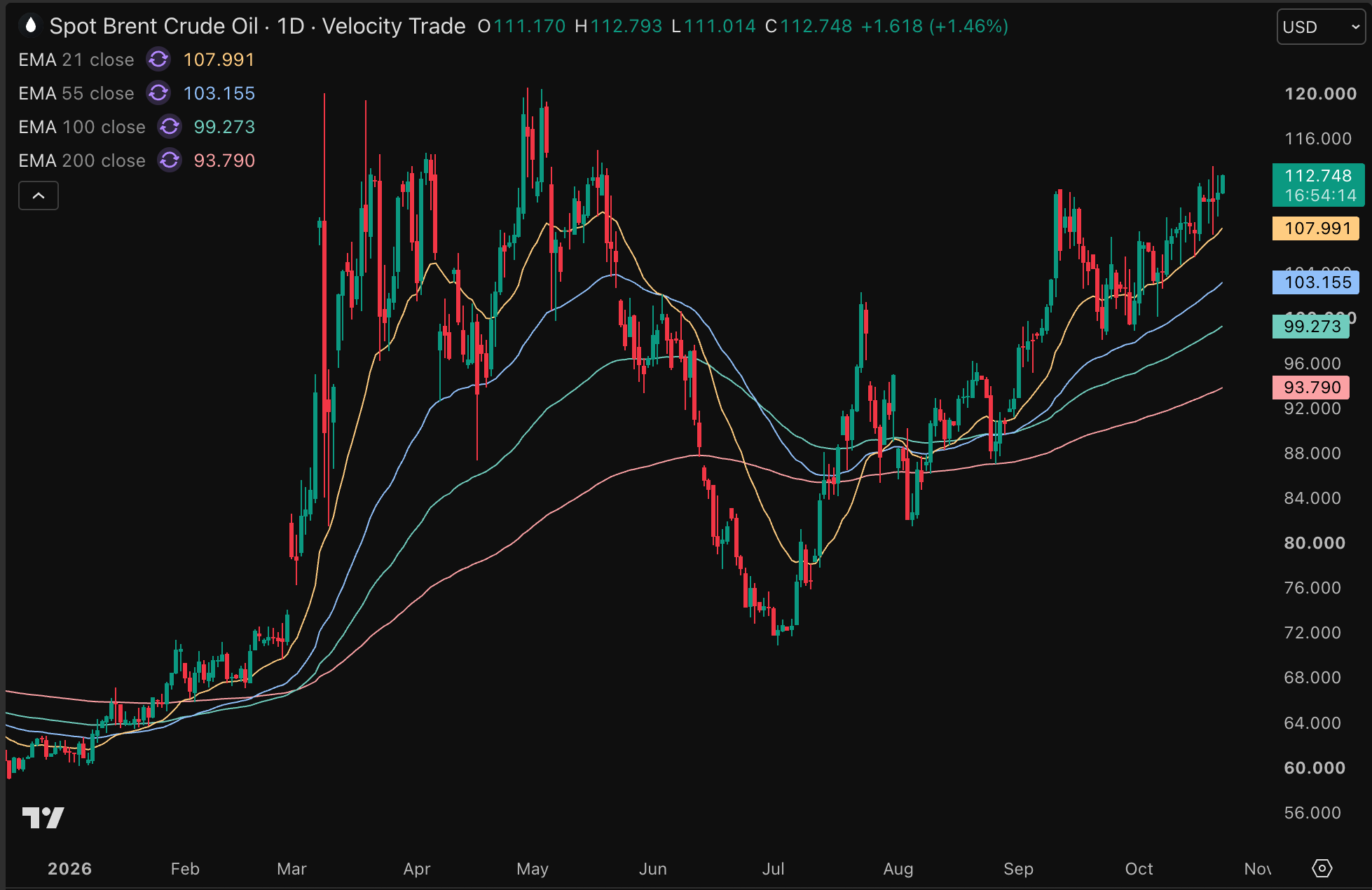
The war with Iran drags on, Brent crude is hovering around $110 a barrel, France is facing increasingly serious financial problems, and stress in South Korea's Kospi index is spilling over to Wall Street. We are looking at a world that is becoming ever more turbulent.
On paper, that is the perfect recipe for a higher gold price. After all, gold is the asset you turn to when you want to protect yourself against turmoil and panic.
And yet gold is mainly under pressure. Since its peak in January, the precious metal has lost around 25 per cent of its value. How is that possible? Why aren't investors flocking to gold in these circumstances?
Why gold is falling despite favourable conditions
Take France. The 10-year yield there has crossed the 5 per cent mark for the first time since 2002. The yield gap with Germany, the much-discussed spread, has now widened to more than 150 basis points. At the same time, the French stress has spilled over to the European banking sector, which has had to absorb considerable share price falls.
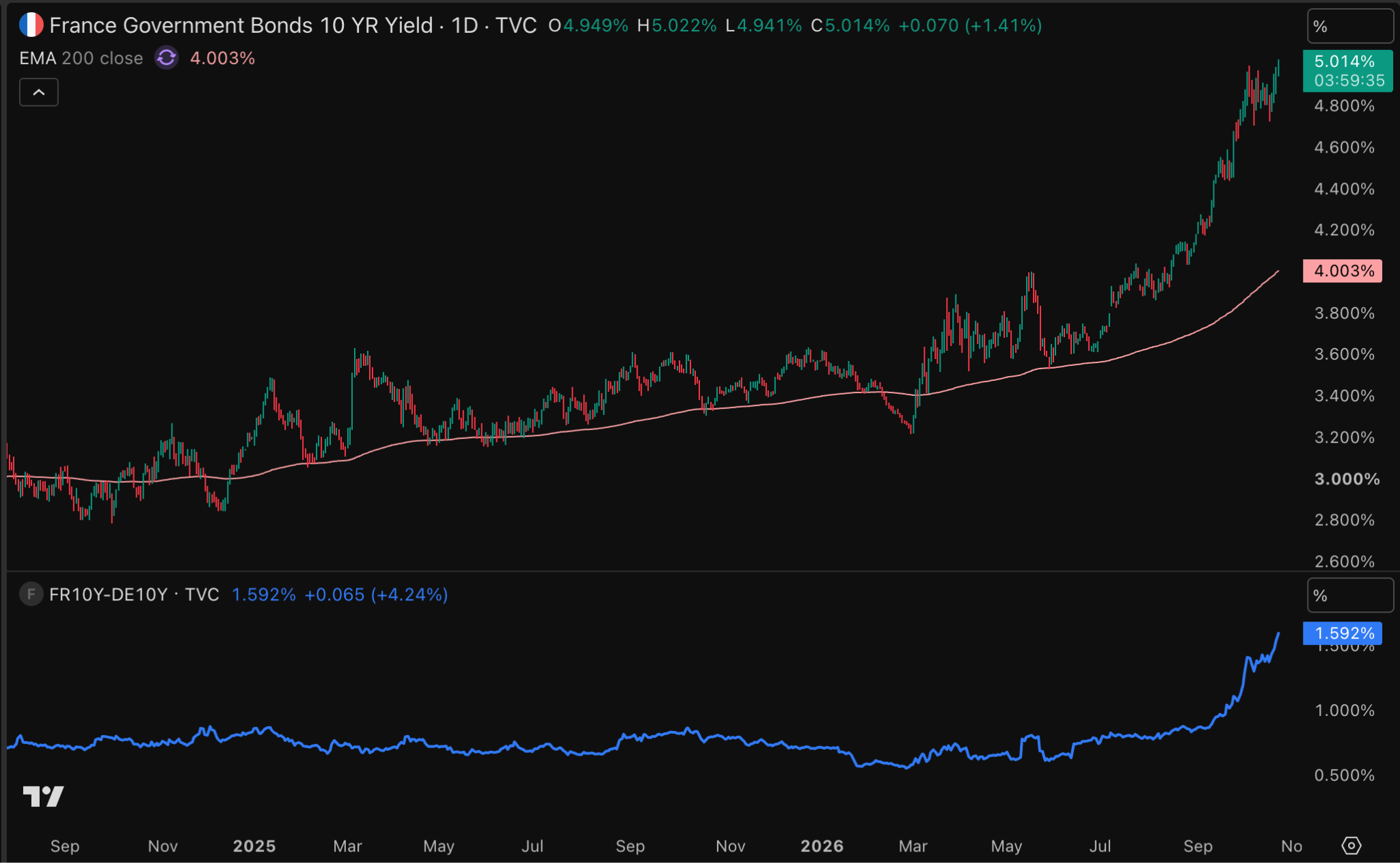
In theory, these are exactly the kinds of developments you would expect to push the gold price higher. After all, the rapid rise in French interest rates exposes a weakness within the traditional financial system.
Or take the war with Iran. It is driving the oil price back above $110 a barrel. You would expect the rising inflationary pressure to make gold more attractive. Yet so far, that has not been the case.
There is no doubt that these developments strengthen the long-term investment case for gold. But the problem lies elsewhere. The problem lies in the short term.
Take the situation in France. Rising bond yields there could eventually trigger a new European debt crisis. If French government bonds fall further in value, banks holding these bonds could come under pressure. That in turn could tighten lending to businesses and households.
In such a situation, a different problem arises: a shortage of liquidity. A shortage of capital.
Investors are then not necessarily looking for protection against inflation, but above all for money that is immediately available and reliable. That can lead to a flight to US dollars, German government bonds and cash.
Even gold may then be sold temporarily. Not because investors lose confidence in gold, but because they need money to cover losses on other investments.
We saw this during the financial crises of 2008 and 2020 as well, when gold initially came under pressure from forced selling.
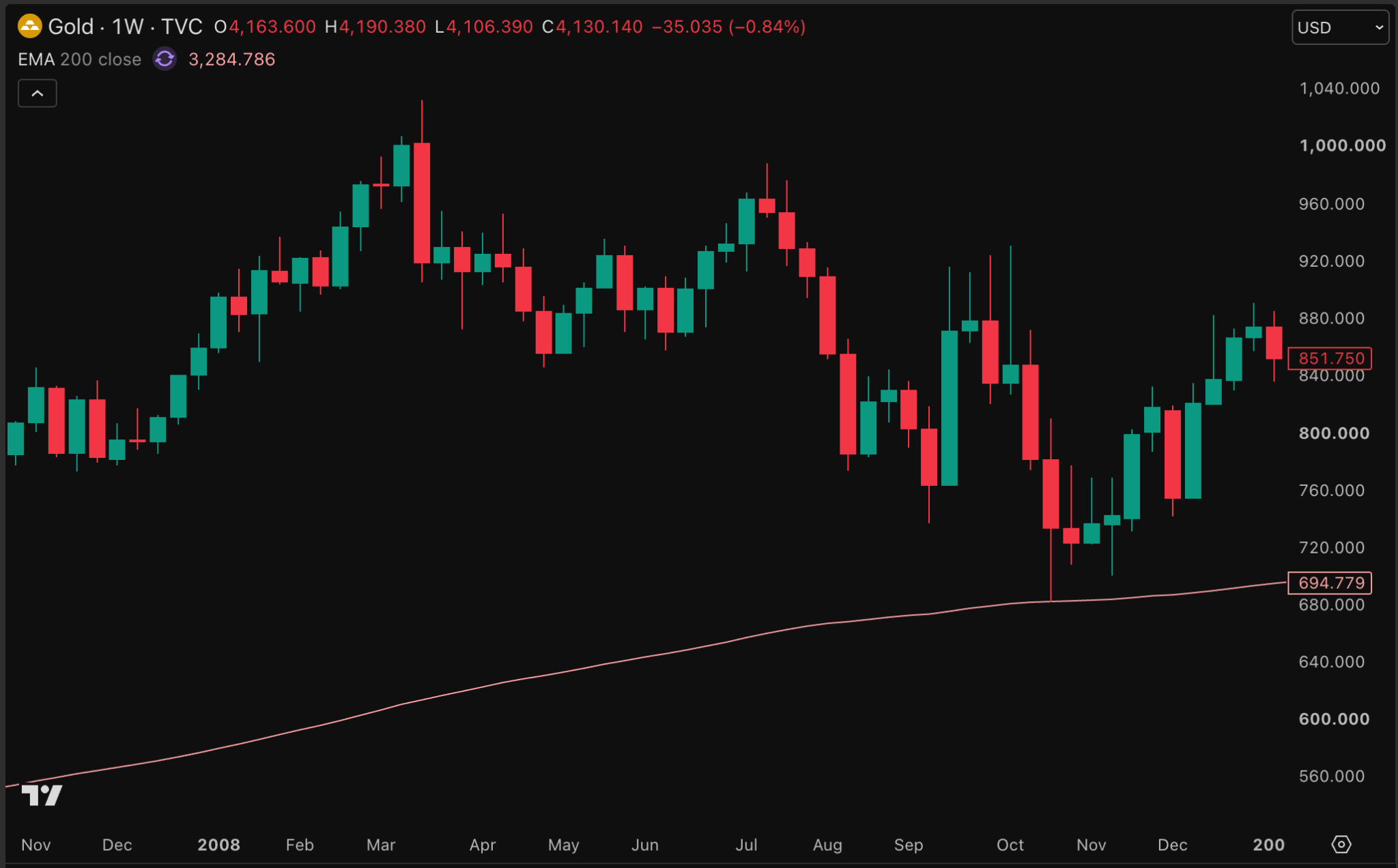
Therein lies the paradox of today's gold market. The financial problems weighing on gold today could, in time, be exactly what sparks a new gold rally.
Because when financial stress turns into a serious crisis, pressure mounts on governments and central banks to intervene. And that can ultimately lead to lower interest rates, additional liquidity and new monetary stimulus.
Precisely the conditions in which gold has historically tended to perform well.
Technical support for gold
The chart shows that the gold price is currently finding support around $4,100. That is clearly an important price level, as gold has bounced back from here several times in recent months.
This is also where the so-called 0.382 Fibonacci level lies. That means gold has now given back roughly 38.2 per cent of its total price increase between September 2022 and January 2026.
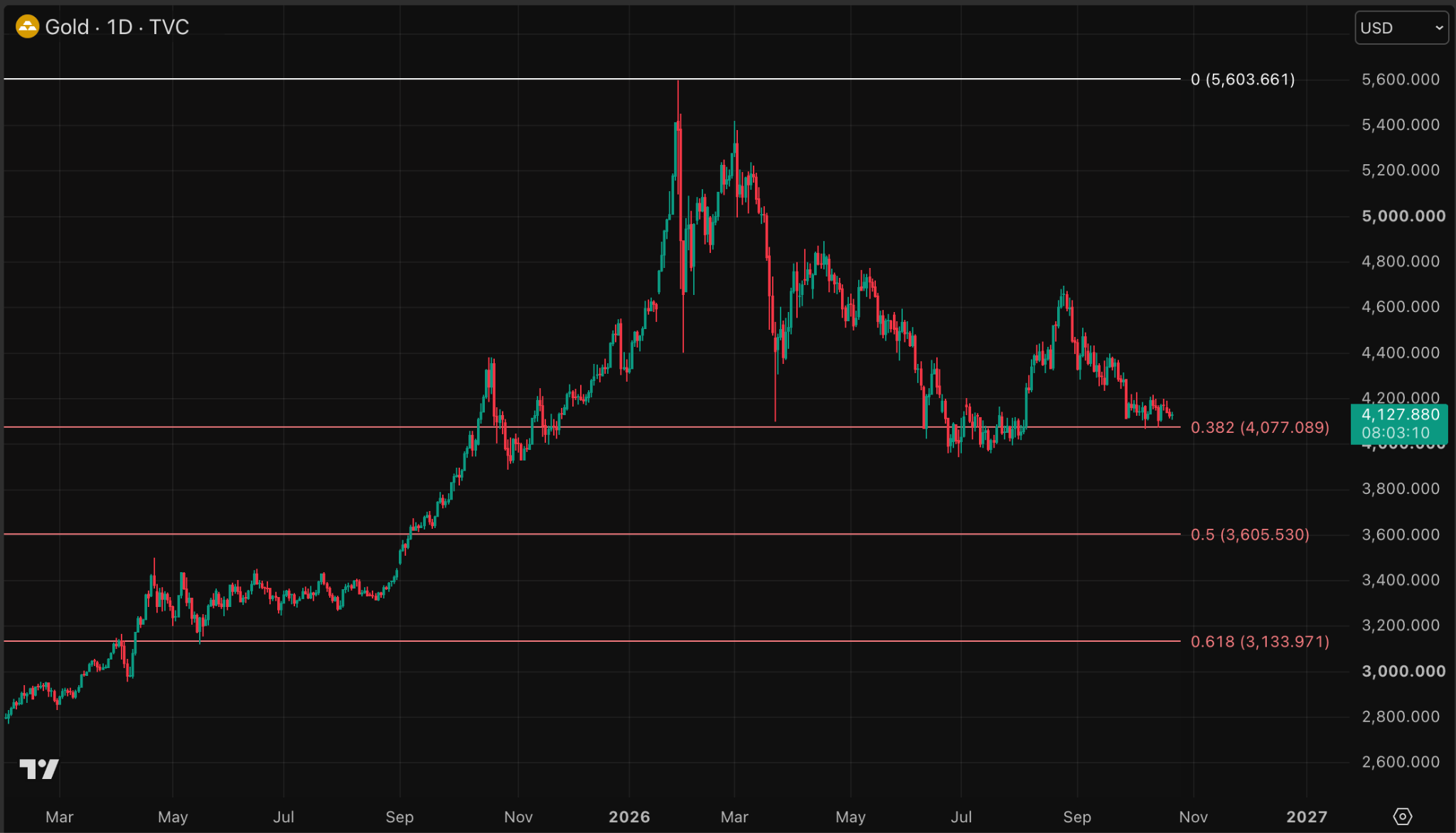
Investors use levels like these to gauge where a price decline might come to a halt. For now, that appears to be happening around $4,100. As long as gold stays above this level, that is a positive signal from a technical point of view.
However, that is no guarantee that gold will stay above this level. Unfortunately, there is no such thing as certainty in the financial world. That said, it is a positive sign that gold has repeatedly found support at this level.
It shows that at these prices, many investors once again see gold as an attractive long-term investment.
In theory, an escalation of the interest rate crisis in France could cause a liquidity crisis within the traditional financial system. That could be a scenario in which the gold price takes another step down from here, for example towards the 0.5 Fibonacci level around $3,600.
However, that would also be a scenario in which the European Central Bank would probably step in immediately with support measures. The same applies to a recession resulting from a potential stall in the AI investment cycle. In that case too, it probably would not take long for central banks to intervene, although in the short term this would also hit gold.
In times of crisis, everything is often sold. Anything to be able to pay the bills. Only after that do gold and silver start to perform again.
That does not have to happen now. It is quite possible that gold will start a new bull market from here. We outline these scenarios mainly to show everything you need to take into account as a long-term investor.
That way, you won't be caught off guard if the markets move in the other direction for a while. That can happen too. But historically, those are precisely the moments when the best returns can be achieved.
Although the gold price is under pressure, fundamental and technical developments are already laying the foundation for the next big rise. The key is to keep your emotions in check.

Thom Derks writes for GoldRepublic on gold, macro-economics and geopolitics. He studied Law in Leiden and Economics in Amsterdam. His personal fascination with scarcity and store of value through both bitcoin and gold brought him into the world of financial journalism. Through his own newsletter De Geldpers on Substack, he reaches over 5,800 subscribers with analyses on markets, geopolitics and the monetary system.