

US inflation briefly rattles gold and silver
Gold and silver took a knock yesterday from the latest US inflation report, which broadly came in higher than expected. The main culprit was the energy component, with rising energy prices now also feeding through to other parts of the economy.
Core inflation (Core CPI), which excludes food and energy prices, came in at +0.33% in September. That is around 0.1 percentage point higher than most forecasters had expected. The annualised three-month average rose from 2% in August to 3.4% in September.
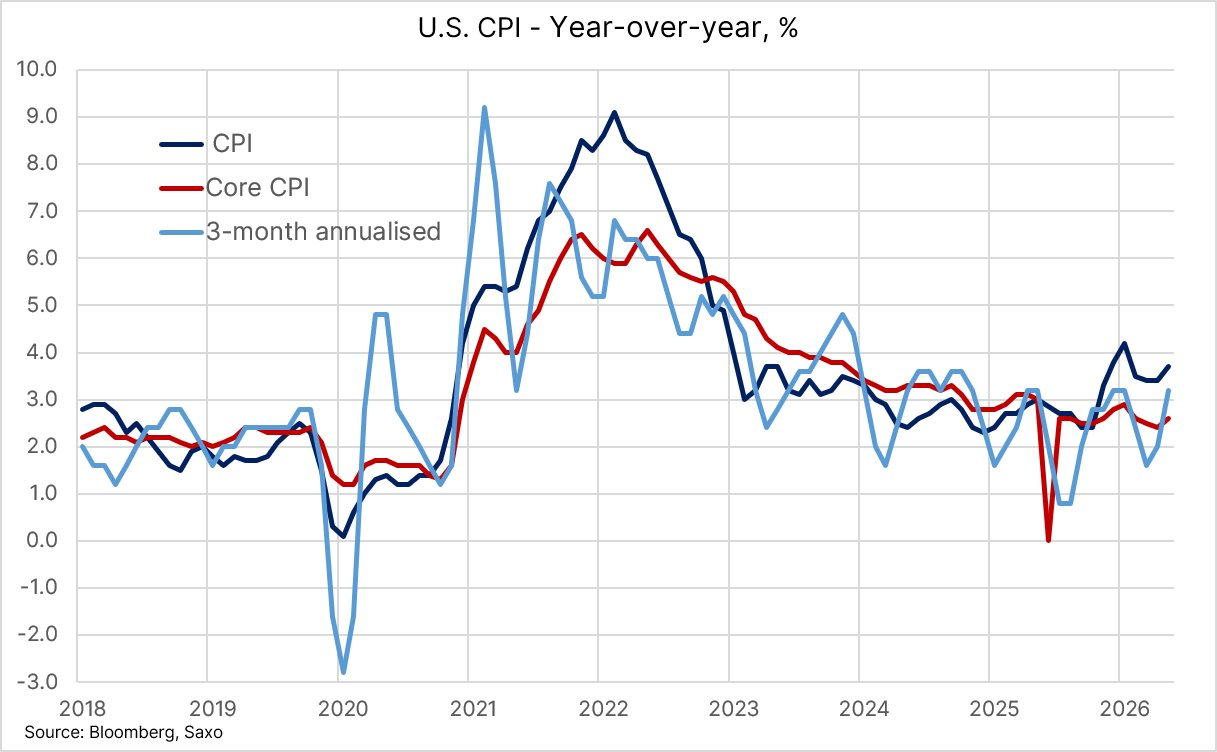
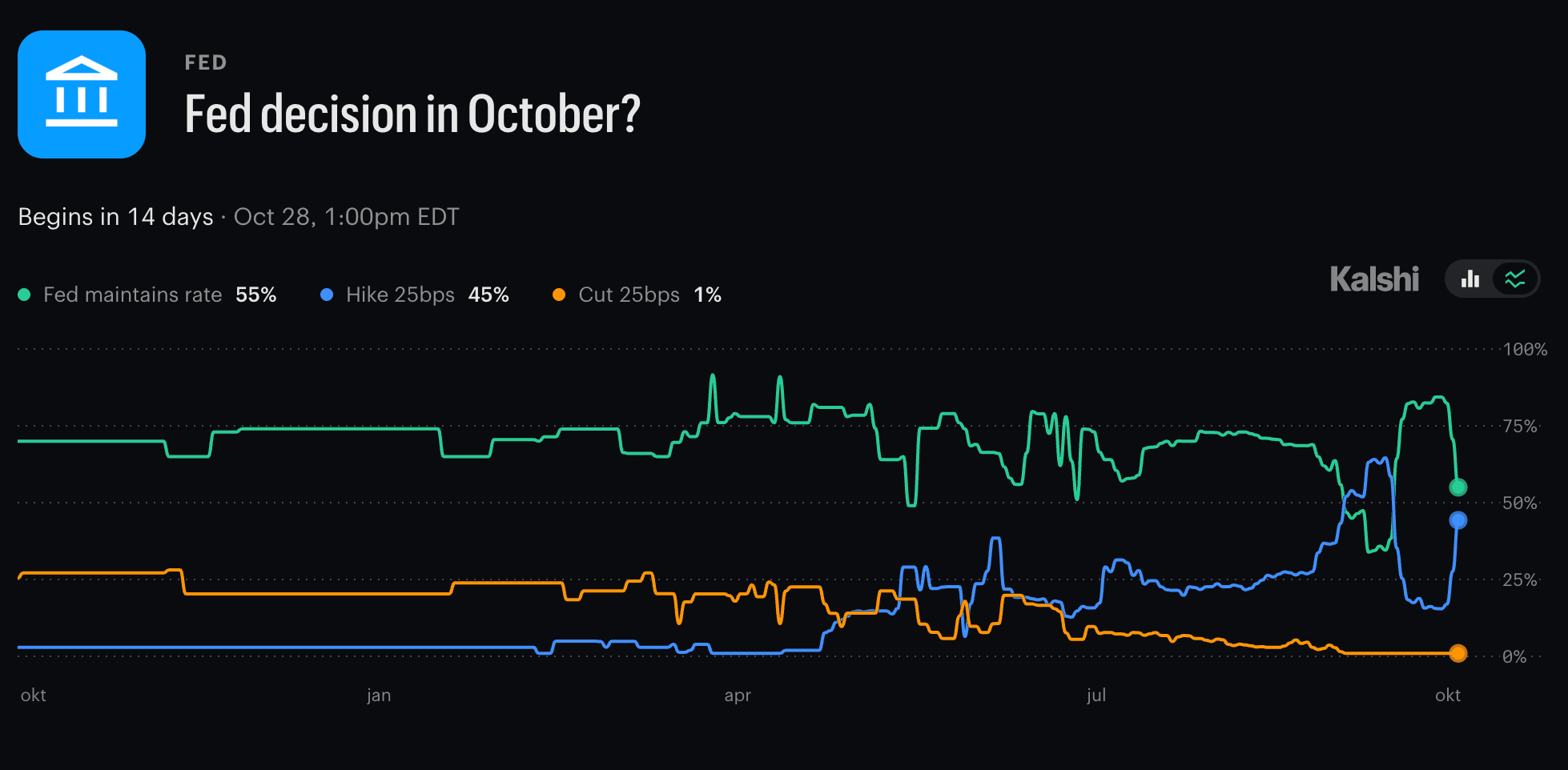
Within minutes, the probability of a rate hike by the US central bank on 28 October jumped from 17 to 45 per cent.
Dat niet alleen, want ook de rentes op Amerikaanse staatsobligaties begonnen in rap tempo te klimmen. Goud kwam onder de 4.100 dollar per ounce te handelen, terwijl de Amerikaanse dollar (DXY) profiteerde van de stijgende rentes.
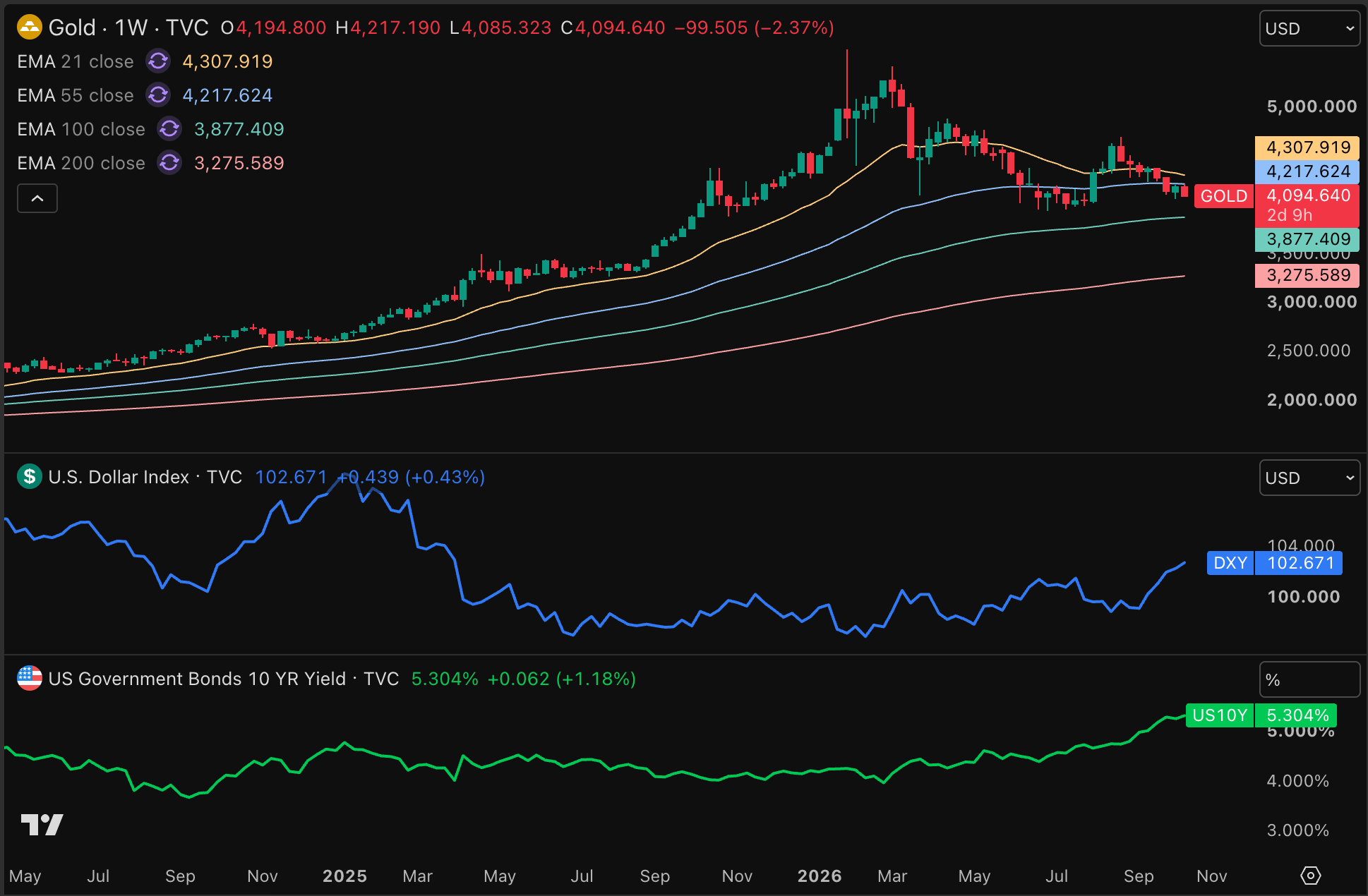
Since then, the situation has almost completely reversed. The probability of a rate hike has fallen back to just 30 per cent, the US dollar has retreated, the US 10-year yield has dropped below its pre-report level, and the gold price has recovered.
This is likely down to another development. There is currently a mild degree of panic in the AI world, after model developer Anthropic released disappointing figures in the run-up to its stock market listing next month.
Although revenue still grew by more than 50 per cent compared with the previous quarter, this is a disappointment. From the first to the second quarter, Anthropic's revenue had jumped by more than 140 per cent.
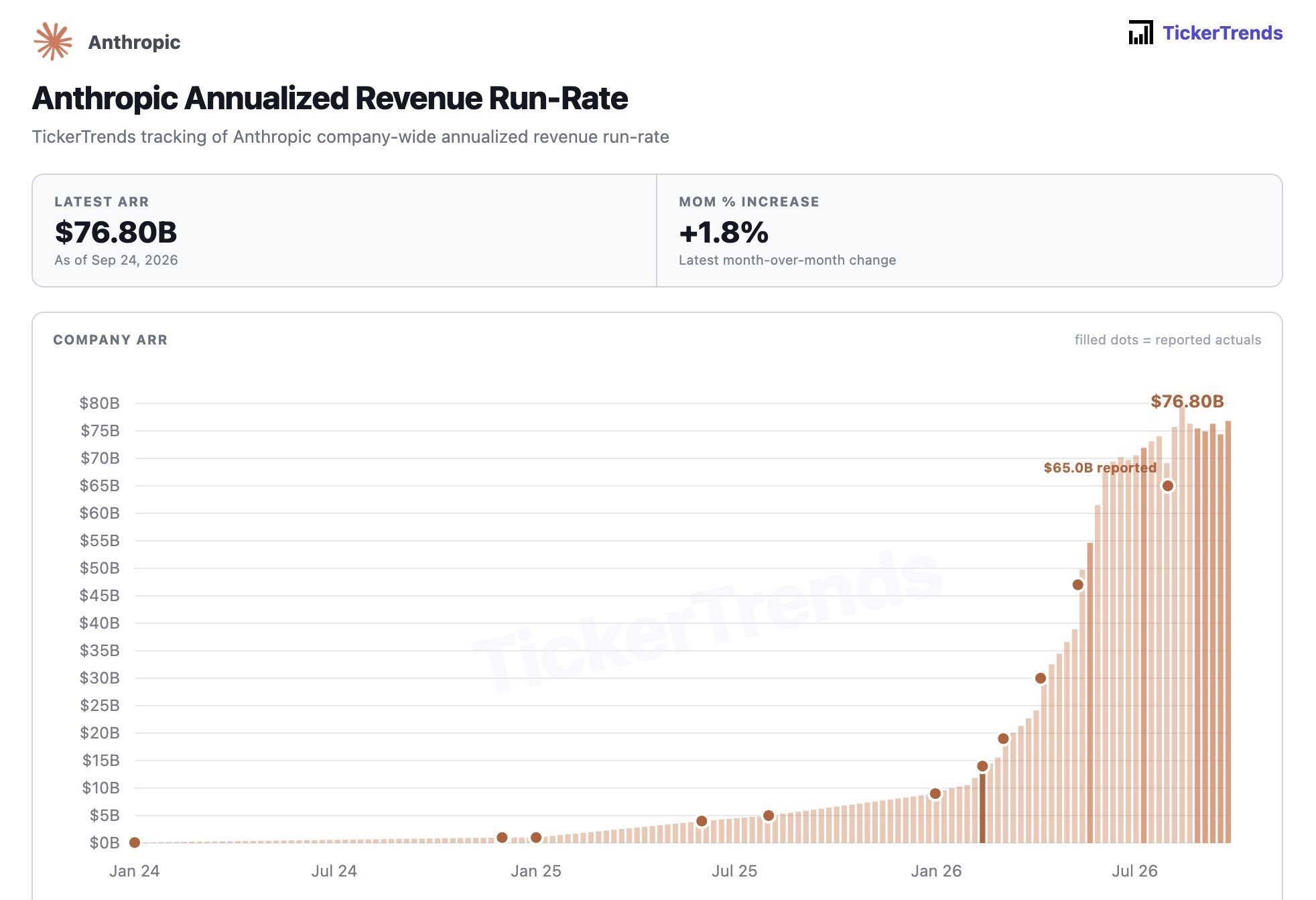
Following this revelation by the Financial Times, the sell-off in the AI sector has gathered pace. The US Nasdaq 100 fell almost 2 per cent yesterday, and futures opened in the red again this morning. In South Korea, the declines are much steeper.
South Korea's Kospi index fell 8 per cent, while major names such as SK Hynix and Samsung Electronics lost more than 10 per cent.
As a result, bond yields are falling sharply today. The US 10-year yield has even dropped below its level before the inflation report. Apparently, investors are attaching more weight to concerns about the AI cycle than to yesterday's hot inflation figures.
Interestingly, gold has since recovered to roughly its pre-report level. The same cannot be said for silver. Besides being a monetary metal, silver is also an economic metal.
Among other things, it benefits from the AI revolution because it is the best conductor of electricity and heat. That is why silver is found in chips, electric cars, solar panels and many other applications.
The fact that gold recovered while silver did not is therefore further confirmation that today's market turmoil is linked to concerns about AI.
It will now be interesting to see how this situation develops. Earnings season could be one of the deciding factors. Over the coming weeks, the AI giants will present their figures for the third quarter of 2026 one by one.
In any case, we appear to have reached a point where investors are seriously doubting the AI revolution again. In theory, gold could benefit from this, especially if the enormous AI investments come to a halt.
That would produce several effects at once:
- Lower bond yields, because a major source of demand for capital would disappear.
- Lower bond yields, because it would slow economic growth.
- A greater chance of swift central bank intervention to support the economy and the AI sector, should that prove necessary.
Each of these developments would, in theory, support the gold price, at least in the longer term. In the short term, volatility and stress can of course trigger a different reaction. For example, a flight to US dollars, since that is ultimately the currency in which much of the world has to pay its bills.
But in the long run, investors will always choose real scarcity. Especially when governments and central banks have to come to the economy's rescue again with support measures.
US consumer price inflation (CPI) came in hotter than expected on several key measures. Initially, this pushed bond yields higher, lifted the US dollar, raised the odds of a rate hike and sent gold and silver lower.

Thom Derks writes for GoldRepublic on gold, macro-economics and geopolitics. He studied Law in Leiden and Economics in Amsterdam. His personal fascination with scarcity and store of value through both bitcoin and gold brought him into the world of financial journalism. Through his own newsletter De Geldpers on Substack, he reaches over 5,800 subscribers with analyses on markets, geopolitics and the monetary system.