

Gold, silver and platinum rise: fears over government debt return
The precious metals complex is slowly building momentum. This week, for example, we saw the gold price climb above $4,400 an ounce for the first time in a long while. Over the past month, gold returned more than 8.10 percent, while the silver price and platinum price did even better, with gains of 13.01 percent and 11.25 percent respectively.
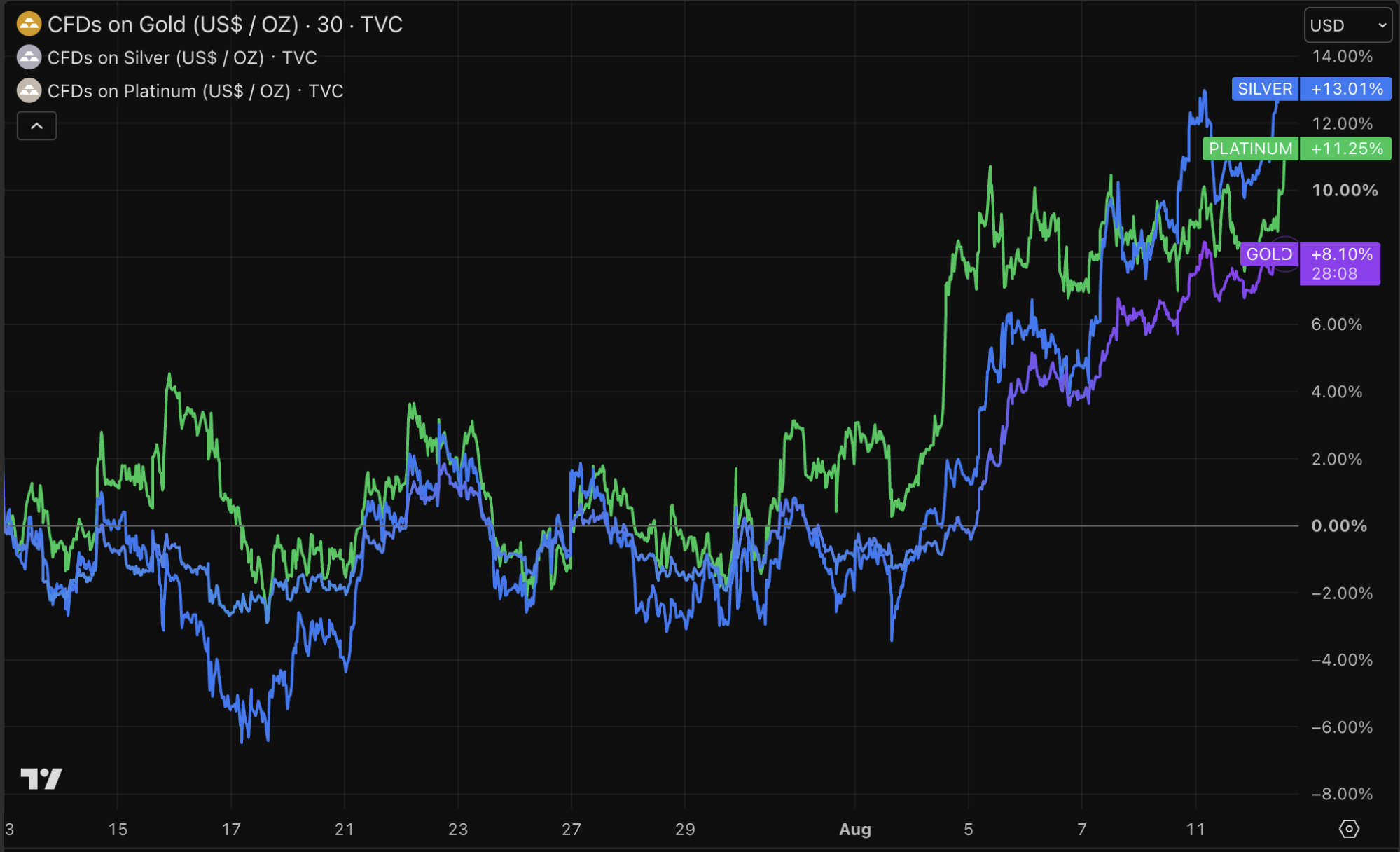
In recent editions of the newsletter, we discussed the favorable technical picture for gold, silver and platinum on several occasions. After the enormous bull market that peaked in January 2026, a period of sharp price declines began. For some time now, the charts have been signaling that the market was becoming oversold.
At the same time, the gold price stopped falling on bad news, such as rising oil prices, inflation expectations and bond yields. That combination of factors painted a favorable picture for gold and other precious metals.
The American debt trap returns to the agenda
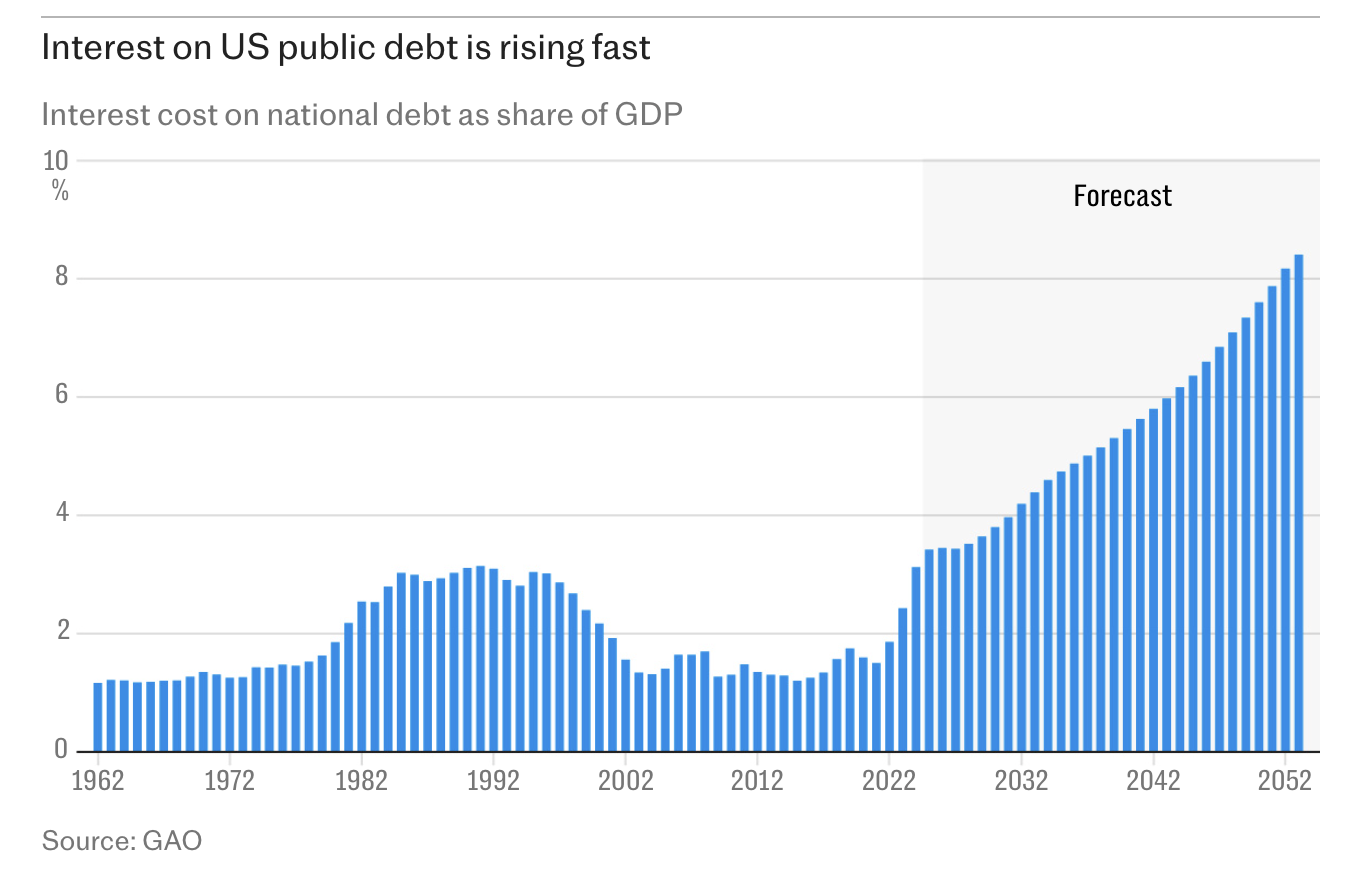
There is probably another theme at play as well, namely the government debt of the United States. That problem has been pushed somewhat into the background on financial markets in recent months, because virtually all attention went to artificial intelligence.
By now, however, we're seeing more and more serious parties publishing on this subject. This week, for instance, a fairly dark piece in The Telegraph appeared on the topic, in which major names from the financial world set out well-founded doubts about the sustainability of US government debt.
"A dangerous belief is creeping into markets that the United States is now so deep into a self-reinforcing debt trap that it no longer dares raise interest rates to bring inflation under control," is how the piece in The Telegraph begins.
The US Treasury has become heavily dependent on short-term financing via hedge funds. Many of these parties draw money from the enormous US money market of $8.3 trillion, with some funds operating at leverage of up to 100 times their own equity.
At the same time, the share of more stable buyers, such as foreign central banks and sovereign wealth funds, continues to decline.
According to Steven Blitz, chief US economist at TS Lombard, this means the Federal Reserve cannot raise rates aggressively without risking a chain reaction. Financing costs, in his view, could then "explode".
"A rate rise these days hits the funding costs of almost 25 percent of US government debt almost immediately, precisely in the part of the market where issuance is growing fastest," says Blitz.
On top of that, the US Treasury has to refinance roughly $6 trillion of existing debt every three months, in a market that is becoming increasingly critical.
In addition, Washington has to issue around $2 trillion of new debt annually to finance the largest structural budget deficit in American peacetime history.
Total financing needs are also rising rapidly. In 2010, the US government's annual gross financing requirement still amounted to 26 percent of gross domestic product.
According to the International Monetary Fund, this percentage rises to 45 percent this year. If policy remains unchanged, it could even head towards 60 percent in the early 2030s. For rating agencies and bond investors, this is an important warning indicator.
No great power in history has been able to survive such financing needs for long.
Emergency measures with the Japanese yen expose the pressure
That there is concern within the US government about this problem also became clear during the joint intervention with Japan to support the yen.
The Japanese yen has weakened sharply against the US dollar recently. That poses a danger for the US, among other reasons because Japan holds more than $1 trillion in US government bonds. In theory, it could dump these in order to buy Japanese yen and support its own currency.
That, however, would result in even higher bond yields in the American market. For that reason, the US also has an interest in the Japanese yen stabilizing. To that end, a construction was devised in which Japan could pledge its US government bonds with the Federal Reserve in exchange for dollars, so that it wouldn't have to dump them on the market.
The US Treasury also did its bit by selling euros for Japanese yen. The most remarkable part was that the US carried out that action without first informing the European Central Bank (ECB). According to The Telegraph, that points to a degree of desperation within the American government.
A fundamental narrative for precious metals returns
The main point is that US government debt appears to be becoming a theme in investors' minds again. Particularly due to rising interest rates and the realization that the American government will then also have to pay those higher rates on its national debt.
The hope is that artificial intelligence will bring about such a production revolution that everything becomes cheaper and inflation is no longer a problem in the future. For now, however, that still seems a long way off, and the enormous wave of investment — think of the construction of data centers — is mainly creating additional demand for commodities, and therefore inflation.
As a result, a powerful fundamental narrative is cautiously starting to take shape again for gold, silver and platinum. In the run-up to the November midterm elections in the United States, this could attract even more attention, since it's appealing for the Democrats to highlight this during their election campaigns.
Very slowly, the contours of a bull market for precious metals are thus emerging again. Meanwhile, the biggest threat lies in rising bond yields, which have climbed sharply because of the enormous AI investments and the Iran war. The 30-year yield, for example, is at its highest level since 2007.
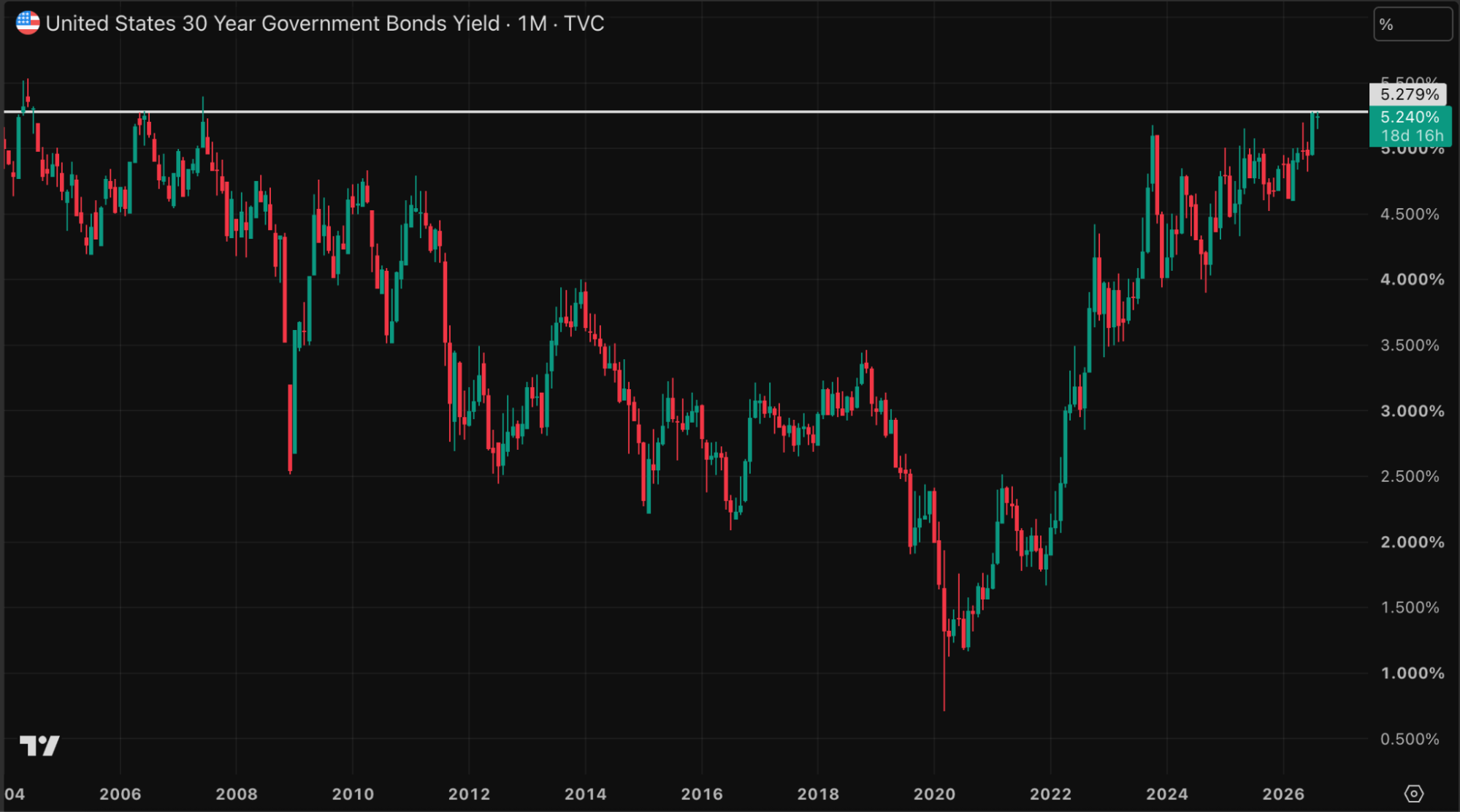
For gold and silver, it would therefore be a positive development if the war in Iran came to a swift end. For now, however, that doesn't appear to be the case.
Gold, silver and platinum are rising as concerns over US government debt return. Discover why this forms a fundamental narrative for precious metals.

Thom Derks writes for GoldRepublic on gold, macro-economics and geopolitics. He studied Law in Leiden and Economics in Amsterdam. His personal fascination with scarcity and store of value through both bitcoin and gold brought him into the world of financial journalism. Through his own newsletter De Geldpers on Substack, he reaches over 5,800 subscribers with analyses on markets, geopolitics and the monetary system.