

Gold falls, but central banks get stressed
- Gold and silver fall: the gold price fell 0.96 percent last week, while the silver price gave up 1.81 percent.
- Bond stress is rising: bond yields keep climbing. The US 10-year yield rises to 5.30 percent, the highest level in 24 years. French and European yields are also rising sharply. This global phenomenon is creating ever more uncertainty.
- Central banks keep buying gold: despite the pressure from rates, central banks remain important buyers of gold. China's central bank expanded its gold reserves for the 23rd month in a row in September.
- Hedge funds sell gold: CFTC data shows that speculative hedge funds reduced their net long position in gold by around 2.7 million ounces in September. That is also putting downward pressure on the gold price at the moment.
- Gold demand via ETFs remains strong: on the other hand, demand for gold from ETFs remains strong despite the macroeconomic headwinds. Long-term investors are keeping their faith in the precious metal.
We can see that last point in the chart below. While the real yield on 10-year US government bonds rose to its highest level in 18 years, ETF gold holdings kept growing. Note: the inflation-adjusted 10-year yield is inverted in this chart. A decline therefore means the real yield actually rose.
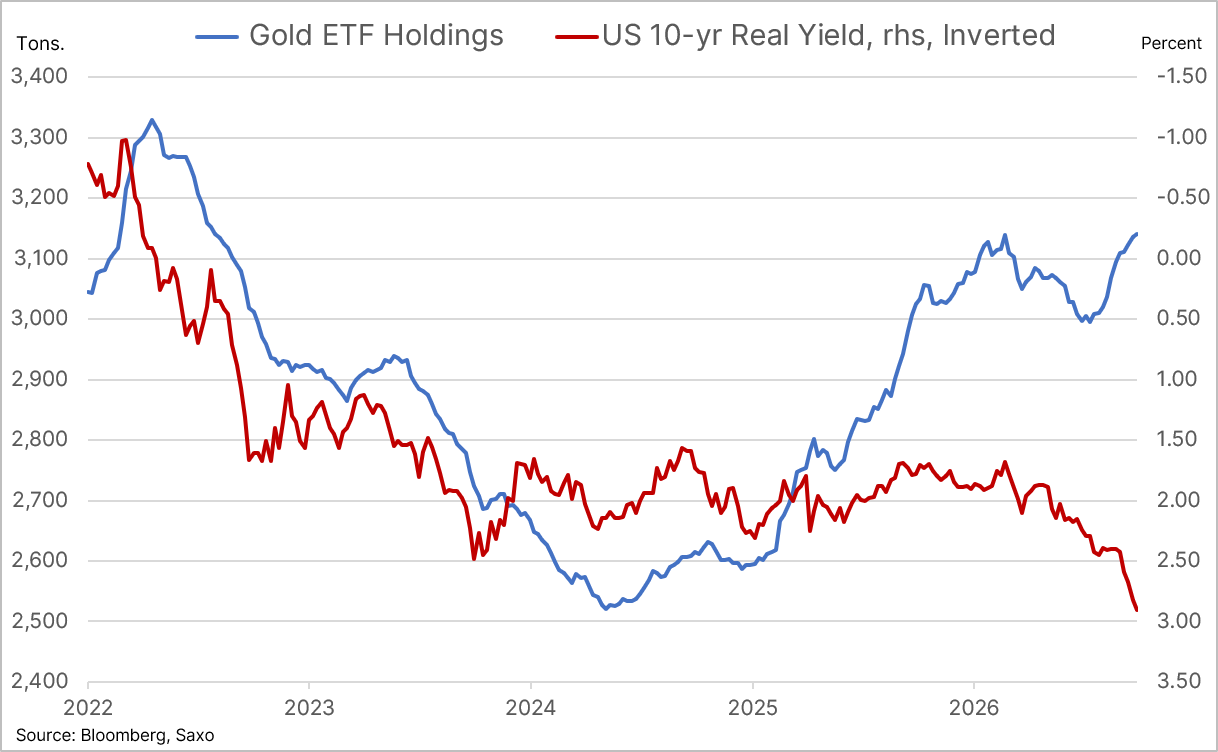
Demand via gold ETFs therefore keeps rising, even though the real yield has climbed toward 3 percent. That suggests a growing group of investors no longer sees high rates merely as competition for gold, but also as a risk in themselves.
Short-term volatility versus the structural trend
That makes it important to distinguish between short-term moves in gold and the structural trend underneath. In the short term, oil prices, inflation expectations, the dollar, and expectations about Fed policy will continue to cause considerable volatility. Higher rates can therefore put gold under temporary pressure.
But those moves increasingly seem to be taking place within a bigger story. Precisely because rates stay so high, concerns about budget deficits, government debt, and governments' ever-rising interest burdens are growing too. That increases the chance that investors see gold not only as protection against inflation, but also against fiscal derailment and future monetary debasement by central banks.
You could say that the macroeconomic developments, the worldwide rise in rates, and the stress in bond markets explain the short-term volatility in the gold price.
Yet these look more like cyclical moves within a larger structural trend.
That is in any case how investors who keep buying gold through ETFs interpret it. We see exactly the same among our customers at GoldRepublic.
Stress in the French bond market
And that's not unwarranted, as the headline below, which appeared in the Financial Times this week, shows.
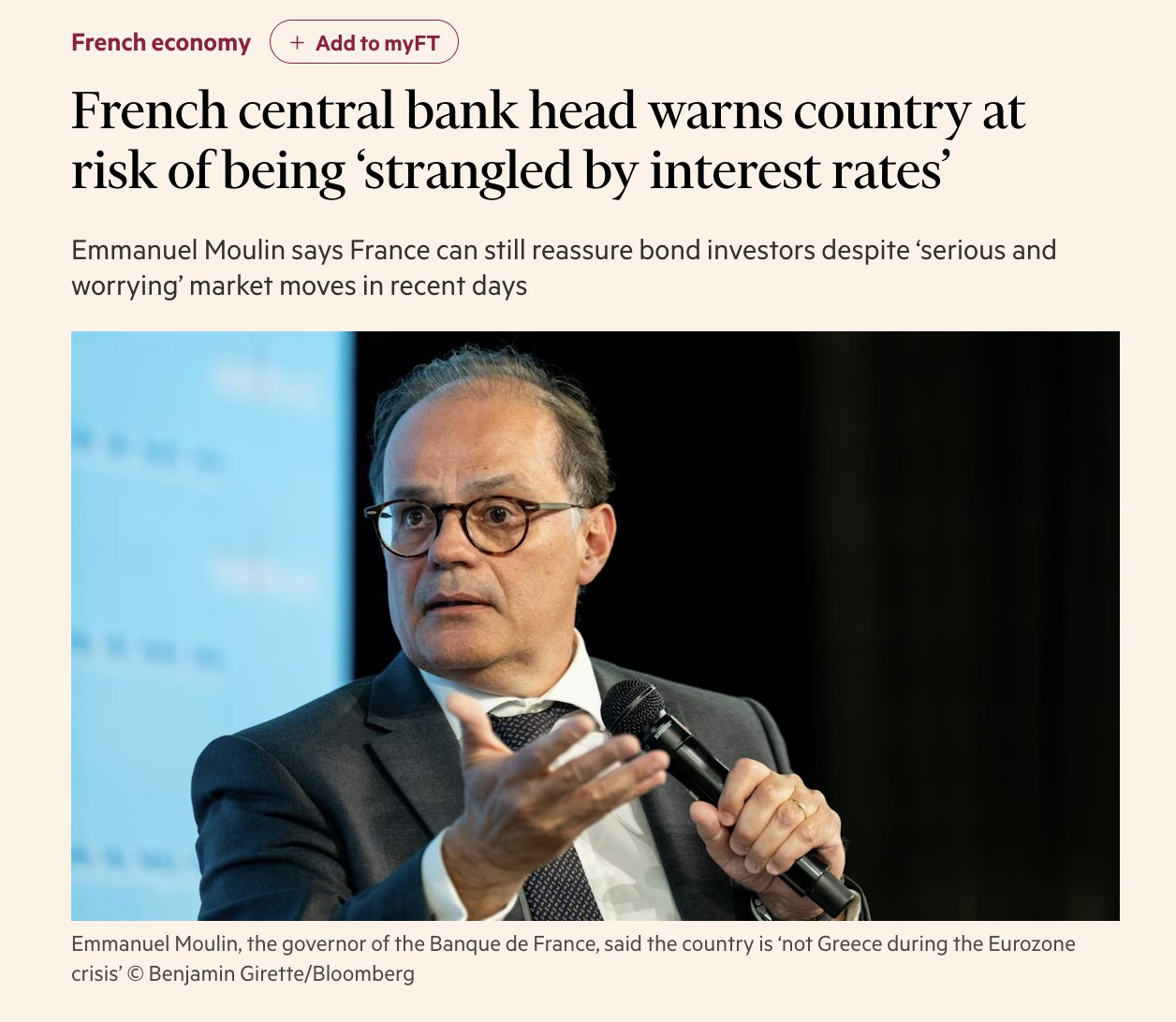
The head of the French central bank is starting to openly worry about the rate situation in his bond market. That's not unwarranted, because the gap between French and German 10-year yields has reached its highest level since the dotcom bubble of 2000.
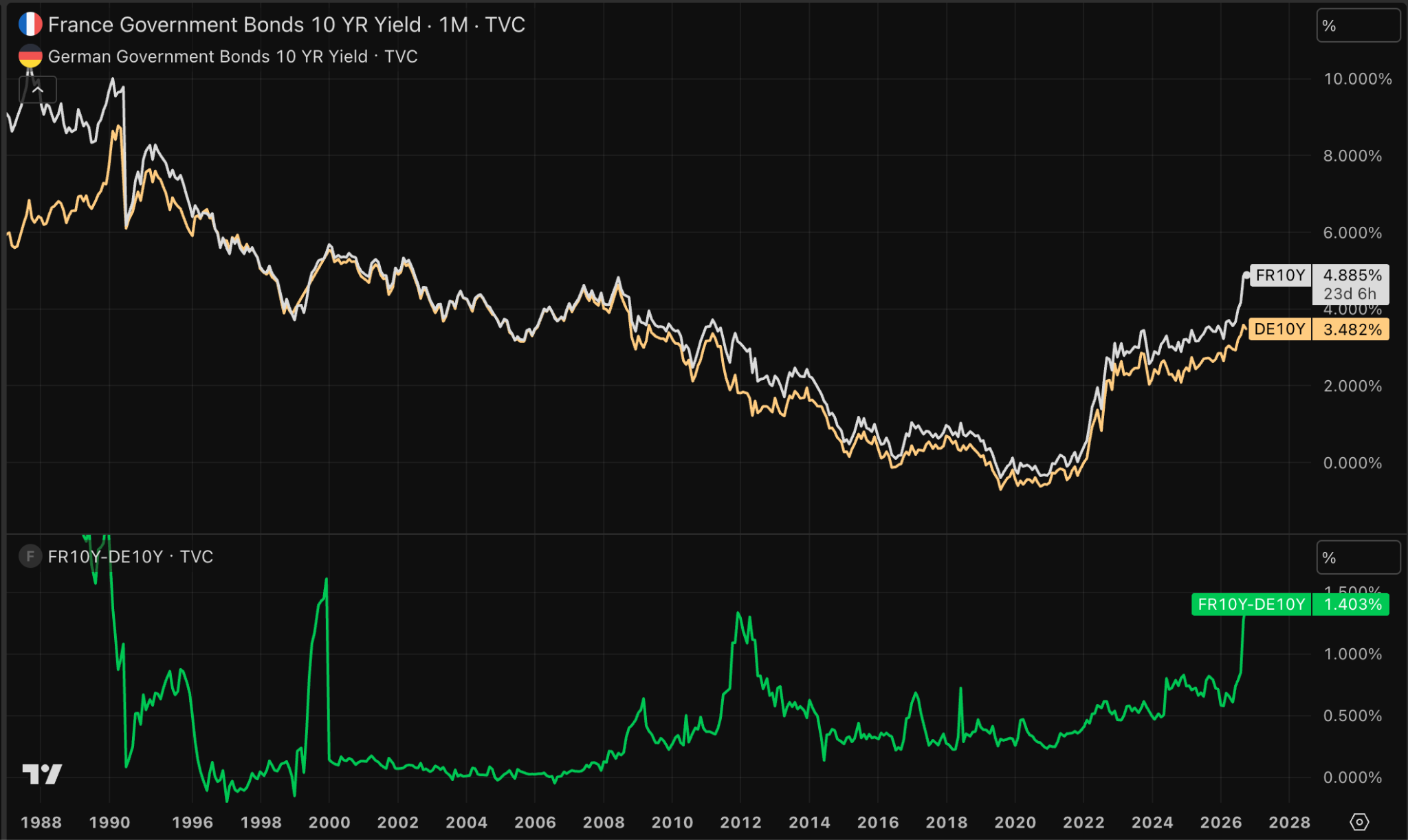
The top of the chart shows the nominal yields on French 10-year and German 10-year bonds. The bottom panel shows the difference between the two. That difference is now larger than during the 2012 eurozone crisis and approaches the level this spread reached during the dotcom bubble of 2000.
In the short term, that creates headwinds for gold and silver. It puts pressure on the world economy. There is a shortage of capital. There is more demand than supply of capital, and that is why rates are rising.
But don't forget to distinguish between the short and long term. In the short term, this puts downward pressure on the gold price. Meanwhile, it makes the long-term case for gold stronger, partly because it makes the problem of government debt bigger.
That is what investors are anticipating, those who keep buying gold despite rising real yields, through ETFs and GoldRepublic.
Bond yields keep climbing to record highs, central banks worldwide are feeling the stress, and gold and silver are falling. Yet investors and central banks keep buying gold.

Thom Derks writes for GoldRepublic on gold, macro-economics and geopolitics. He studied Law in Leiden and Economics in Amsterdam. His personal fascination with scarcity and store of value through both bitcoin and gold brought him into the world of financial journalism. Through his own newsletter De Geldpers on Substack, he reaches over 5,800 subscribers with analyses on markets, geopolitics and the monetary system.