

Market Update
Dear reader, welcome to the latest GoldRepublic newsletter! In just five minutes, we’ll bring you fully up to date with the current precious metal prices and the most relevant news affecting your precious metal investments. Don’t miss these valuable insights!
1. Energy prices keep driving inflation
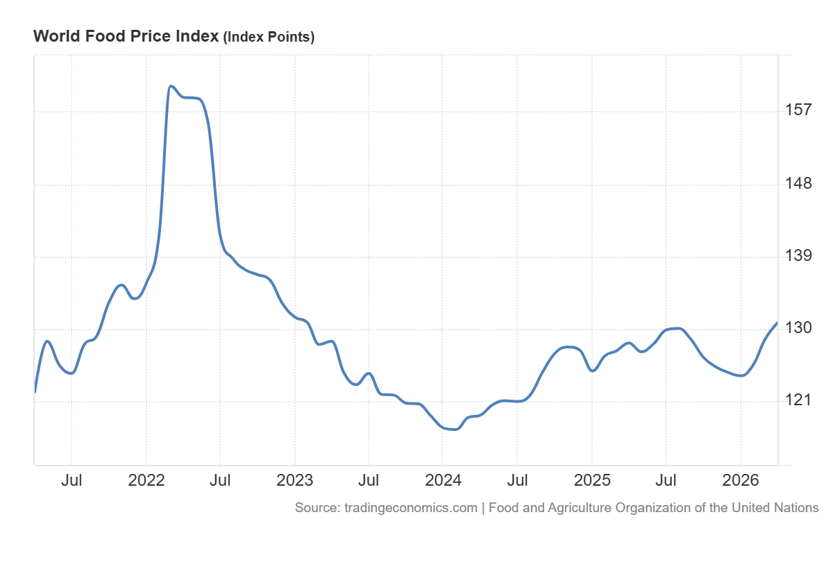
Concerns about inflation are rising rapidly again worldwide. An end to the conflict in the Middle East does not appear to be in sight for now, keeping oil and gas prices elevated. Concerns are also emerging about higher food prices, partly due to rising fertiliser and transport costs.
Central banks are increasingly warning that interest rate hikes may be necessary again if the situation does not improve quickly. This is notable, as central banks can actually do little against inflation that is primarily driven by war, energy and geopolitical tensions.
Eurozone inflation rose further in April, from 2.6% to 3.0%. Transport costs and energy bills were the main drivers. Higher petrol prices are therefore becoming increasingly visible throughout the economy.
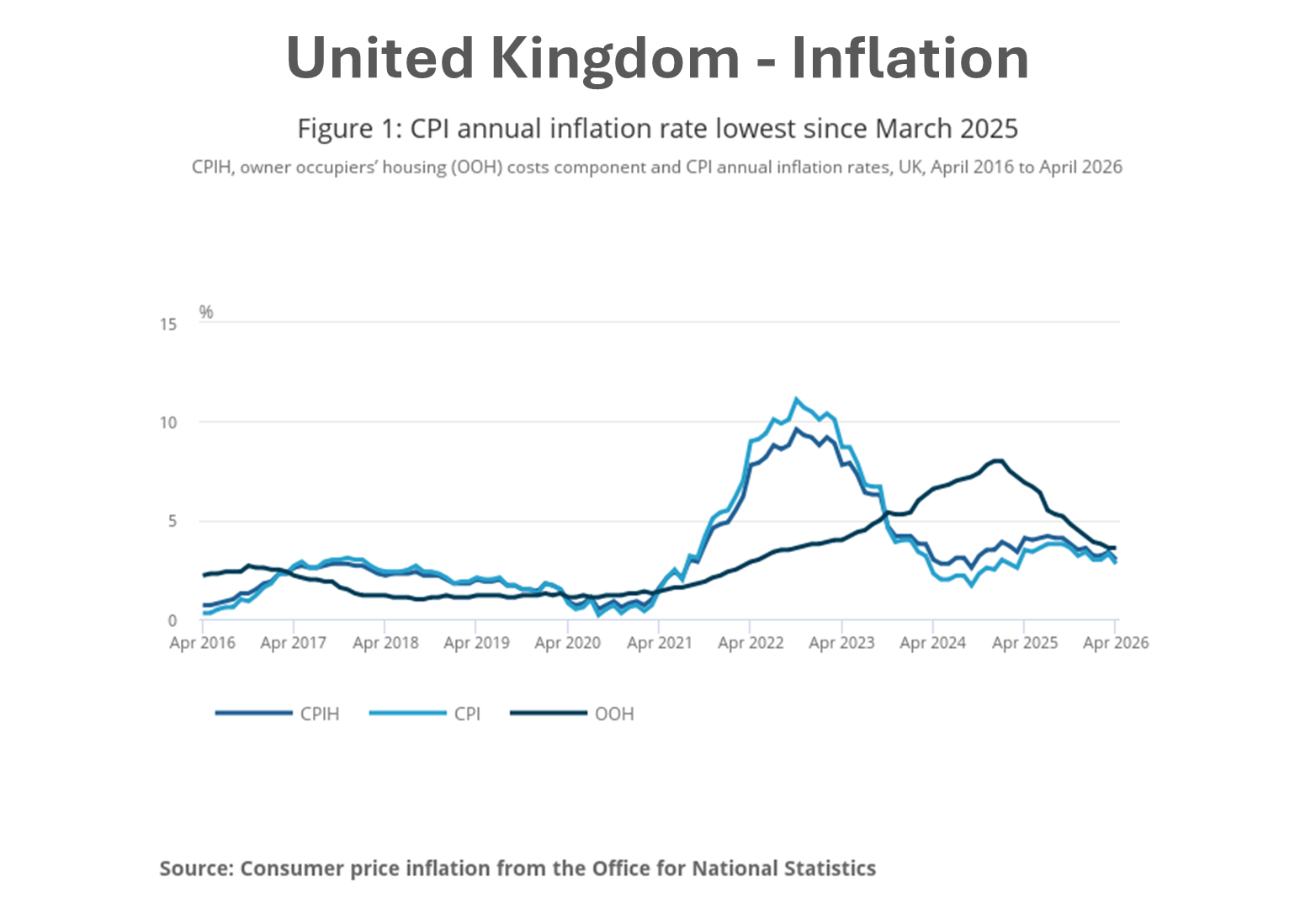
In the United Kingdom, inflation fell surprisingly sharply. Consumer price inflation came in at 2.8% in April, down from 3.3% the previous month. Services inflation also dropped to its lowest level since early 2022.
Yet that picture appears more favourable than it actually is. The decline was largely due to temporary effects and government measures to push down energy bills. Due to the British system of energy price caps, higher energy prices also feed through with a delay.
From July onwards, a significant rise in energy bills is therefore already looming. The Bank of England also expects inflation to pick up again later this year.
2. Interest rates surge worldwide
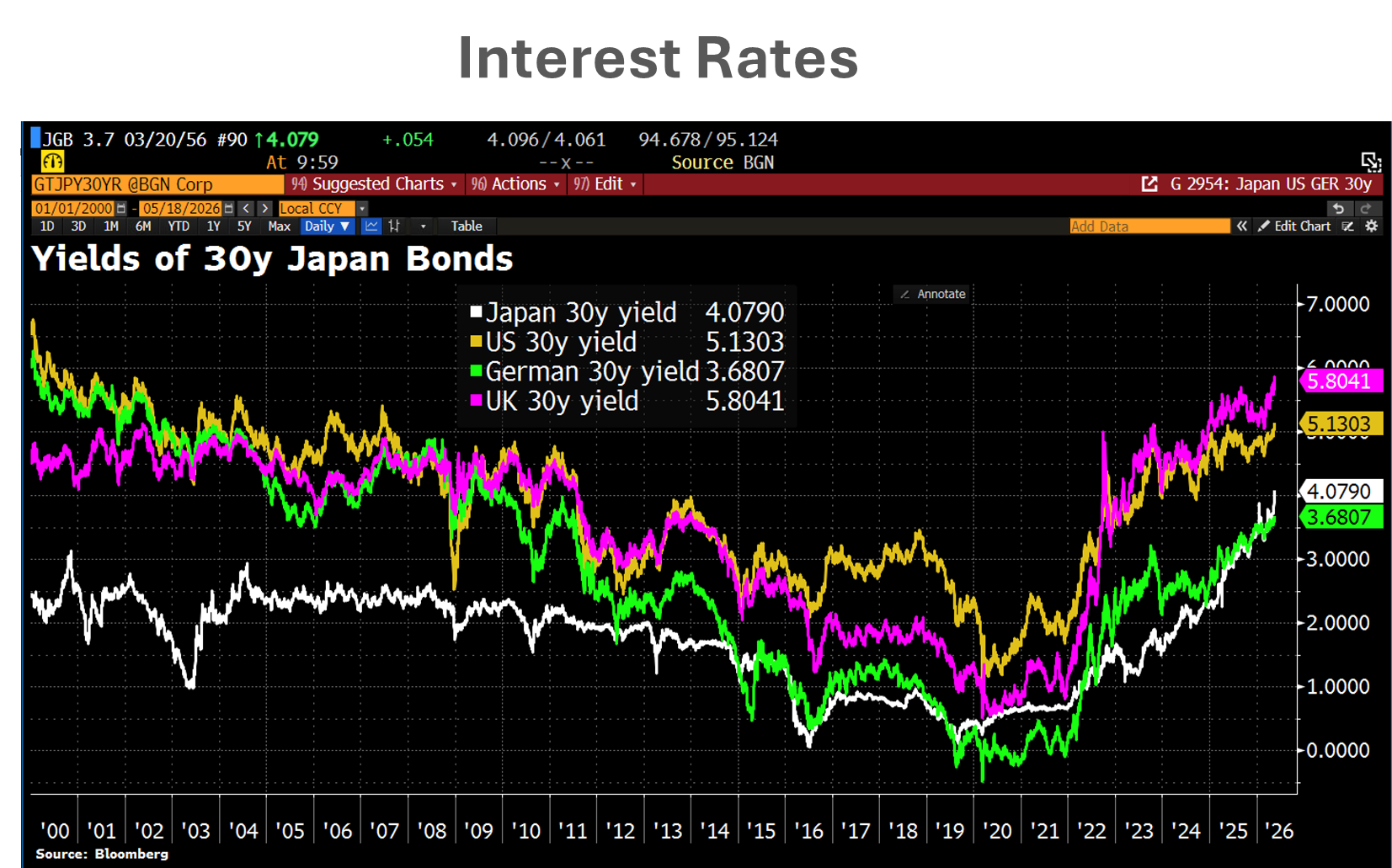
Bond markets meanwhile remain under severe pressure. Long-term interest rates are rising sharply across the globe, driven by the combination of higher energy prices, rising inflation expectations and concerns about government deficits.
The US 30-year yield is now moving towards levels not seen since 2007. Some major investment banks are even warning of rates above 5.5%.
Notably, a growing number of large investors are becoming less enthusiastic about government bonds. BlackRock now advises investors to reduce exposure to sovereign debt from developed countries and instead look more towards equities.
The idea that bonds automatically provide protection in turbulent times is therefore once again under pressure.
3. China calls for calm
China is meanwhile making a deliberate effort to play a diplomatic role. During talks with Vladimir Putin, President Xi Jinping stressed that a resumption of the war must be prevented at all costs.
According to Xi, a full ceasefire is necessary and negotiation remains the only realistic solution. This also illustrates how significant China's economic interests are. The country is heavily dependent on stable energy supplies from the region. At the same time, the situation remains extremely fragile.
4. Threat of fresh escalation remains high
Iran warned this week that new attacks by the US or Israel will no longer remain confined to the Middle East. This increases the threat of further escalation once again.
Trump meanwhile threatened fresh attacks if Iran does not make further concessions on its nuclear programme and the Strait of Hormuz. The rhetoric on both sides therefore remains hard, despite the earlier ceasefire. The risk of fresh unrest on energy and financial markets consequently remains significant.

5. NATO discusses intervention
Within NATO, open discussions are now taking place about a possible mission to escort shipping through the Strait of Hormuz should the blockade continue.
There is not yet full support for this, but the fact that this discussion is now being taken seriously underscores how important the situation has become for the global economy.
Roughly one fifth of all global oil and LNG shipments pass through this route. The longer the uncertainty continues, the greater the economic consequences threaten to become.
Macroscopic: Francis Hunt
Francis Hunt, also known as The Market Sniper, returns to explain why he believes silver could become the trade of this market cycle. In this episode, he shares why his ambitious $330 per ounce silver target remains intact and dives into what he calls the “Trump Trauma Triangle” the growing pressure between oil, bonds, and gold that is tightening financial markets.
He also discusses China’s aggressive silver accumulation, the closing “discount window” in precious metals, and why he sees the debt markets as a controlled demolition. In addition, the conversation explores Europe’s exit taxes, unrealized capital gains, and increasing pressure on private property. Francis also shares his view on gold, copper, and uranium, and explains what the future could hold for fiat currencies, the Federal Reserve, and markets as a whole.
Gold rises 4.27% YTD to $4,517/troy oz as inflation climbs and global interest rates surge. Read the GoldRepublic market update for May 26, 2026, and find out what this means for your investment.

Jeroen Blokland has over 20 years of experience as a professional investor and was formerly Head of Multi-Asset at Robeco, where he was responsible for a client portfolio of over five billion euros. After leaving Robeco he founded True Insights, an independent investment research platform, and has since built a following as a columnist, YouTuber and sought-after speaker. With over 100,000 followers on X, he is one of the most prominent voices in Dutch finance. For GoldRepublic he writes on macro-economics, markets and the role of gold in a diversified portfolio.