Table of contents

Stay informed about everything you need to know about investing


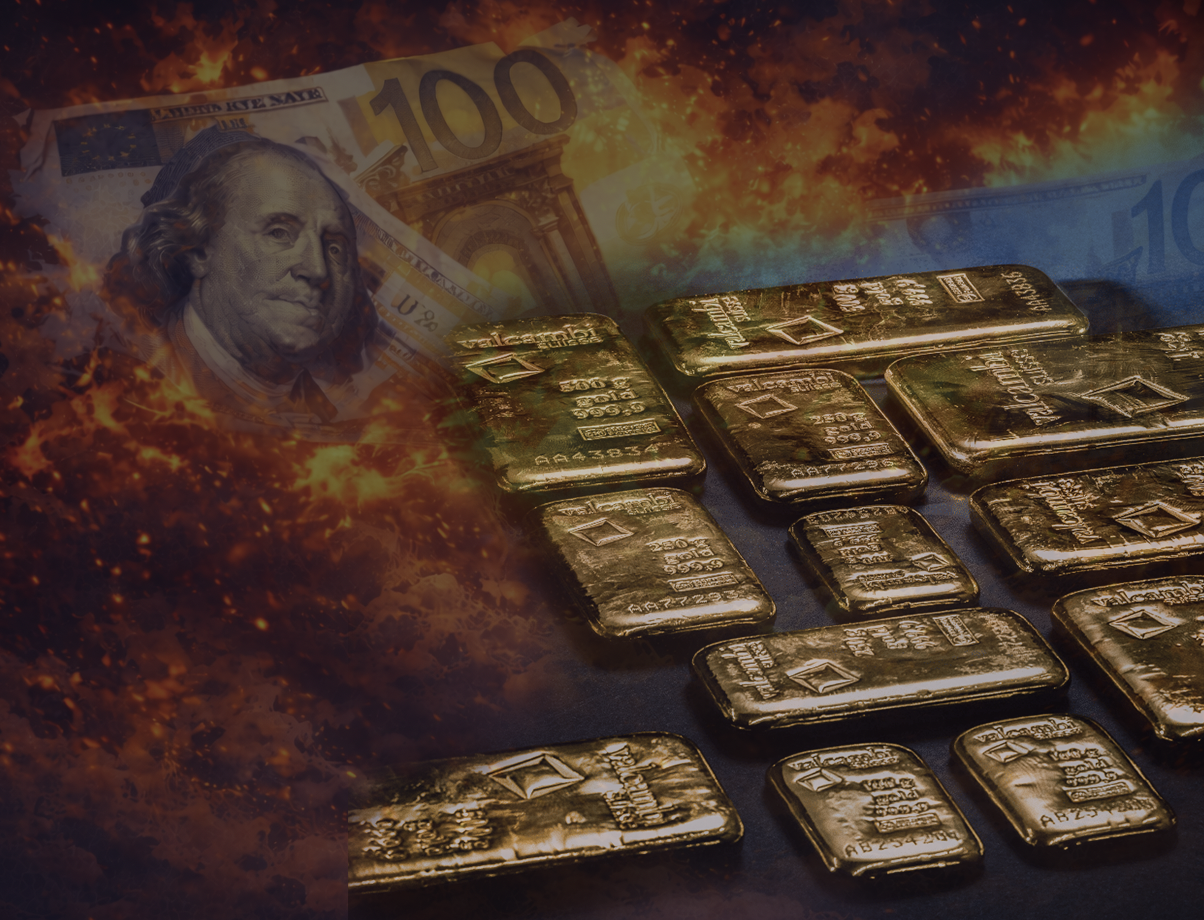
The gold price increased by an incredible 65 percent in 2025, and with an increase of more than 140 percent, silver even more impressive. These huge increases, in particular those in gold, appear to be the result of the so-called Decomposition Trade. That sounds very technical and exciting, but it's actually about the fear that money will become less valuable over time.
By “debasement” is meant eroding the value of money. This usually does not happen in one fell swoop, but gradually. Governments incur debts, central banks keep interest rates low or create extra money, and so the purchasing power of currencies decreases. You won't notice this directly in your bank account, but you'll notice it in rising prices and higher living costs.
Since the 2008 financial crisis, and again after the corona crisis, central banks such as the Federal Reserve have intervened massively to support economies. This policy has brought growth and stability, but also led to high debts and structurally loose monetary policy. That's exactly where the Debasement Trade comes in.
Investors who fear depreciation are looking for assets that cannot simply be “printed”. Gold is the classic example of this. The offer is growing slowly, it is globally recognized and has no counterparty risk: you are not dependent on a bank or government that must fulfill its promises.
When trust in paper money decreases, gold's appeal increases. This is often seen in periods of high debt, low real interest rates and geopolitical uncertainty. Also other precious metals, such as silver and platinum, they also benefit, although industrial applications sometimes also play a role.
Importantly, the Debasement Trade is not about quick profits. It is not a bet on a sudden crisis, but a form of protection. Investors accept that returns on savings and bonds can evaporate due to inflation, and therefore opt for tangible or scarce assets.
That feeling took off in 2025. For this reason, among other things, we saw the gold price rise by almost 65 percent and record new highs almost continuously. The rise and the narrative also co-operate. The huge increases are giving investors extra faith in the Debasement story and giving both the narrative and gold wings.
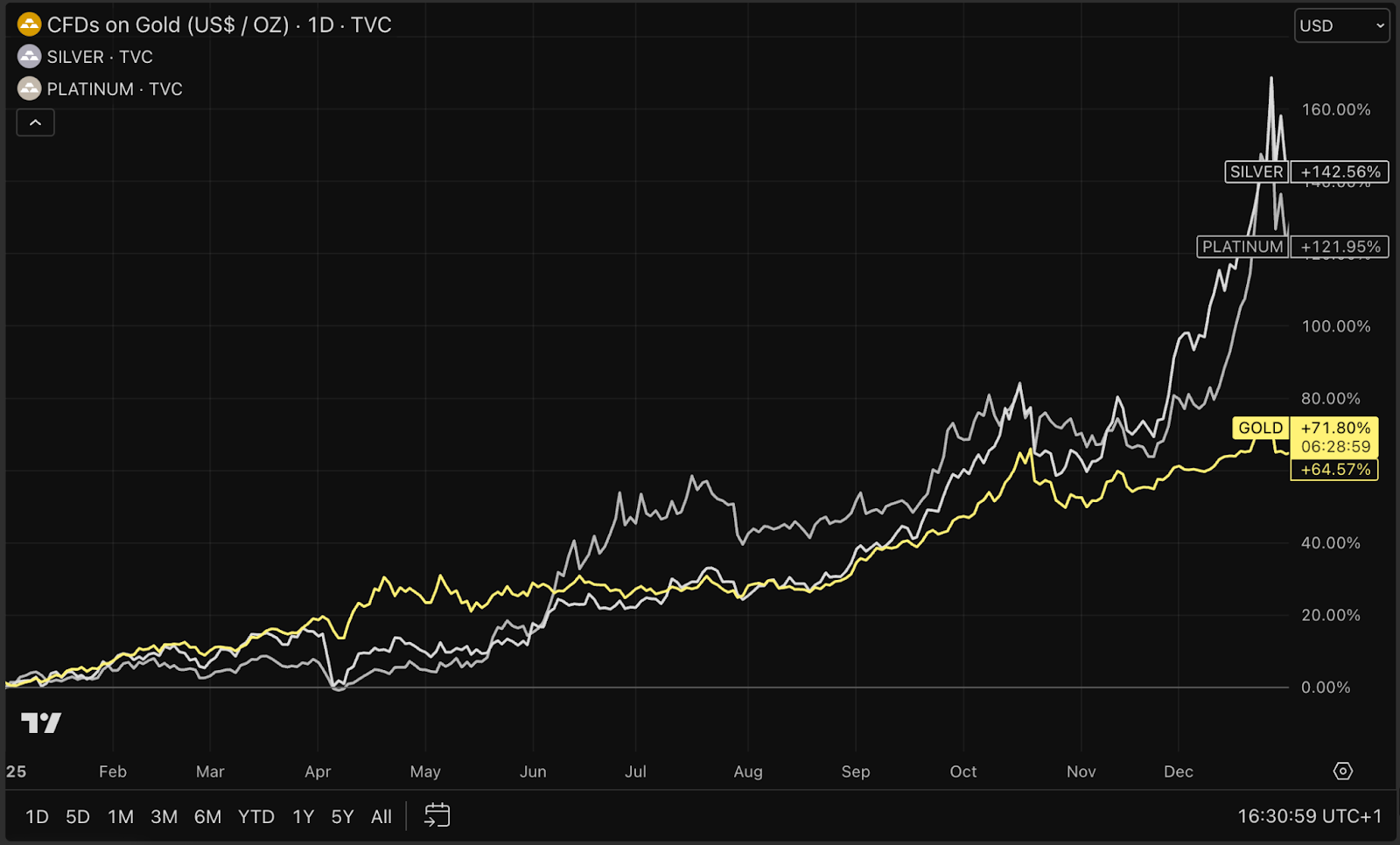
Although you can't say whether it's a good time to invest about any financial asset, gold has once again started the year on a strong note. Buy gold in 2026, despite last year's huge increases, still seems to be justified, because the fundamentals of that price explosion are still intact.
All in all, this provides a climate where more inflation or depreciation is the most likely outcome in the longer term. At a time when there are increasing doubts about the supremacy of the United States, and investors want to better distribute their capital around the world, gold remains an attractive stabilizer.
Over thousands of years, gold has proven to be a means of protection against inflation, but is also economically independent. Precious metals are not dependent on the future success of the US tech industry. If the center of gravity of the tech world were to shift to China, gold would essentially not be affected.
In this way, gold is also a stabilizer, and there is currently no reason to assume that gold will not pay off in the coming years.
Of course, the fact that the foundation for gold still looks solid does not mean that there are no dangers. For example, in recent months, we have seen a global increase in market interest rates. In particular, the interest rates on long-term variants of government bonds are currently rising.
Government bonds have traditionally been a kind of counterpart to gold and are seen as “risk-free” assets. The chance of the US government going bankrupt is practically zero, because they can, in principle, always use the money printer to repay the debts.
A rising interest rate on government bonds with a maturity of 10 years, for example, makes it relatively more attractive to park capital there than in gold. Higher interest rates also dampen credit creation, which in the debt-based financial system is practically equivalent to money creation.
Higher interest rates therefore dampen money creation, and currently investors can earn 4.163 percent on US 10-year loans risk-free. In theory, a rise in government bond yields means that other assets, which carry more risk, become less attractive to investors.
After all, why invest in gold and stocks when you can also beat inflation with a risk-free government loan? Until February 2022, we saw that relationship between government bond yields and gold prices last.
This relationship is reflected in the graph below. Note: The interest rate on US 10-year loans is shown inversely here. An increase in the red line therefore means a drop in interest rates (positive for gold), and vice versa. Until February 2022, we see that interest rate falls generally resulted in an increase in the gold price.
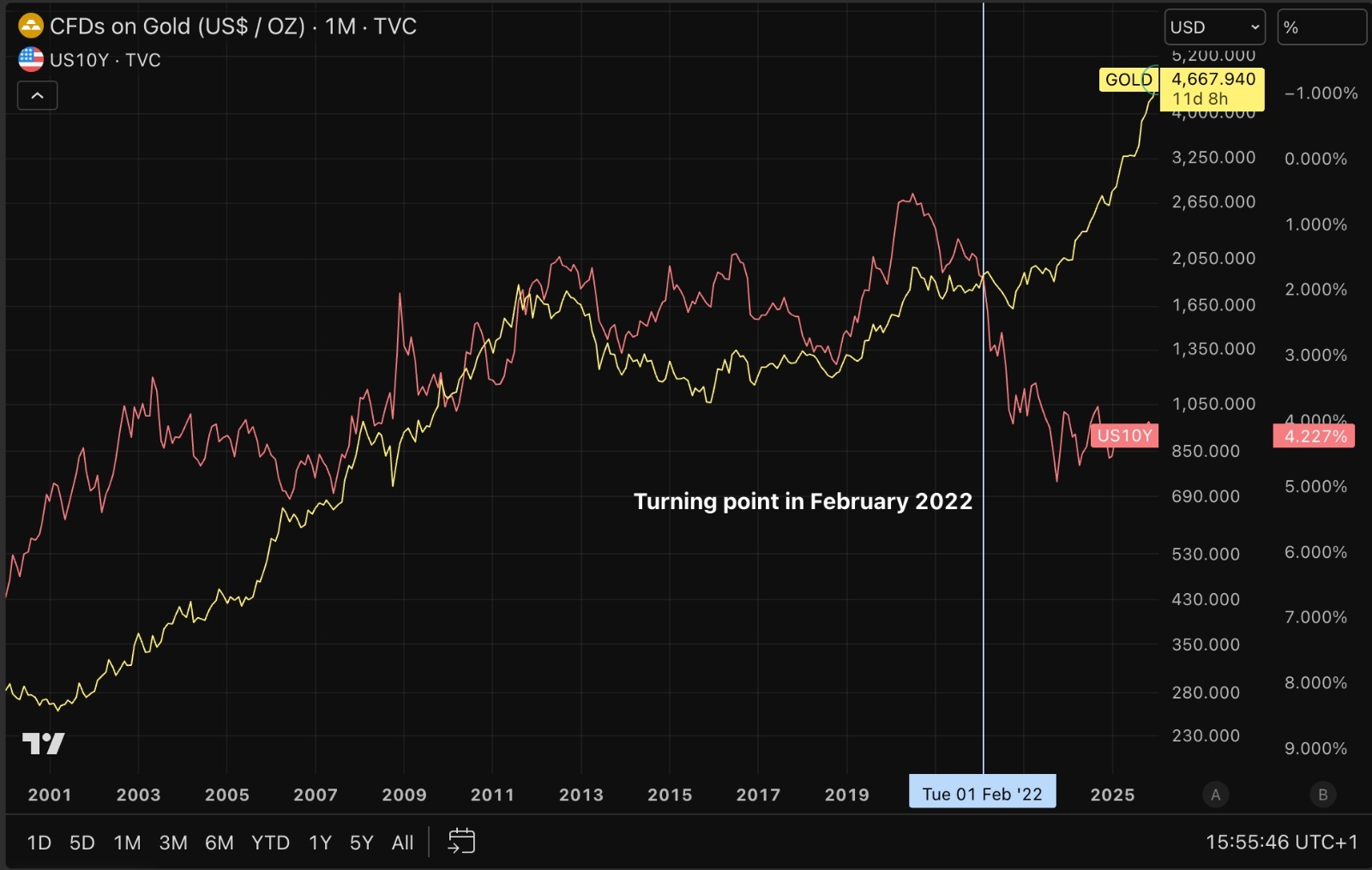
That changed in February 2022 after the Russian army invaded Ukraine and the West decided to freeze Russia's dollar reserves. Since then, the interest rate on US 10-year loans has risen enormously, but broke the inverse relationship with gold, and the precious metal also began to rise explosively.
According to many analysts, the reason for this is that the freezing of dollar reserves was a moment of achievement for many countries. If our reserves are not safe in the dollar system, shouldn't we look at alternatives? Since then, you can see that many central banks, especially outside the West, have started buying gold and selling US government bonds.
However, the increased interest rates that we are currently seeing may be a problem for gold in the short term. After all, investors can beat inflation with this, and after the huge increases of 2025, it can be attractive to make profits and park capital in government bonds. Possibly with the idea of waiting for a correction for the gold price.
In the longer term, however, this seems to contribute positively to the story of gold. Since the 2008 crisis, Western economies have been built on artificially low interest rates that were around zero. It remains to be seen how long, for example, the US economy can bear these increased interest rates.
Companies are increasingly affected by these higher capital costs. It is not without reason that Donald Trump has been saying for some time that he wants lower interest rates. Should this cause problems, it seems only a matter of time before governments and central banks intervene and stimulate money creation. And gold will undoubtedly benefit from this again, because it is in fact a sequel to the Decelerator Trade.
The price of gold rose by 65% in 2025 due to growing fears of depreciation, while silver rose even faster. In this article, you can read how the so-called Debasement Trade once again made gold a safe haven for investors.
The latest updates, analysis and insights from precious metals and financial markets


Socials