
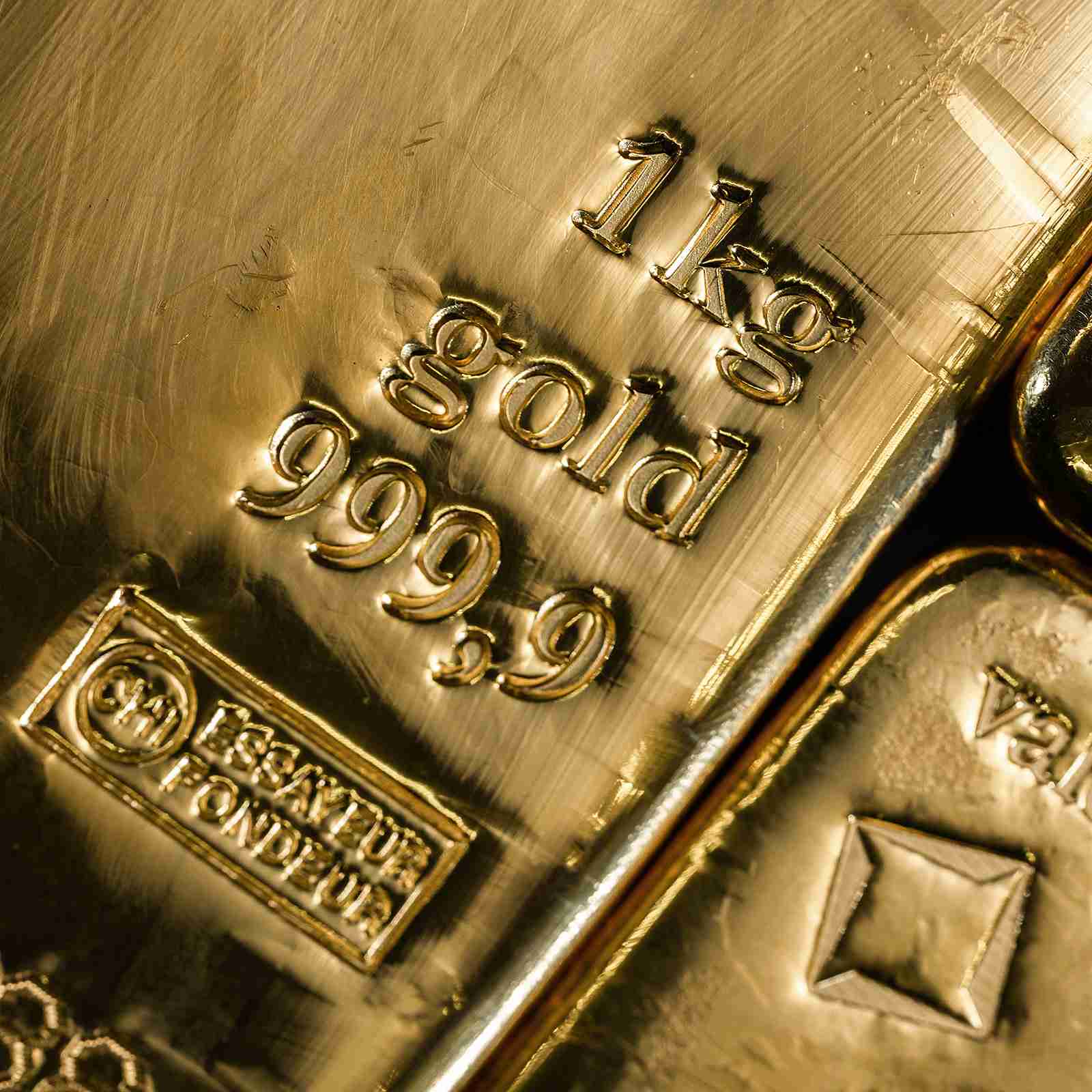


Buying gold from a bank?
Decades ago, if you wanted to buy physical gold, you could often walk into a bank branch and buy a gold bar or coin. You could have the gold stored in a safe-deposit box at the bank and, in some cases, take physical delivery. That way, you became the owner of physical gold.
But times have changed. Major US banks no longer sell physical gold bars and the safe-deposit-box business is shrinking. Why is that the case? How did it work in the past, and what options do you still have to buy physical gold today?
Why can you no longer buy gold from a bank?
The regulation around capital flows has been tightened drastically over the past decade. Physical gold has become a 'high-risk product' for banks under the strict requirements of the Bank Secrecy Act and the broader US AML / KYC framework.
Verifying the origin of the gold on the buy side, and the source of funds on the sell side, creates an enormous administrative burden. The operational costs and insurance premiums of holding physical inventory also no longer justify the margins for most banks.
To avoid the risk of regulatory penalties, major US banks have effectively exited retail physical gold altogether.
Buying gold from a US bank: then and now
JPMorgan Chase
JPMorgan Chase is one of the world's largest precious metals players and operates an approved COMEX gold vault, holding thousands of tons of physical metal that backs futures contracts. However, this is institutional activity. JPMorgan does not sell gold bars over the counter to ordinary retail customers; references to gold purchases through JPMorgan typically apply to private-banking and wealth-management clients.
Bank of America and Wells Fargo
Bank of America and Wells Fargo, two of the largest US retail banks, do not offer physical gold bars or bullion coins to retail customers. Their precious metals exposure is limited to gold-related funds, ETFs and structured products available through their brokerage arms.
Most clients who ask in-branch about buying a gold bar or coin are referred to specialist bullion dealers or to the official channels described below.
The US Mint
The United States Mint is not a commercial bank but the federal mint, part of the Department of the Treasury. It is the country's official channel for state-issued bullion coins and offers products such as the American Gold Eagle and American Buffalo directly through its own website and through a network of authorized purchasers.
The US Mint sells most coins through this network of authorized purchasers (which includes large bullion dealers) rather than directly to retail customers, but the dealer network's pricing is closely tied to the Mint's published premiums.
For US investors who specifically want a state-linked product rather than a private label, the US Mint and its authorized dealers are the most prominent route, though fees, product range and availability vary.
Specialist bullion dealers
Because most retail banks have stepped back, US investors who want physical gold typically buy from specialist bullion dealers such as Apmex, JM Bullion or Kitco. These dealers provide a wider product range than banks and can either ship the metal or store it in third-party vaults, but their level of regulatory oversight, custody arrangements and counterparty risk vary considerably from one provider to the next.
Buying gold from a bank today
Through banks, retail investors can therefore no longer buy physical gold directly. (Indirectly) investing in gold or (indirectly) investing in silver is still possible at most banks, in the form of "gold ETFs" or "silver ETFs" (Exchange Traded Funds).
These are exchange-listed investment funds that track the gold price, in which you as an investor buy a share in the fund rather than the physical metal itself.
At banks, this typically works through a paper claim, with the bank either managing the gold for the fund or guaranteeing its value via derivatives.
This means you depend on the solvency of the bank and the fund, since you are not a direct owner of physical gold bars.
This stripped-down form therefore does not offer the same guarantees as the physical gold bars that banks used to sell.
Where do you buy physical gold today?
Where you previously could simply go to your own bank to buy physical bars, the landscape has changed in recent years. The major US banks have almost completely closed their physical bullion counters. They now focus primarily on digital banking and digital investment products, which means that for tangible ownership you have to turn to another type of provider.
Through GoldRepublic you can still buy physical gold. You invest in physical precious metals, from as little as $50 or 1 gram. Your investment is held in an independently managed vault in Switzerland, Germany, or the Netherlands. You are and remain the legal owner of your gold holdings and can monitor your position and the vault entries 24/7 via your GoldRepublic account.
GoldRepublic was the first precious metals seller in the Netherlands to obtain an AFM license and currently manages more than $1.8 billion of precious metals on behalf of its clients.
You used to be able to buy gold at the bank. Now it is no longer possible. But why? And what options do you still have to buy physical gold?

Rika Zaat is host of MacroCheck at GoldRepublic, where she translates macro-economic topics into clear and accessible videos. She is also responsible for marketing, productions and events, including large live evenings with speakers such as Willem Middelkoop and Peter Schiff. Rika graduated cum laude from Nyenrode Business University with an MSc in Financial Management (GPA 8.2).


