

Gold price rises 17 percent since the end of March bottom
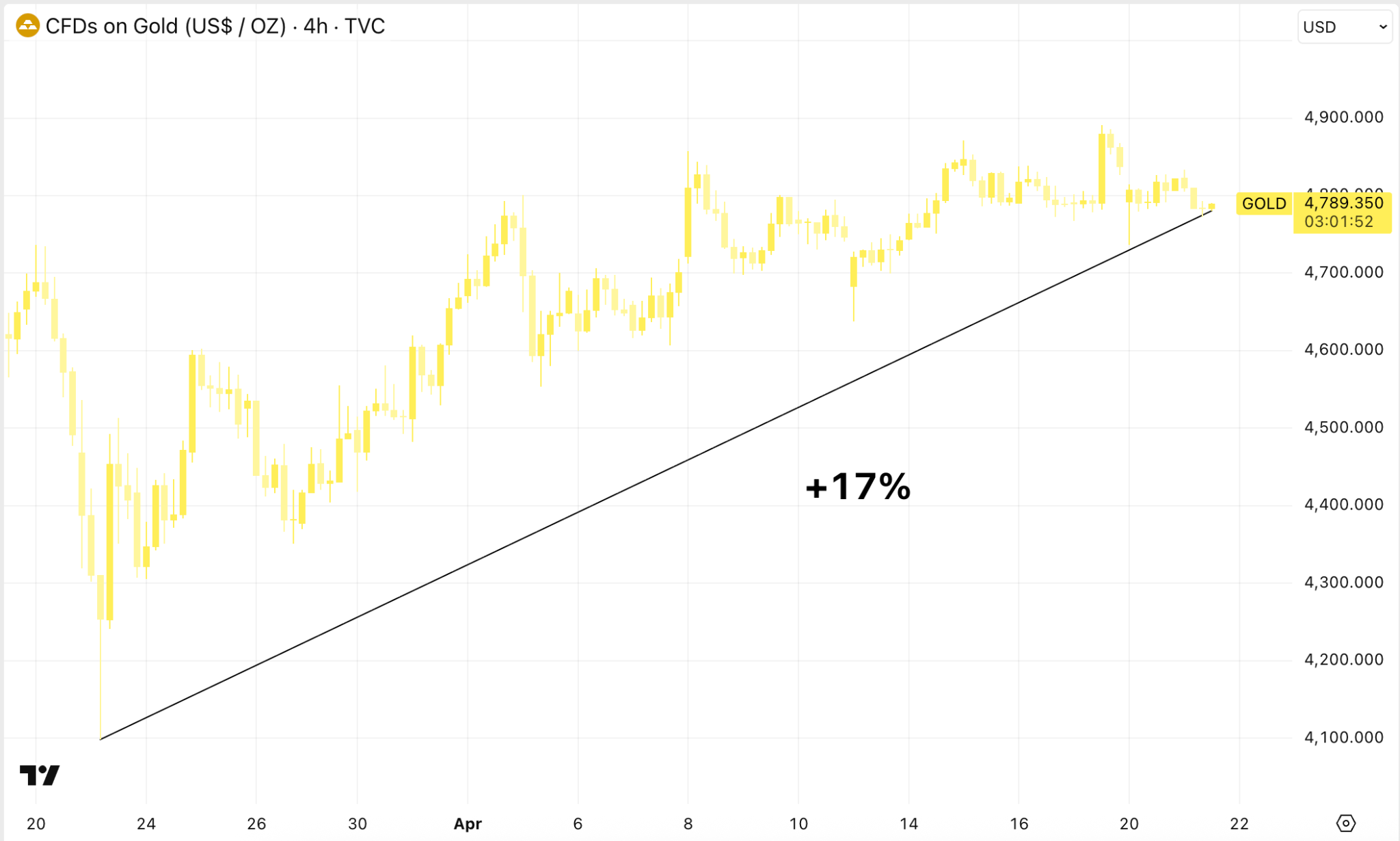
Although gold no longer dominates the financial markets as has been the case in recent months, the price is beginning to recover reasonably. From the bottom of March 23, the gold price has now risen by around 17 percent. As a result, the bull market has not resumed, but the market is clearly giving positive signals again.
Unfortunate coincidence of circumstances for gold
The weaker period for gold, which began at the end of January, occurred due to an unfortunate coincidence. First, the gold price came from an extremely strong period. A period in which it broke all price records and recorded huge increases, even creating a kind of hype about precious metals.
In that hype, private individuals began to flock investing in gold. Such periods of exceptional price increases are often short lived. There comes a point where it becomes attractive for a group of former loafers to sell a share.
Then you often get a change, where the same individuals who got to the top start selling in a panic on the way down. Just as the rise due to the hype ends at a higher point, the subsequent decline is often deeper than it would have been without the craziness.
While the gold price was in that weaker period after the decline and lost momentum, the Iran War began. As the Strait of Hormuz closed, inflation expectations continued to rise, investors began to expect fewer interest rate cuts from the US central bank, and the US dollar gained ground.
This created a negative investment climate for gold in the short term, reinforced by the previous loss of momentum. The tide is now starting to turn a bit again and we see gold gaining support at key points in the graph.
Gold price gets support at the right time
During the second major price fall since the peak in late January, the gold price received support from the 200-day price average (blue) and its exponential variant (red). We are now seeing a recovery movement and the precious metal seems to be finding support at the 100-day price average (pink).
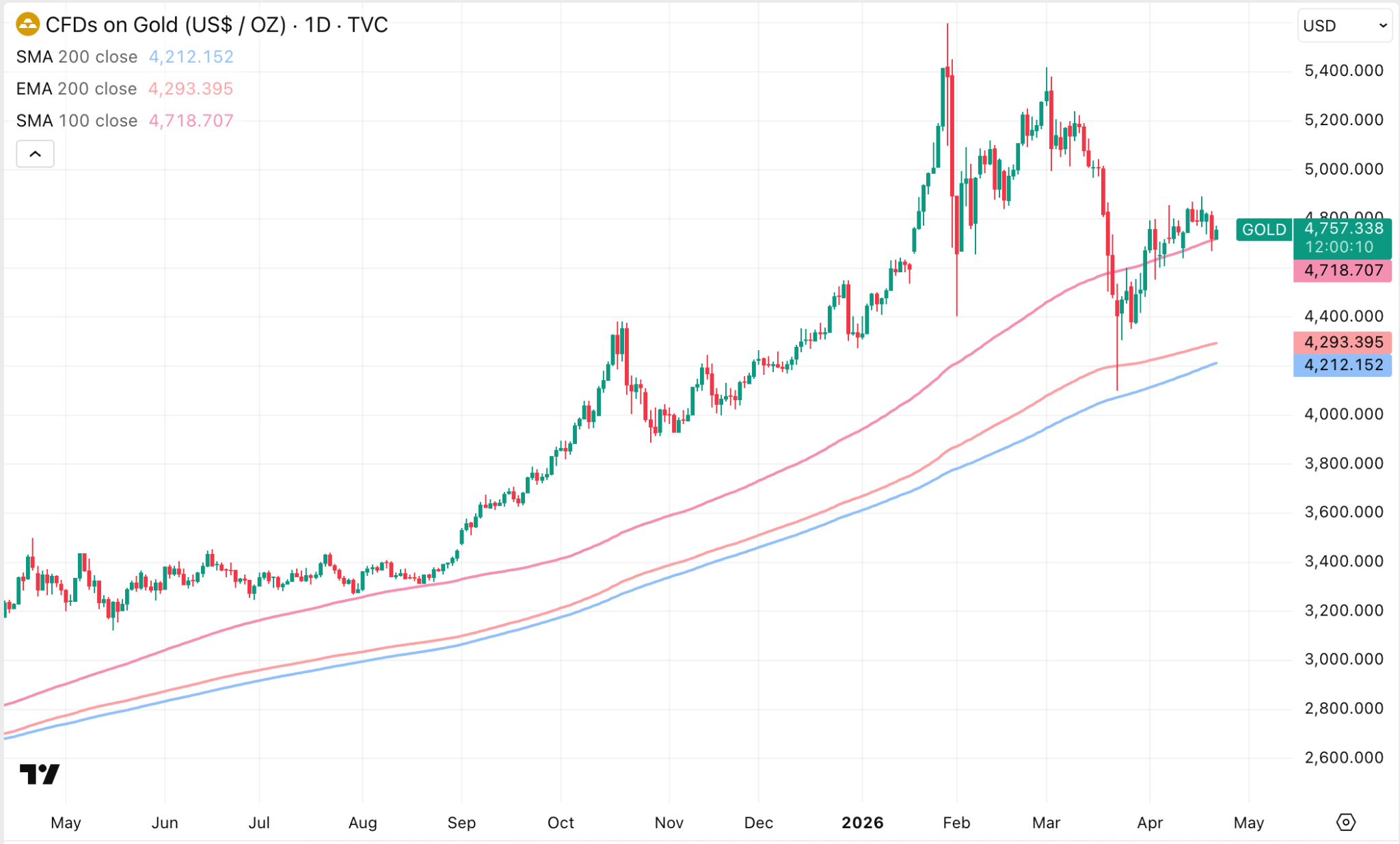
That 100-day average has been important earlier in gold's rise. In the third quarter of 2025, the gold price also found support in that price average.
Thus, gold seems to lay the foundation for another period of increases. The upward trend has not yet been broken thanks to maintaining these support points, so there is insufficient evidence to say that the bull run is over.
Fundamentally, the climate remains strong for gold
In addition, there remains a fundamentally strong investment climate for gold. There is undeniably a high level of geopolitical unrest. History tells us that such periods often involve monetary and fiscal support from central banks and governments.
Unrest, uncertainty and uncertainty provide efficiency. Now we see this, for example, in the rise in oil prices. In theory, this is a development that acts as a brake on economic growth, so that central banks and governments are likely to have to plug gaps in the long run.
At the same time, we are in a period in world history where geopolitical power relations are in danger of shifting.
No one can say for sure whether the United States will still be the absolute world power in 10 to 20 years. China is getting closer. This creates a stronger basis for an economy-independent asset such as gold.
For investments in stocks, such as the S&P 500, it is important that the US economy remains leading. Especially when it comes to technology. While it is in principle irrelevant for gold which economy takes the lead in which area.
In theory, gold is therefore an interesting diversifier for portfolios. Especially at times when uncertainty is increasing, as is the case today. From that perspective, it is also not surprising to see that gold has dominated the financial markets in recent years.
Ultimately, no one can see into the future, and that is exactly what makes an allocation to precious metals more attractive at this point in time. If the vision of the future was clearer, that would have been the case to a lesser extent.
The reality, however, is that we live in a world where more and more people are questioning the dominance of the United States and the US dollar. For this reason, the fundamental climate for gold and other precious metals remains favourable.
Gold has climbed 17% since the bottom of March and is showing signs of strength again. Learn how technical support and geopolitical tensions lay the groundwork for possible further increases.

Thom Derks writes for GoldRepublic on gold, macro-economics and geopolitics. He studied Law in Leiden and Economics in Amsterdam. His personal fascination with scarcity and store of value through both bitcoin and gold brought him into the world of financial journalism. Through his own newsletter De Geldpers on Substack, he reaches over 5,800 subscribers with analyses on markets, geopolitics and the monetary system.


.jpg.jpg)