

Platinum jumps 6%: what's driving the surge?
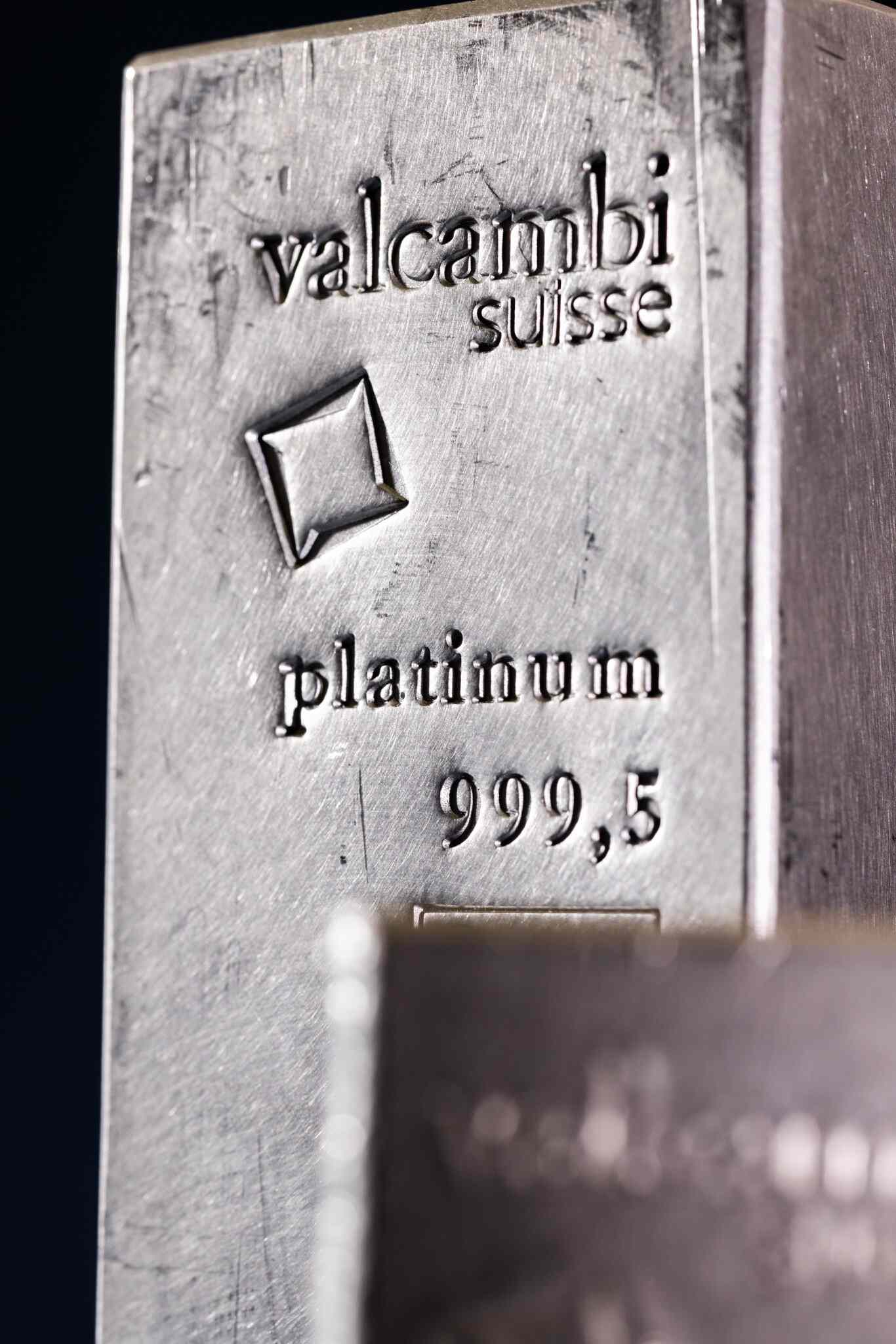
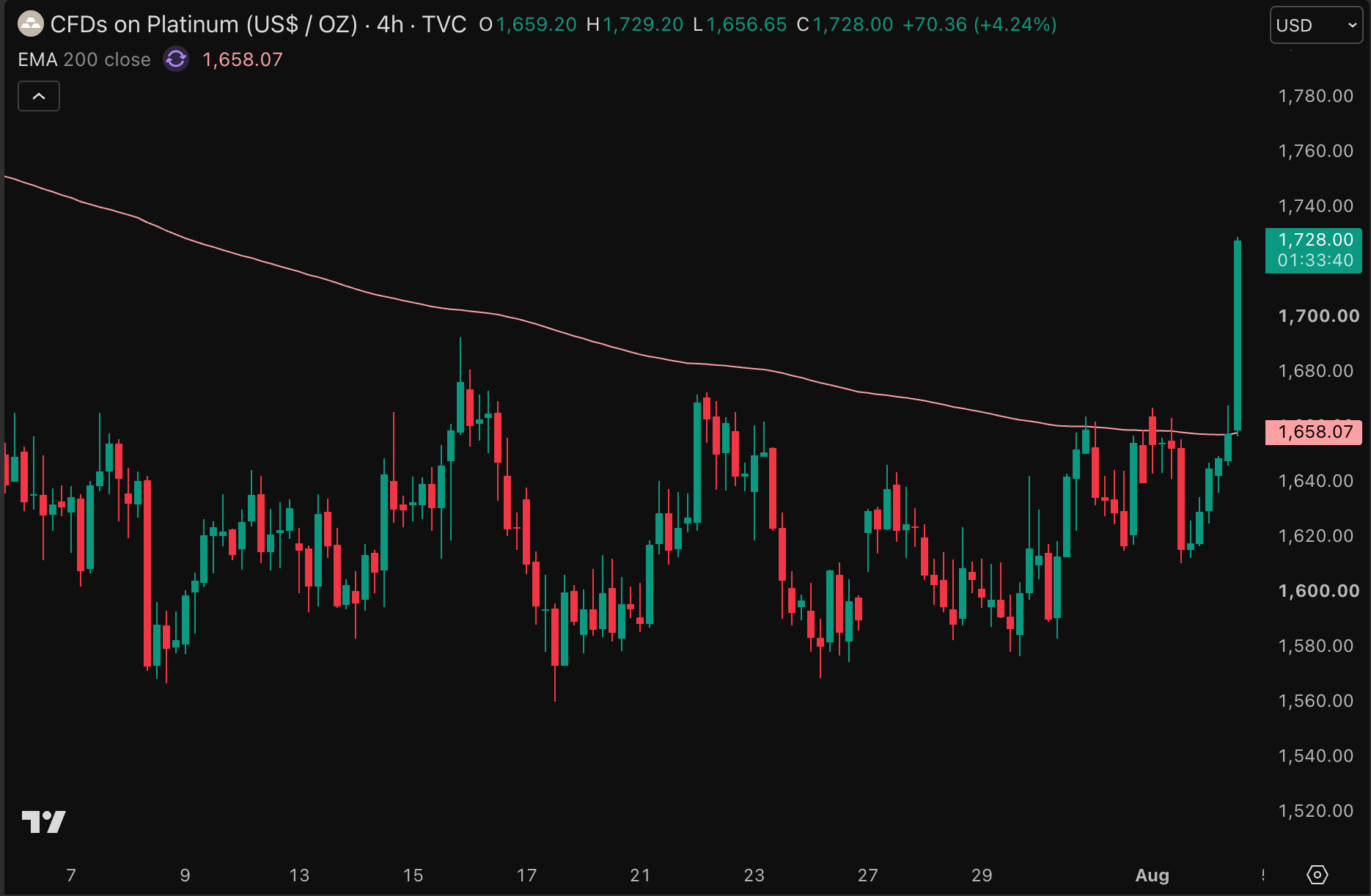
While gold and silver usually claim all the attention, it's platinum having its moment in the spotlight right now. Today the platinum price jumped more than 6 percent to $1,725 per ounce. In doing so, platinum convincingly broke through the 200-period exponential moving average on the 4-hour chart. We wrote earlier about the bottoming signals platinum was showing, and now a breakout appears to be cautiously taking shape.
There's more behind this rally than pure speculation. The market is facing a combination of fragile production, limited stockpiles and new forms of industrial demand for platinum.
Supply barely responds to higher prices
A large share of global platinum supply comes from South Africa and Russia. That makes the production chain geographically concentrated and vulnerable to geopolitical tensions, sanctions, operational setbacks and logistical disruptions.
What's more, mining companies can't simply ramp up production whenever prices rise. Platinum is largely mined in deep-level mines, while new projects require years of preparation and substantial investment.
According to the World Platinum Investment Council, supply is therefore highly price-inelastic in the short and medium term. In other words, even if the price rises, production won't simply follow suit in the near term. That leaves the market particularly sensitive to relatively small setbacks at major producers.
Platinum heads for a fourth year of deficit
For 2026, the World Platinum Investment Council forecasts a platinum deficit of 297,000 ounces. Above-ground stocks are expected to fall to less than three months of global consumption by the end of the year. Meanwhile, mine production is expected to remain largely flat.
That matters. A deficit doesn't automatically mean the price rises every day, since existing stockpiles can temporarily bridge the gap between supply and demand. But as that buffer shrinks, a disruption in South Africa or Russia could trigger disproportionate market moves.
Johnson Matthey reaches a similar conclusion, namely that demand for platinum will again outstrip supply in 2026. They foresee robust industrial consumption combined with limited mine production. That would make it the fourth consecutive year of deficit.
Demand is broader than just the car industry
Platinum is used in catalytic converters, the chemical industry, glass production, jewelry and data center equipment. That last one is a particularly notable development. Johnson Matthey expects data center construction to support platinum demand, as the metal is used in the magnetic layers used to store information on hard drives.
Hydrogen also remains a potential growth driver for platinum. The metal plays a role in PEM electrolyzers and fuel cells. That market is still small, however. According to WPIC, hydrogen accounted for less than 1 percent of total platinum demand in 2025, though that could rise to around 11 percent by 2030.
That's promising, but it's no reason to attribute the current price rise entirely to the hydrogen economy. Project delays and a shift toward alkaline electrolyzers, which generally use little or no platinum group metals, are tempering that growth. For now, hydrogen remains mainly an option on future demand rather than the driver of the current market.
The price rise is interesting, but not risk-free
According to experts, there's therefore a structural platinum deficit, shrinking stockpiles and hard-to-scale production. JPMorgan expects platinum to trade around $1,800 per ounce by the end of 2026, partly due to the supply problems in South Africa. A significant step towards that has already been taken today with the jump to $1,728 per ounce.
But platinum also remains cyclical. A global recession could hit industrial demand, while high interest rates make non-yielding precious metals less attractive. Rising prices can also curb jewelry demand and encourage recycling. WPIC already expects a decline in 2026 in platinum demand from the jewelry sector, partly due to the higher price and pressure on consumer budgets.
The platinum price jumps over 6% on a structural deficit, limited stockpiles and tight supply. What's behind this striking rally?

Thom Derks writes for GoldRepublic on gold, macro-economics and geopolitics. He studied Law in Leiden and Economics in Amsterdam. His personal fascination with scarcity and store of value through both bitcoin and gold brought him into the world of financial journalism. Through his own newsletter De Geldpers on Substack, he reaches over 5,800 subscribers with analyses on markets, geopolitics and the monetary system.

.jpg.jpg)