

Critical hours ahead for gold
In June, the gold price reached a tentative local bottom of around $3,950 per ounce. Since then, it has climbed considerably, to a tentative peak of nearly $4,700. We then saw a correction, with quite a bit of support forming around the $4,400 level.
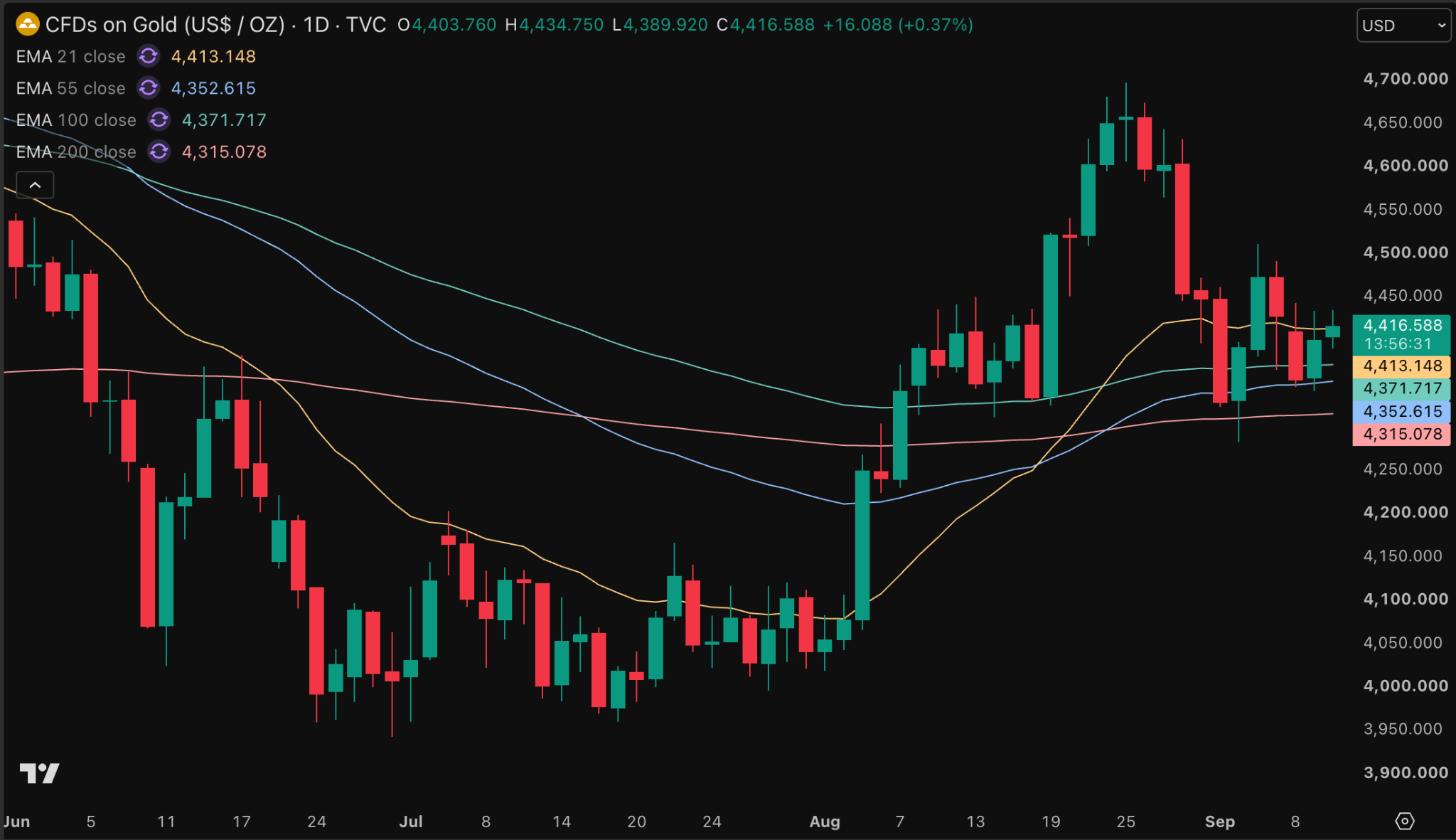
That's where gold seems to be getting a bit stuck, waiting for its next big move. The strongest headwind for gold comes from rising bond yields and stricter central banks, while a slightly weaker US dollar is providing support, and demand for gold from ETFs remains strong.
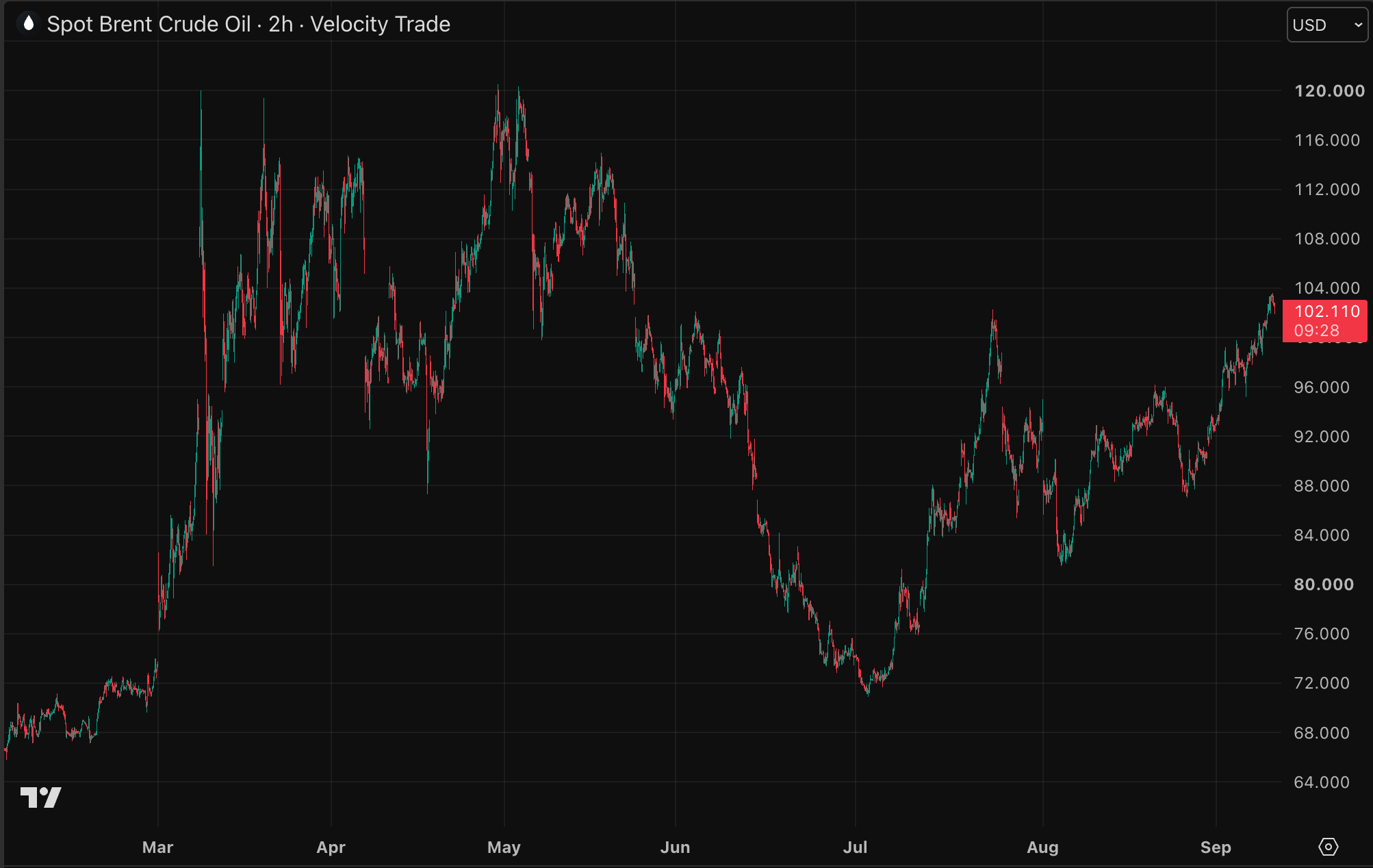
Adding to the complexity, the Brent oil price once again broke through the symbolic $100-a-barrel level this week. That gold and silver are holding up despite such fundamental headwinds is a powerful signal from the market.
It means the bigger picture, in which gold and silver protect against the inflation stemming from the ever-growing global debt pile, is weighing more heavily for investors than the short-term macroeconomic headwind.
Crucial inflation data for gold?
For now, though, the next big price move appears to hinge on the inflation data due today and tomorrow. This afternoon it starts with the Producer Price Index (PPI), followed tomorrow by the Consumer Price Index (CPI).
The reason these inflation figures matter so much is that the US central bank makes a rate decision next week. For now, the market sees a 60 percent chance of a rate hike.
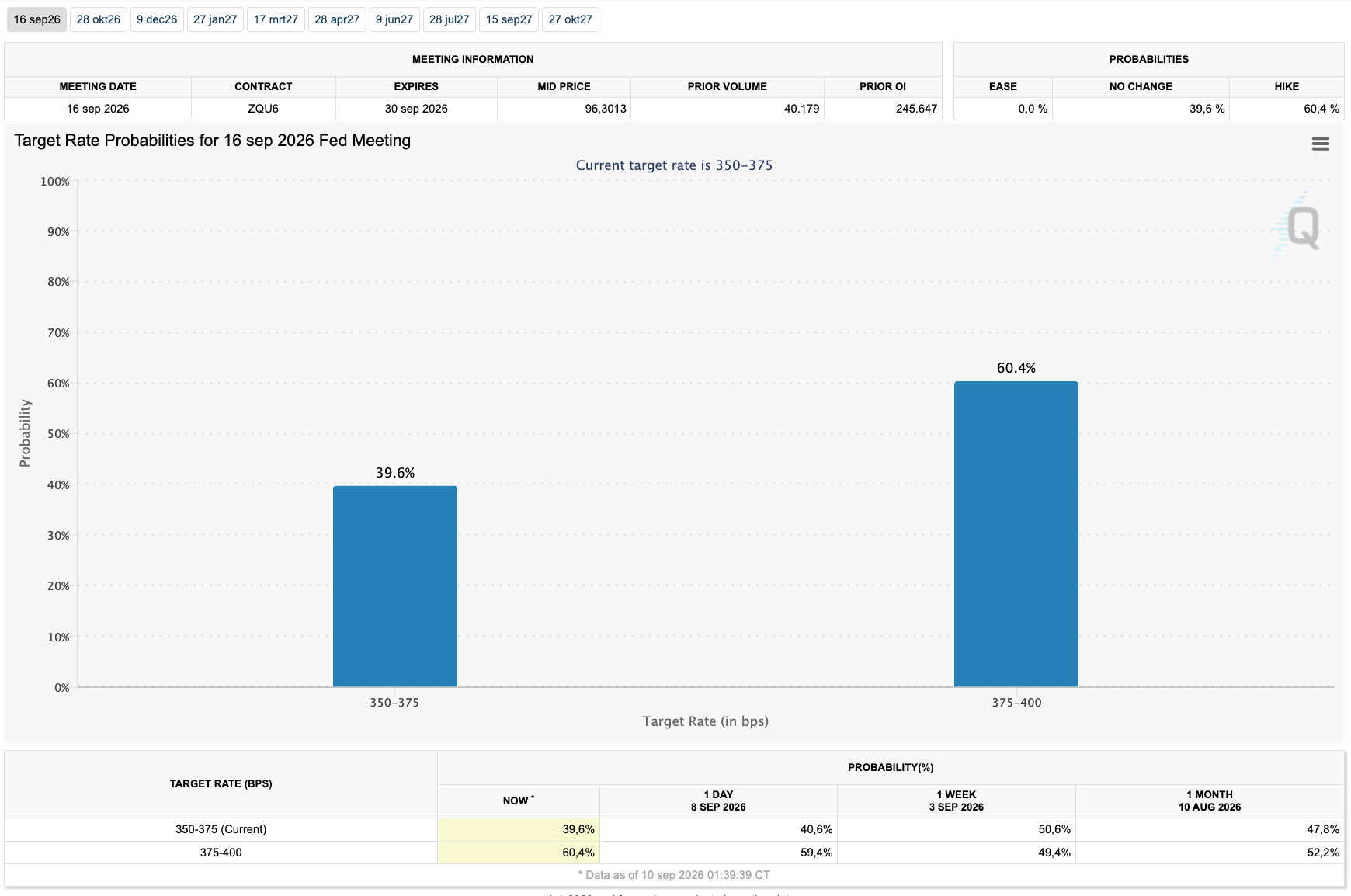
Before Kevin Warsh took over as chair of the US central bank, the outcome was usually fairly clear to the market in advance. Now the central bank communicates less, so the rate decision depends more heavily on incoming economic data.
The market will be watching the core measures in particular, Core PPI and Core CPI. These strip out the change in energy prices. Those indicators tell the market the extent to which the rise in oil prices is feeding through into other sectors of the economy.
If that turns out to be limited, the US central bank gets more room to hold off on a rate hike. That would be favourable for gold and silver. Gold's correction from $4,700 to $4,400 per ounce began after the market suddenly started expecting a stricter US central bank.
This week's inflation data could, in theory, reverse that. For that to happen, though, the figures would need to come in lower than expected.
Bessent backs gold and silver again
Alongside the US central bank, the Treasury Department under Scott Bessent is also playing an increasingly important role for gold and the rates complex. In several ways, Bessent has already shown that the US Treasury isn't happy about rising bond yields.
That showed, for example, in the joint intervention with the Japanese government to support the weakening yen. The Japanese currency has been struggling against the US dollar, the euro, and other international currencies.
The danger for the United States is that Japan is the largest foreign holder of US government debt. It holds around $1.2 trillion in US Treasury bonds. If the yen keeps weakening, Japan could sell those bonds on a large scale to support its own currency.
That could sharply increase the supply of US government debt on the market, pushing yields even higher.
Recently, the US Treasury supported the Japanese yen to prevent this scenario, and according to rumours, it even did so by selling euros in favour of the yen.
To make clear to the market that he means business, Bessent made a number of striking statements this week during an event at Southern Methodist University in Texas.
His remark "I am the house now" in particular made the front page of virtually every financial publication. Bessent used those words to challenge currency traders and warn them not to bet against his policy of strengthening the Japanese yen.
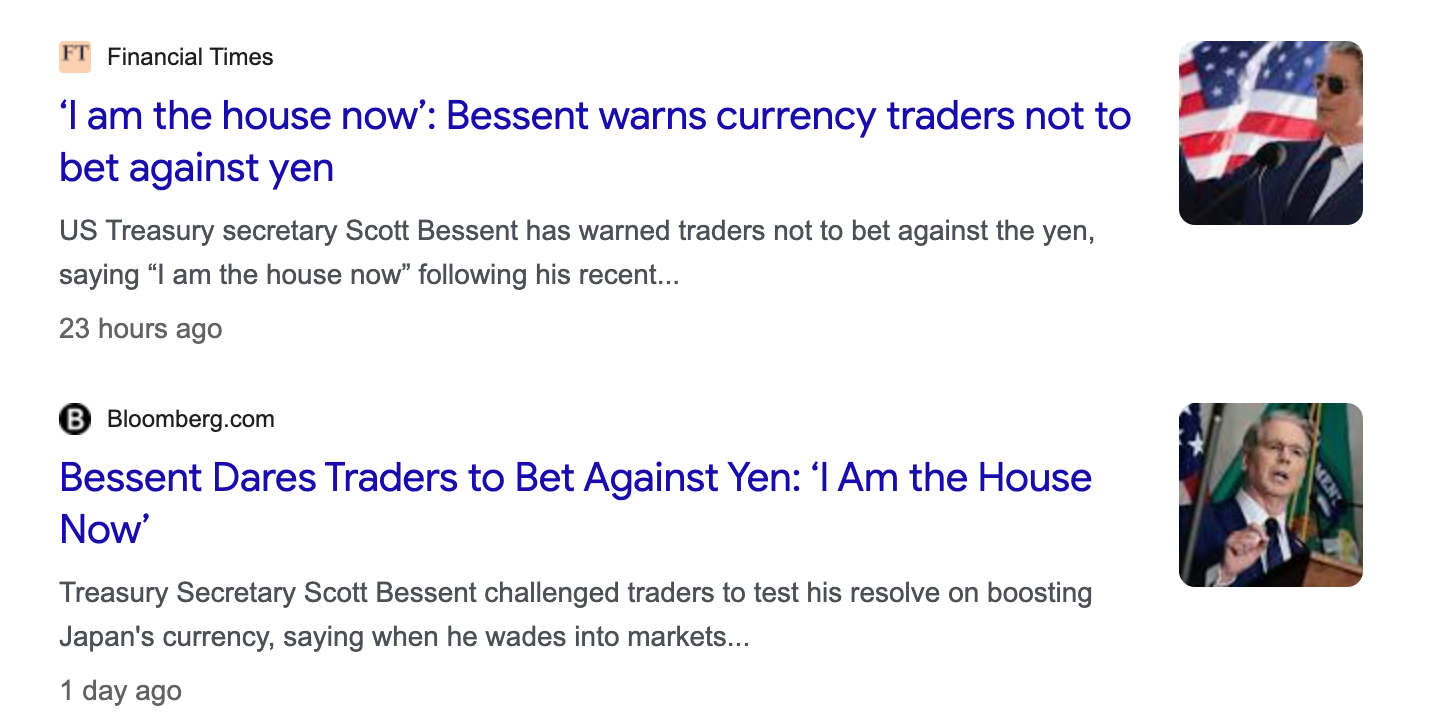
He reinforced those words by stating that the US interventions in the Japanese yen are coordinated with the Bank of Japan and Japanese policymakers. "I have a pretty good idea of what they're going to do," Bessent said.
The big signal here for gold investors, among others, is that Bessent and the US Treasury are drawing a line for bond yields. This is the rate level at which they get nervous and step in.
We saw the same thing with the recent announcement that the US Treasury would double its buybacks of long-dated government debt. On Wednesday, the Treasury Department announced that it wasn't actually a doubling, but a tripling.
That reduces the supply of these government bonds, creating downward pressure on long-term yields. For now, that intervention has had little effect. For gold and silver, it's mainly the signal that matters.
This makes clear, from the US government's side, that the 10-year yield isn't allowed to rise much above the current 4.8 percent, and the 30-year yield should stay around 5.3 percent. In doing so, they're accepting that inflation will likely stay above the desired 2.0 percent for longer, and that this comes at the expense of the US dollar.
That's precisely what makes this development interesting for gold and silver, assets that naturally protect against inflation. It also helps explain why gold is holding up reasonably well around the $4,400-per-ounce level, despite rates having risen recently and the chance of a US central bank rate hike remaining real.
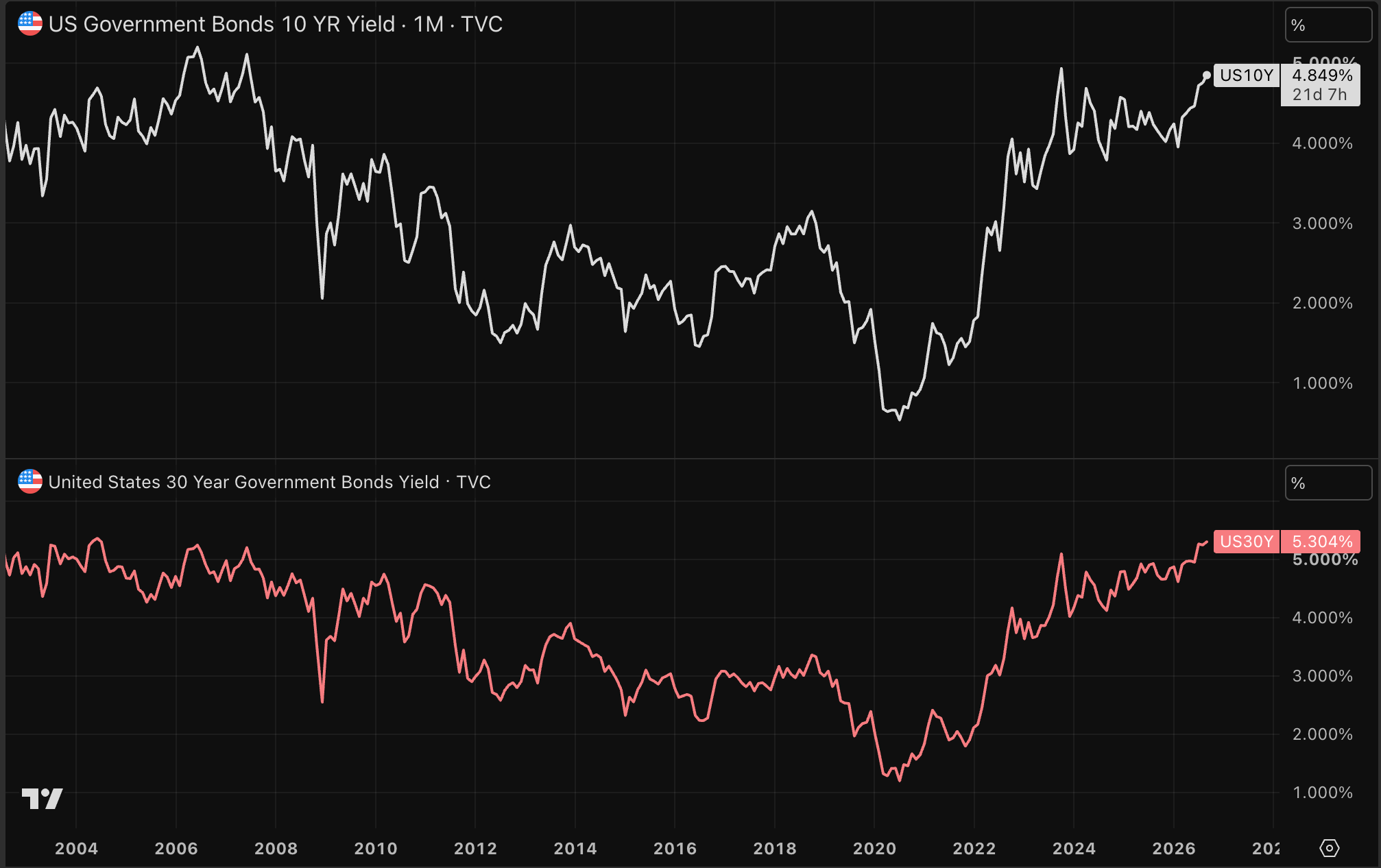
For now, the interventions by Bessent and the US government haven't had the desired effect. That's likely related to the fresh breakout in the oil price above $100 a barrel. As a result, yields shot back above the levels at which Bessent had previously decided to intervene.
This development is undoubtedly causing plenty of stress within the Trump administration, not least because midterm elections are scheduled for November 2026. They need to win those to keep pursuing decisive policy and hold on to power across the administration.
So far, though, that doesn't appear to be going to plan, partly because of the Iran war not unfolding as Trump had expected. The American public will increasingly feel the pinch of rising prices at the pump. As a result, though, the odds are also rising that the US will act more forcefully in the coming weeks to bring the war with Iran to a swift end.
From that perspective, a volatile period could be ahead for financial markets. But for the coming week, the focus is on the inflation data and the US central bank's rate decision, which is of course further complicated by the renewed rise in the oil price.
A brief oil shock is something a central bank can still ignore. By now, though, the war has been going on for months, and it seems only a matter of time before the rising oil price feeds through into the rest of the economy.
For now, though, gold and silver keep sending positive signals. Despite there being plenty of short-term reasons for price declines, precious metals continue to hold up remarkably well.
Thursday and Friday bring crucial inflation data that could shape the Fed's rate decision and the short-term direction for gold and silver.

Thom Derks writes for GoldRepublic on gold, macro-economics and geopolitics. He studied Law in Leiden and Economics in Amsterdam. His personal fascination with scarcity and store of value through both bitcoin and gold brought him into the world of financial journalism. Through his own newsletter De Geldpers on Substack, he reaches over 5,800 subscribers with analyses on markets, geopolitics and the monetary system.