

Gold rises despite oil, rates and war
Gold, silver and platinum all rose by more than 1 percent this past week. Notably, this gain took place while the Brent oil price climbed back above $95 due to the resumption of the Iran war.
Previously, that combination actually put pressure on precious metals. A higher oil price can fuel inflation, pushing up interest rate expectations. That's typically unfavorable for gold, silver and platinum.
This time, however, precious metals appear to be cautiously charting their own course. The gain is still too limited to draw firm conclusions, but it is a positive signal. Precious metals are managing to gain ground despite a macroeconomic development that would normally create downward price pressure.
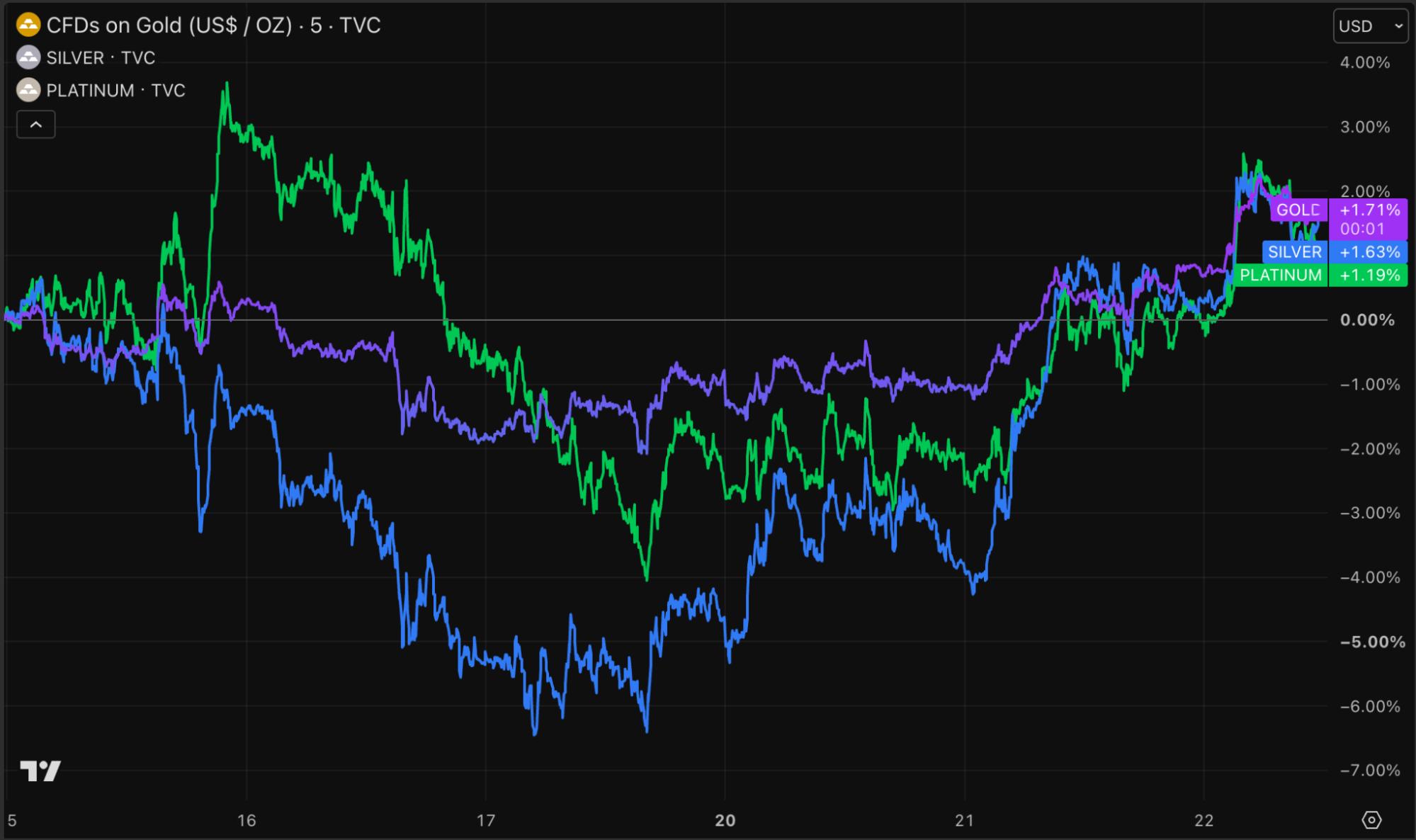
This price action seems to suggest the market currently expects the Iran conflict and its consequences for the oil price to remain manageable. The question is whether that confidence is justified.
At the time of writing, the United States had carried out attacks on Iran for the twelfth day in a row. At the same time, US Secretary of State Marco Rubio stated on Wednesday morning that Iran wasn't taking negotiations with the United States seriously.
Those aren't developments consistent with the de-escalation scenario the market is hoping for. The Brent oil price duly responded with a jump of around 4 percent to well above $90 a barrel.
It will therefore be interesting to see how precious metals react if the oil price rises further. Even if gold, silver and platinum merely hold their ground, that alone would be a powerful signal of underlying strength.
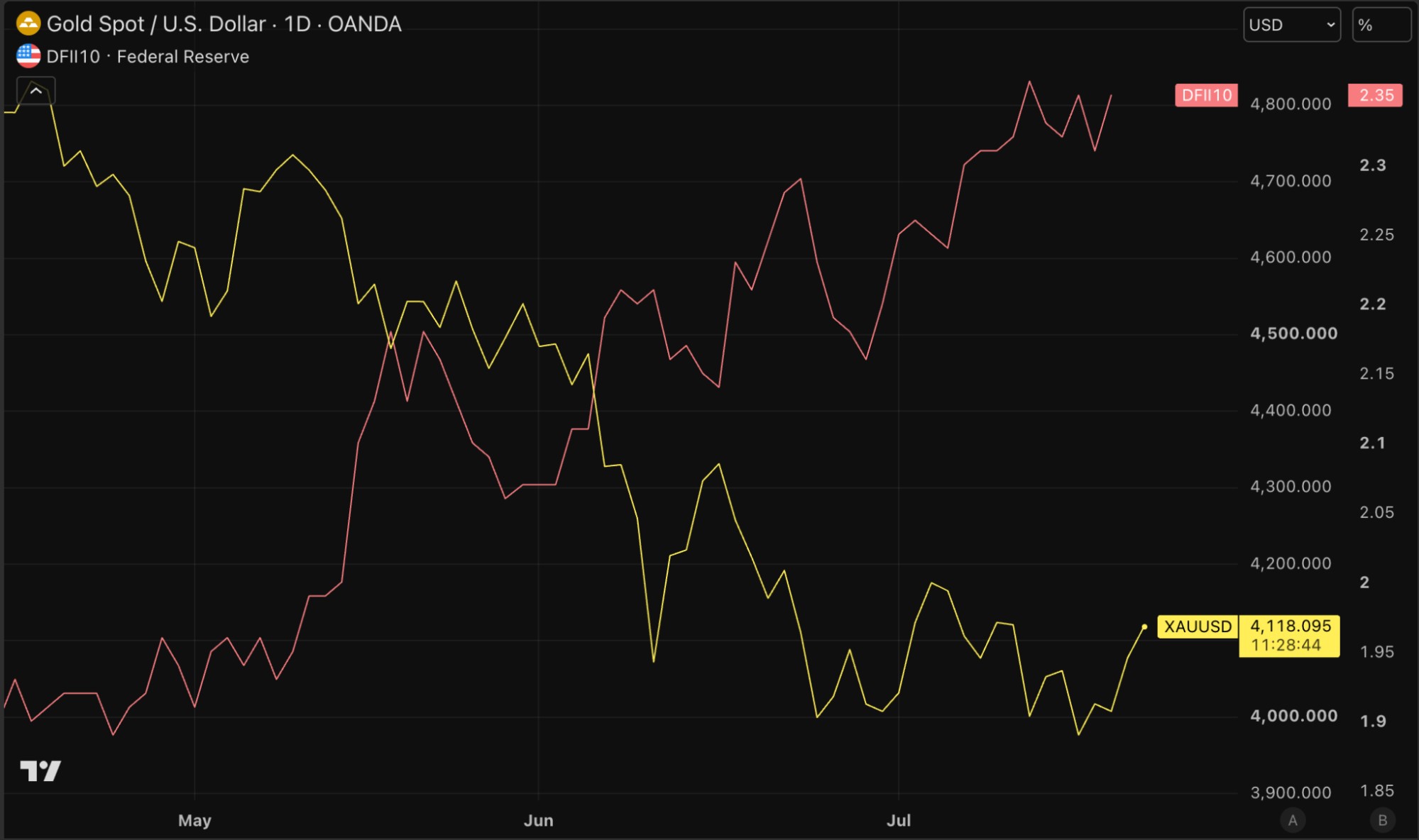
Since the start of the Iran war, real interest rates in the United States have risen sharply. These are inflation-adjusted rates, meaning they reflect the actual return on dollar assets. Gold normally competes with this rate, since the precious metal, unlike government bonds, pays no yield.
In the chart below, we see the real yield on 10-year US government bonds rising, yet the gold price is doing the same. That's a bit like watching water burn, and could mean gold is moving towards a stronger phase. Investors appear to find the precious metal attractive at current prices, despite the macroeconomic headwinds.
At the same time, we're seeing investors become stricter when it comes to AI stocks. Previously, it was enough for hyperscalers like Google to promise higher AI investment in their quarterly results. Alphabet, Google's parent company, did exactly that on Wednesday evening. But that turned out not to be enough to satisfy investors.
Alphabet's share price dropped by almost 3 percent in after-hours trading. The signal here is primarily that investors now want to see results too. The market already knows the tech giants are investing hundreds of billions per year — that no longer convinces investors on its own. In the next phase, those investments need to translate into returns, cash flows and higher profit margins.
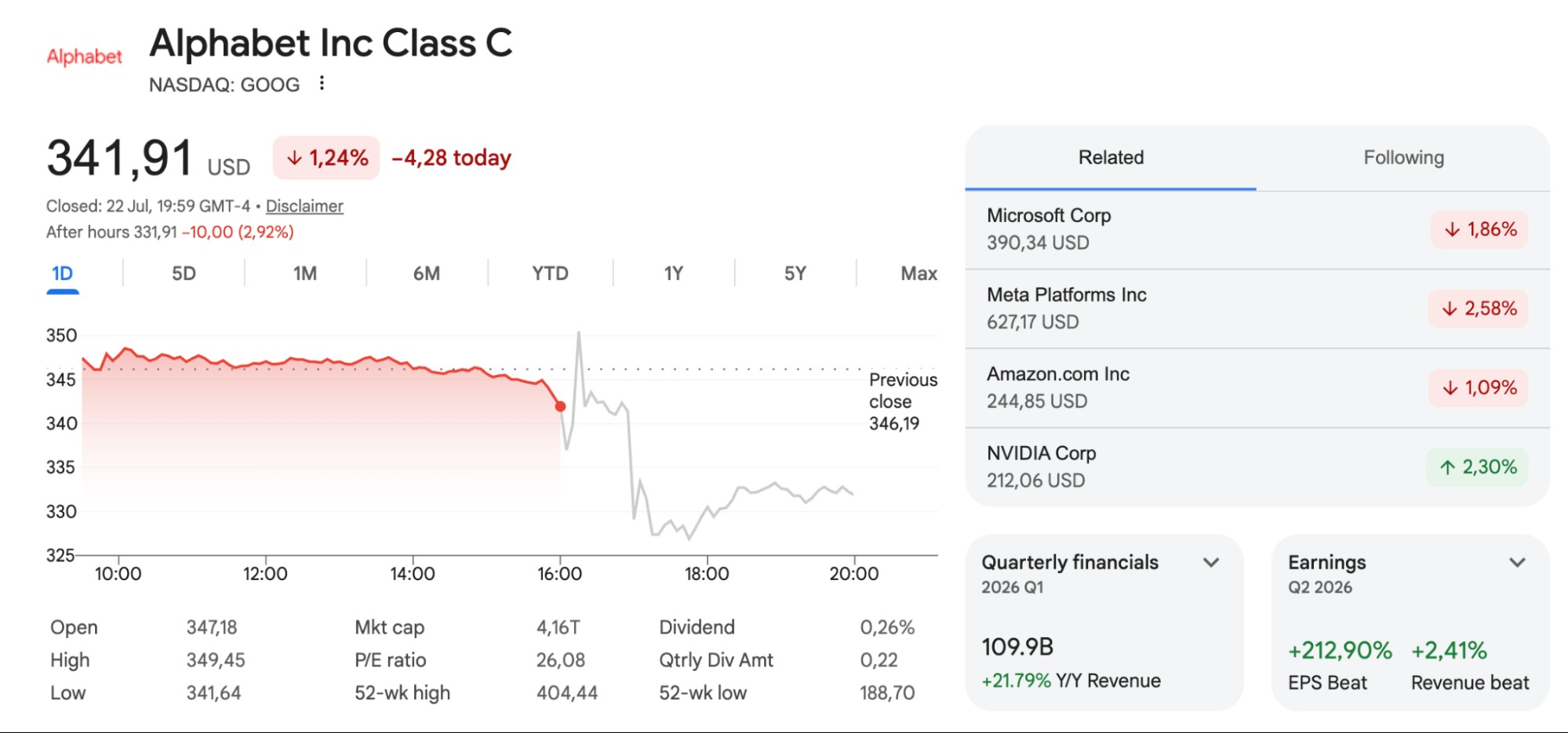
Apparently, Google fell short on that front. In theory, that's also an important signal for gold and the rest of the precious metals complex. It's entirely possible that the combination of the Iran war, higher interest rates and disappointing quarterly results could partly draw the market's attention away from AI stocks.
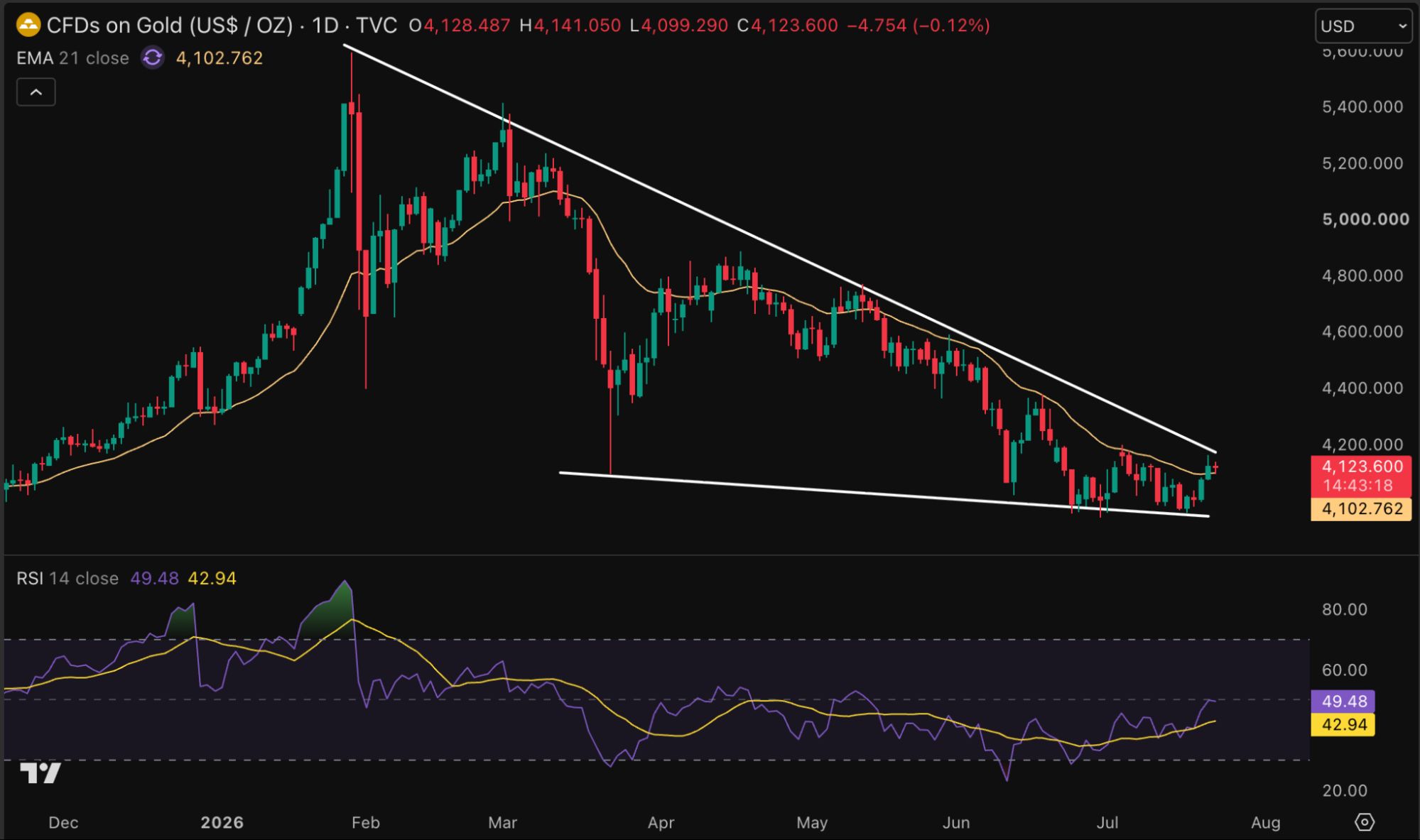
Gold could benefit from this by taking over part of the spotlight — especially now that the gold price has remained solid around $4,000 for some time. For silver and platinum, it's a bit more complex, since these are also industrial metals. Silver is the single best electrical conductor of all metals and therefore plays an important role in the AI revolution.
A temporary fading of the AI hype could therefore affect the silver price on that front. For gold, this is a cleaner scenario for that reason.
In addition, a wobble in the AI complex could set off a bigger development, particularly for gold and silver as monetary metals. Economic growth in the United States increasingly relies on AI and the build-out of the infrastructure it requires.
The sharply risen stock prices also give consumers a sense of wealth — the so-called "wealth effect," which helps keep US consumption steady.
If the infrastructure build-out stalls and stocks fall, that could pose a serious threat to the US economy. In that scenario, there's a strong chance the government and the central bank would step in with support — not least because the US doesn't want to lose the AI arms race to China.
That could be a moment when gold and silver, as monetary metals, gain fresh momentum. For now, though, that remains a scenario for the future. With Google, we've only just seen the first genuine AI giant report. You could arguably add Tesla to that list too, which lost 4 percent after its quarterly results.
Over the coming weeks, the rest of the market's big names will need to prove that the enormous AI investments are paying off. Whether that happens smoothly or not, it could present an opportunity for gold and silver to regain ground — provided the precious metals continue to shrug off rising oil prices and interest rates, since that pressure keeps simmering in the background too.
Goud, zilver en platina stegen deze week ondanks de hervatte Iran-oorlog, hogere olieprijs en stijgende rentes. Ontdek waarom edelmetalen hun eigen koers lijken te varen.

Thom Derks writes for GoldRepublic on gold, macro-economics and geopolitics. He studied Law in Leiden and Economics in Amsterdam. His personal fascination with scarcity and store of value through both bitcoin and gold brought him into the world of financial journalism. Through his own newsletter De Geldpers on Substack, he reaches over 5,800 subscribers with analyses on markets, geopolitics and the monetary system.

.jpg.jpg)