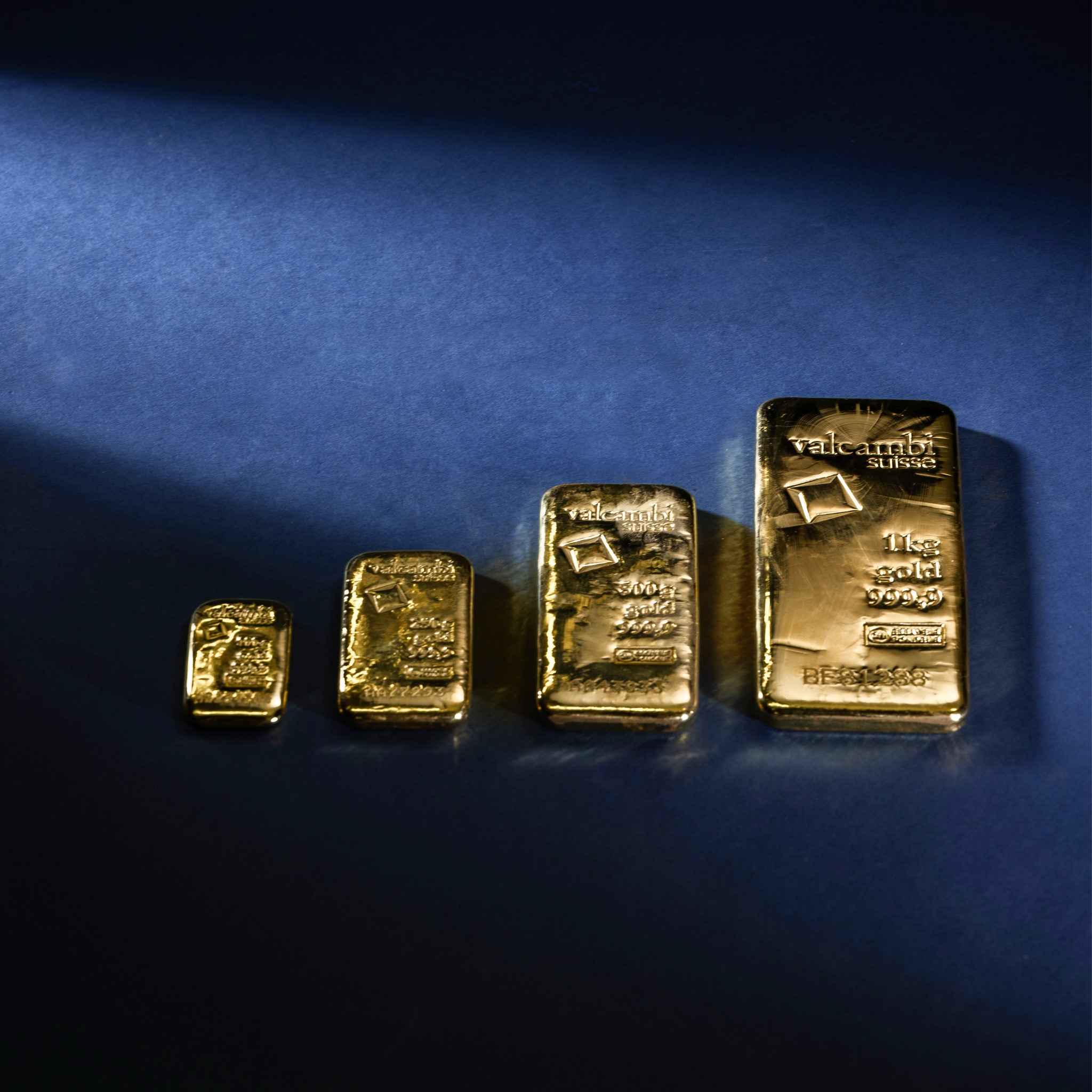


Gold keeps rising: scarcity becomes important again
The gold price also started the new trading week with a gain, while US stock futures were under pressure on Monday morning. The combination of geopolitical unrest, stress in the energy markets and doubts about the sustainability of government debt is once again making investing in scarcity an important topic.
That idea gathered pace last week after the US Treasury Department announced a doubling of its buybacks of long-term government bonds.
Gold rises further after Bessent's war rhetoric
This week has once again started well for the gold price. On the night of Sunday into Monday, US Treasury Secretary Scott Bessent announced an "economic D-Day" against Iran. According to him, the largest financial offensive ever mounted against an adversary is about to begin.
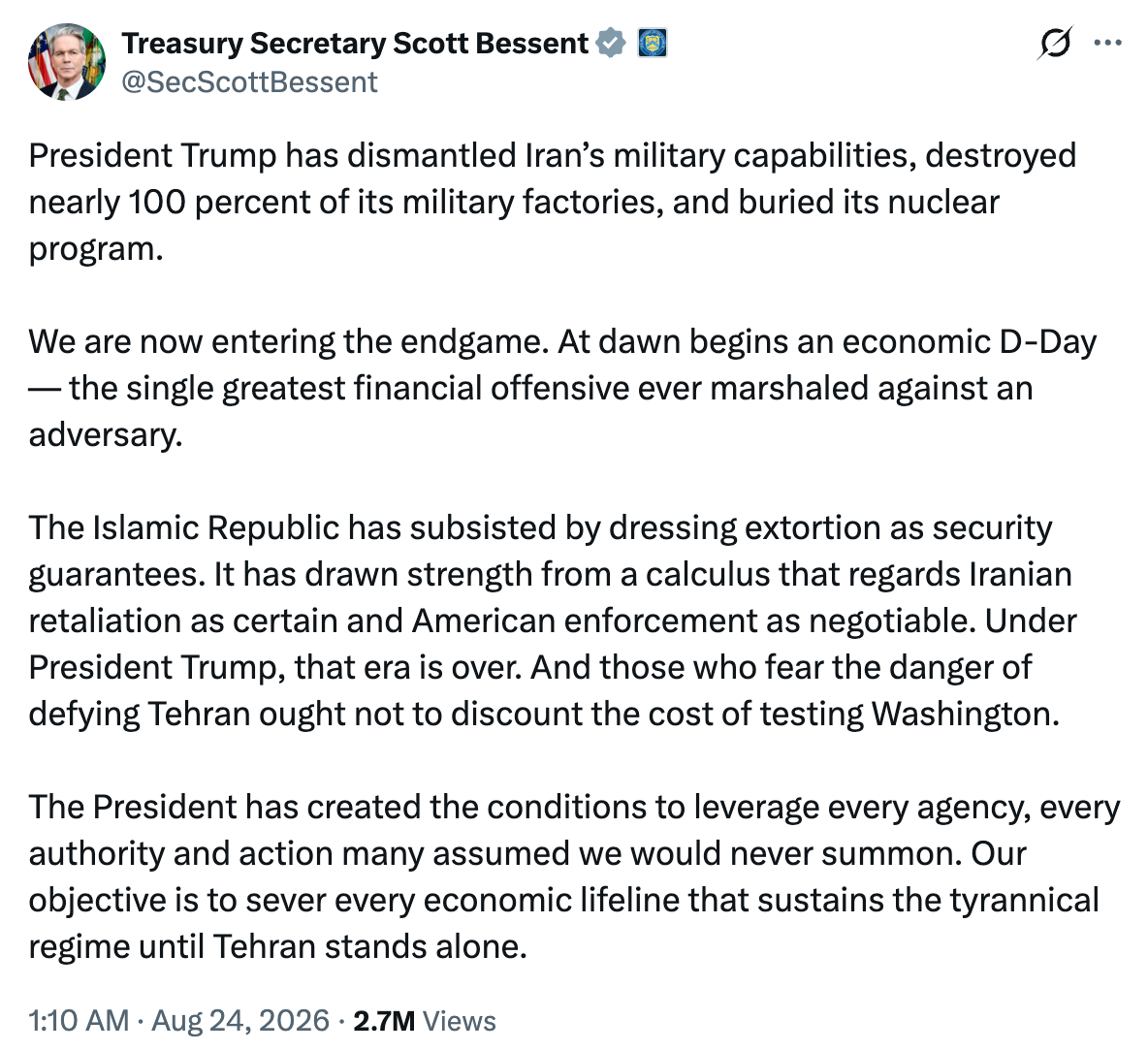
The ultimate goal of this economic warfare is, of course, to corner Iran to such an extent that it is forced to give in, with the reopening of the Strait of Hormuz as the eventual result.
In the short term, however, it's questionable how realistic that is. For now, the crucial strait remains closed and Brent crude is still trading at well over $90 a barrel. For the time being, this move appears to run counter to last week's intervention.
By announcing its intention to buy back additional long-term government bonds, the US Treasury Department wants to push long-term interest rates lower. In the short term, however, this economic assault on Iran could create fresh uncertainty around oil.
As a result, there's a chance that higher oil prices will feed through into inflation, prompting investors to demand compensation in the form of higher long-term interest rates.
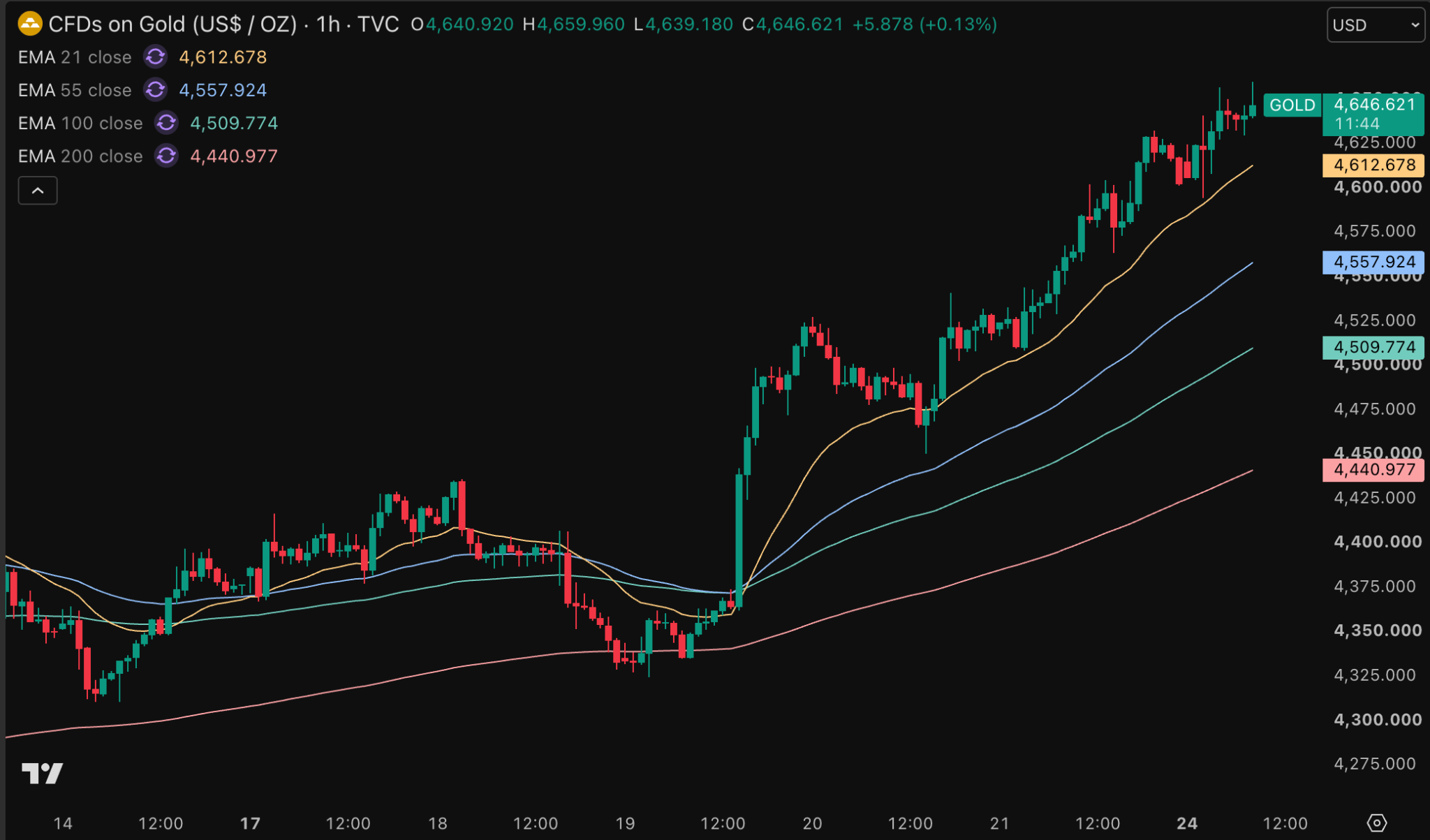
In any case, the turmoil is fuelling greater uncertainty around interest rates and US government debt. Gold is benefiting from this and continues to climb for now, while US stock markets appear to be starting the week with a slight decline.
An interesting shift in market dynamics
With these price movements, there appears to be an interesting new dynamic at play in the financial markets. Until recently, the gold price reacted mainly negatively to rising interest rates, because, unlike the US dollar, the precious metal pays no yield.
Now something seems to be cautiously shifting in investors' minds. Following last week's actions by the US Treasury Department, people are realising that higher interest rates are fuelling fears about government debt.
Interest rates have now reached a point where the US government is starting to intervene again. The aim of these interventions is to bring interest rates down, making government debt more sustainable and helping keep the economy afloat.
Although the government may be able to save itself and the economy this way, investors are concluding that it could well come at the expense of the US dollar. For precisely that reason, the market once again appears to be reaching for assets that protect against inflation, such as gold.
Gold isn't the only one in demand again. The silver price is currently trading at its highest level since June and is approaching the $70 per ounce mark. The price dipped slightly on Monday night, but the past few hours have again seen a small rise in silver as well.
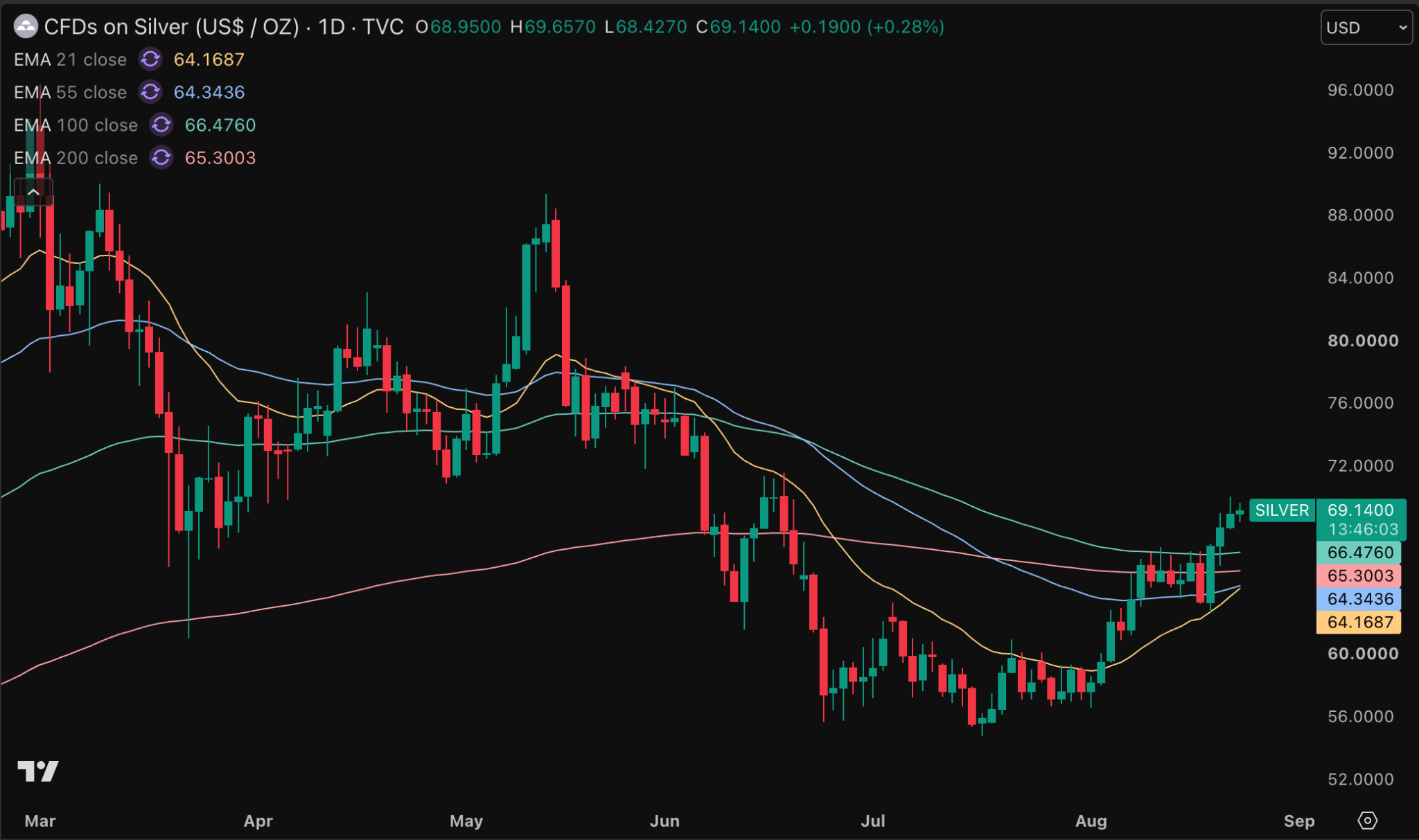
Investors are increasingly worried about high interest rates combined with US government debt, and are turning back to precious metals.

Thom Derks writes for GoldRepublic on gold, macro-economics and geopolitics. He studied Law in Leiden and Economics in Amsterdam. His personal fascination with scarcity and store of value through both bitcoin and gold brought him into the world of financial journalism. Through his own newsletter De Geldpers on Substack, he reaches over 5,800 subscribers with analyses on markets, geopolitics and the monetary system.