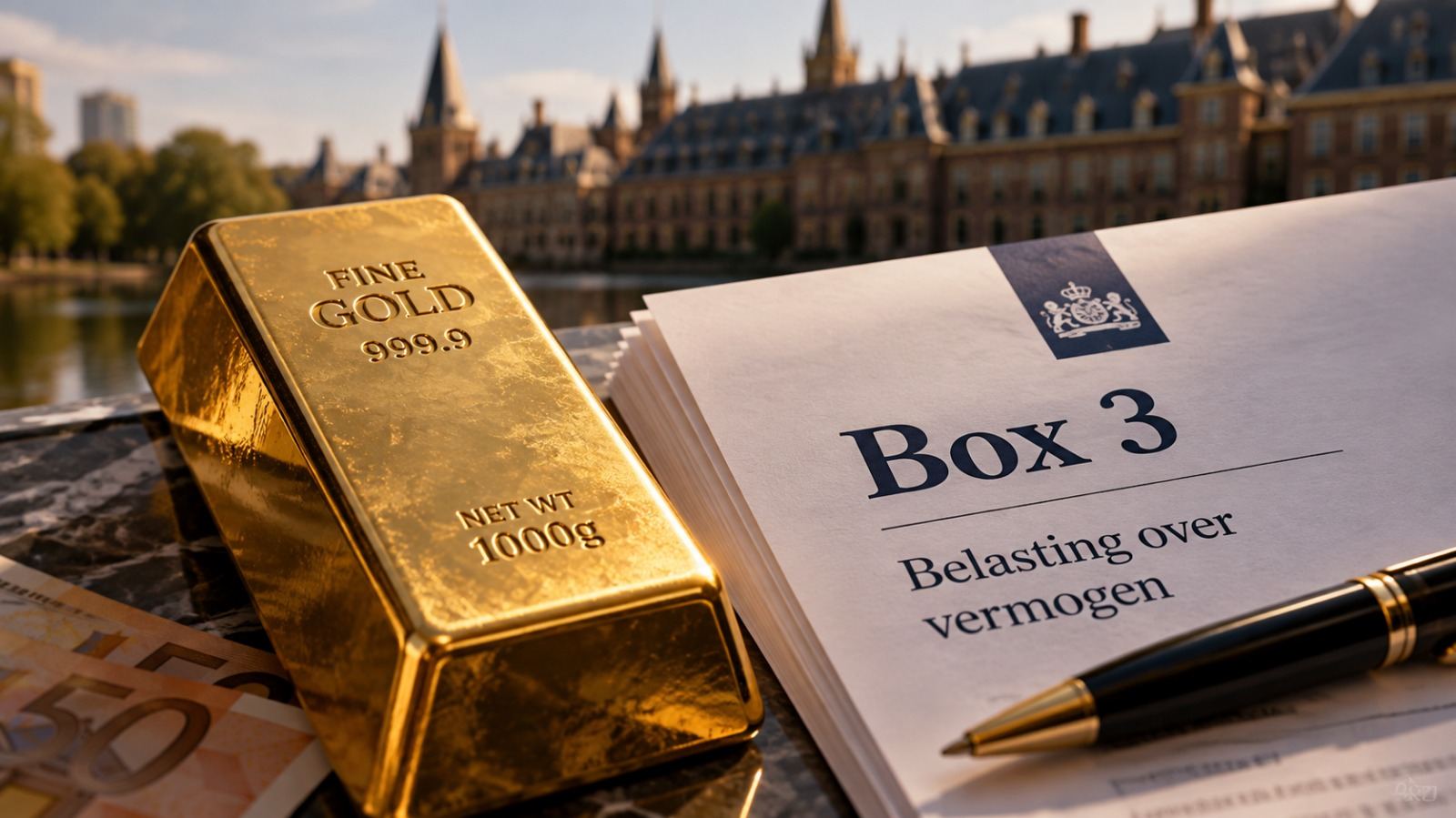


Box 3: will the Netherlands soon tax gold gains that haven't even been cashed in?
By GoldRepublic
This article concerns "Box 3," the Dutch wealth tax category covering savings and investments, including physical gold.
Two investors have each put €100,000 to work. One in stocks, the other in physical gold. A year later, both investments are worth €110,000. Neither has sold. Yet under the new Box 3 plans, the stockholder could defer tax on their gains, while the gold owner would already have to settle up. The same increase in value, a different tax moment, with consequences for how much money stays available to invest.
That difference could arise from the proposed phasing of the new system. The cabinet's proposal of September 29, 2026 provides for taxation on realization for financial instruments, including stocks, bonds, and options, starting in 2028. Other asset classes would follow in 2030. The legislation and its implementation still need to be finalized.
If physical gold remains subject to the wealth-growth tax in 2028 and 2029, an increase in value could be taxed even without a sale. The final scope will determine whether that difference actually materializes. For GoldRepublic, the question is why such a difference would be necessary, and how the consequences for investors are being weighed.
Paying tax without proceeds from a sale
Under a wealth-growth tax, the annual change in value counts toward the tax. Under a capital gains tax, the increase in value is in principle taxed when the investor realizes it, for example through a sale. That distinction is separate from tax on ongoing income, such as interest and dividends.
Arguments exist for both systems. Annual taxation captures wealth growth directly and limits deferral. Taxation on realization lines up better with the moment money actually becomes available, but can encourage investors to delay a sale. Feasibility, loss offsetting, and tax revenue also factor in.
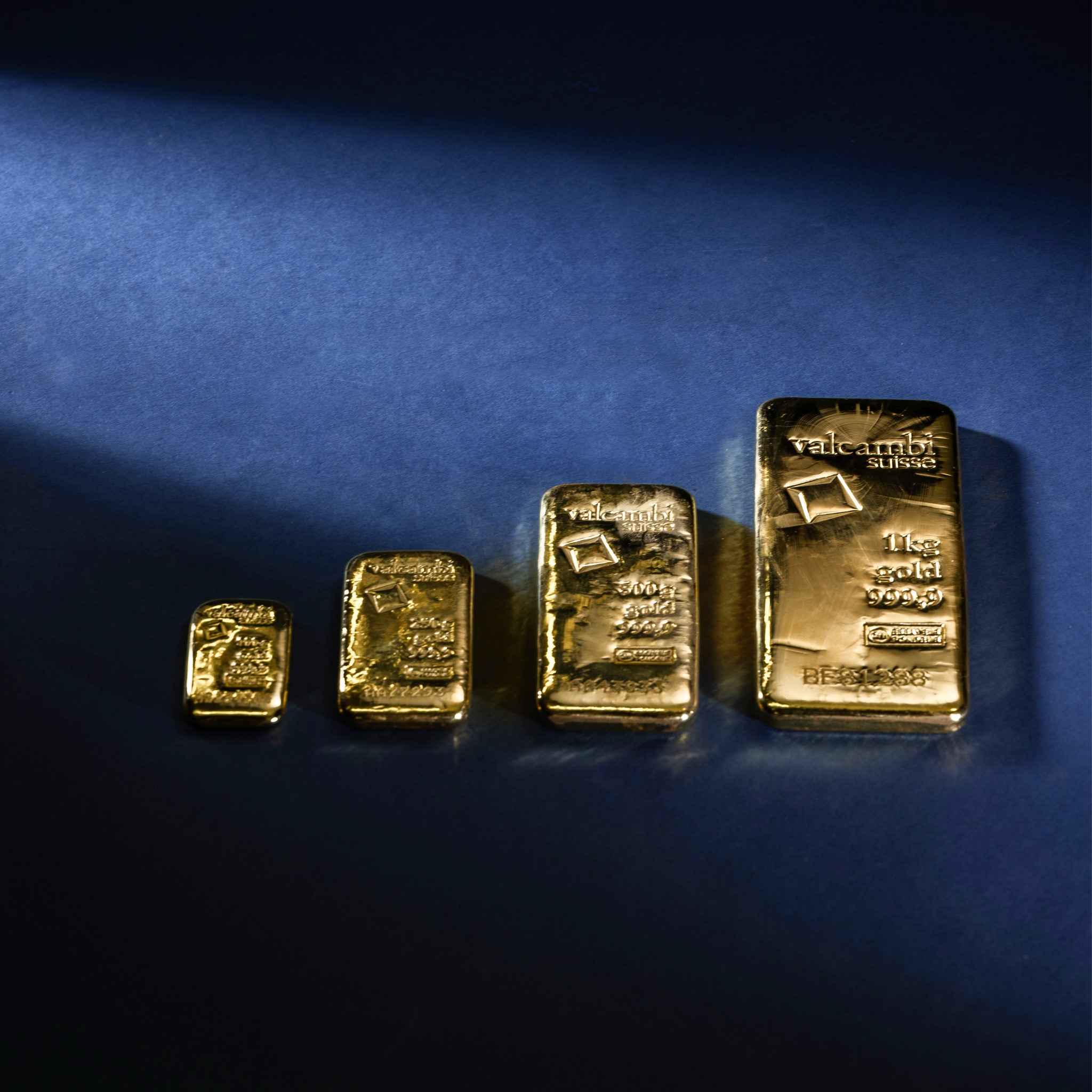
For gold owners, the availability of cash is especially relevant. Physical gold pays no interest or dividends. A higher market value therefore generates no cash to pay a tax bill. Anyone without sufficient other resources may have to sell part of their gold.
The stockholder, who only has to settle up on realization, gets no exemption. The tax claim still stands. But as long as payment is deferred, that amount remains available within the invested capital.
What's left in terms of purchasing power?
Alongside the timing of taxation, a second question matters: how much of an increase in value is actual purchasing-power gain?
Take the gold owner from the example. Their investment rises from €100,000 to €110,000. At an illustrative tax rate of 36 percent on the full increase, the tax bill comes to €3,600. After paying this out of the capital, €106,400 remains.
At 4 percent inflation, €104,000 is needed to preserve the original purchasing power. The remaining capital sits €2,400 above that. Converted back to the purchasing power at the start of the year, the real after-tax growth in wealth comes to roughly 2.31 percent.
So the nominal 10 percent increase in value only tells part of the story. Part of it compensates for the loss of money's value, while the assumed tax is calculated on the full increase.
This is a simplified example, not an individual tax calculation. Exemptions, costs, losses, and other assets are left out of consideration. The example also assumes no entitlement to an inflation deduction.
"Actual return" isn't automatically return after inflation
This distinction applies to all forms of wealth. Interest and stock price gains, too, can partly be compensation for inflation. "Actual return" doesn't in itself mean that only purchasing-power gains are taxed, or that profit has already been realized at the point of sale.
Taxing on realization therefore doesn't solve the inflation problem. Even on a sale, part of the nominal gain may be needed to preserve the original purchasing power.
For people who hold gold as a wealth reserve, that's relevant. At the same time, gold offers no guaranteed protection against inflation. Its price can fluctuate sharply and can also disappoint over longer periods.
Differences call for justification
A difference in tax timing affects how much capital remains available, and can steer investment choices as a result. Even a temporary arrangement can have consequences for how a portfolio is structured.
Differences in tax treatment can be justified, for example because of implementation challenges or the characteristics of a particular asset class. But that calls for a clear justification.
"I'm not arguing for tax-free investing in gold. Nor am I arguing for special tax status for GoldRepublic or our customers," says founder Marleen Evertsz.
In the further development of Box 3, GoldRepublic is asking for clarity on the position of physical precious metals, loss offsetting, and the transition between the systems. If comparable increases in value are taxed at different points in time, it should be made clear why that's necessary, and how long that difference will remain in place. Investors need to be able to assess in advance what the rules mean for their available cash, purchasing power, and wealth accumulation.
Petition: Fair and equal tax rules for physical gold in Box 3
To put this issue on the Dutch political agenda, GoldRepublic has launched a petition together with other parties from the Dutch gold and crypto community. Holland Gold, Goudwisselkantoor, Silver Mountain, DoopieCash, Madelon Vos, Goud999, Goudzaken, and Doijer en Kalf, among others, have joined the initiative. With the petition, we're calling on the Dutch government and parliament to tax physical gold in Box 3 only when profit is actually realized, for example on a sale, rather than on an increase in value that exists only on paper. We're not asking for tax-free gold, but for fair and consistent treatment of realized profit.
New Dutch "Box 3" wealth tax plans could tax physical gold earlier than stocks, even without a sale. GoldRepublic is calling for clarity and has launched a petition.

GoldRepublic is a leading European platform for physical precious metals, founded in 2010 as the first precious metal dealer licensed by the AFM (Dutch Authority for the Financial Markets). Our articles are written by a team of specialists in macroeconomics, precious metals and geopolitics.