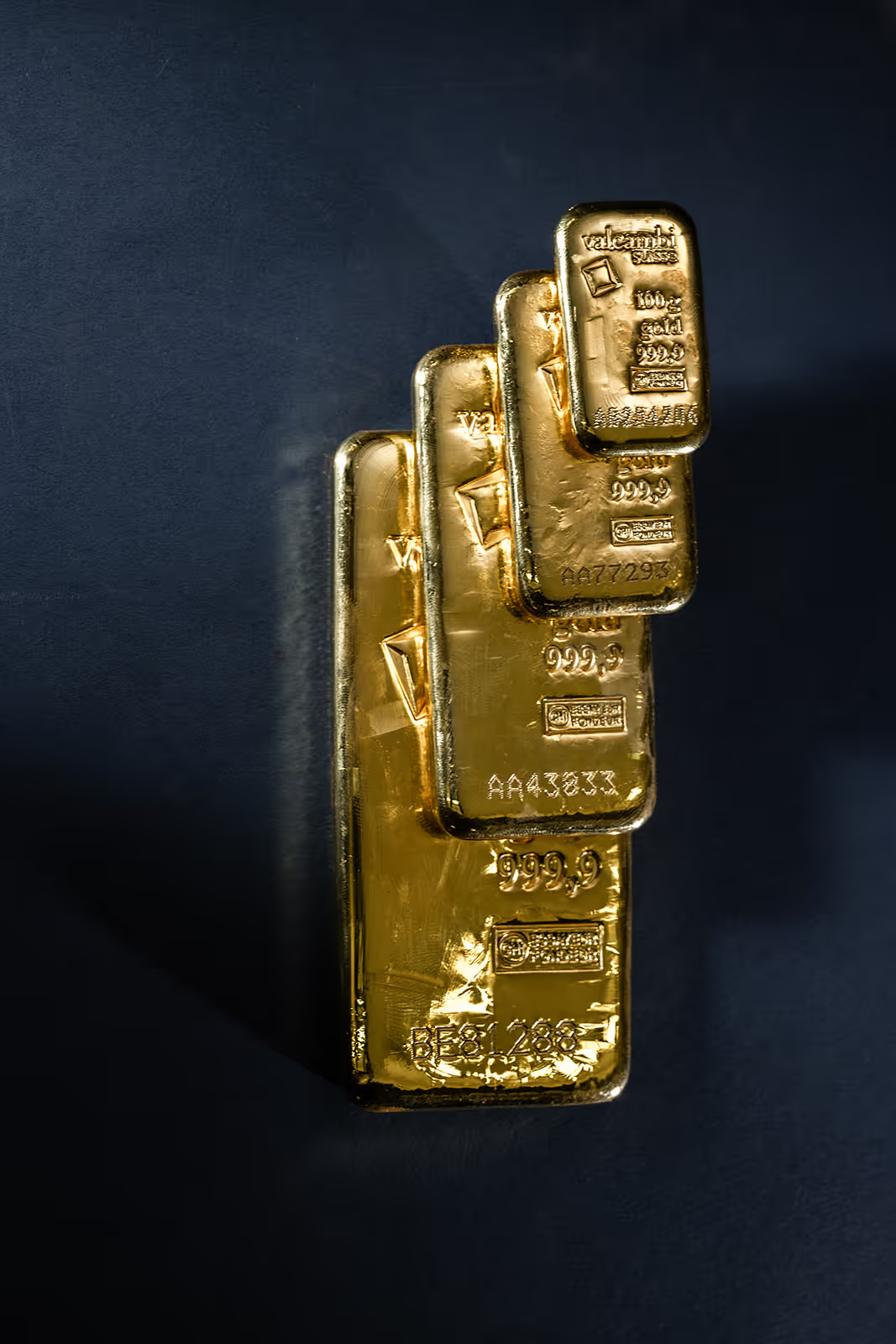
Current gold price

View the current and historical gold price here. Our data is updated in real time, so you are always up to date with the most current gold price.

How is the current gold price determined?

The current gold price is largely determined by the principle of supply and demand: if demand for gold increases while supply is limited, the current gold price rises. If there is a surplus of supply and lower demand, the gold price falls. The same applies to the price of silver. Historically, demand for gold has often exceeded supply. 

Fluctuations between the US dollar and the euro can also influence the price of gold, as the price of gold is usually expressed in dollars.

Finally, factors such as economic uncertainty, inflation, and central bank interest rates influence the price of gold. As a result, the price of gold fluctuates continuously on trading days.

What is the historical gold price?

The historical gold price shows that gold has been a stable investment over long periods, with significant increases in times of economic uncertainty. Over the past 30 years, the gold price has risen sharply, particularly since the 2008 financial crisis, when gold became popular as a safe haven.

Between 1995 and 2025, the price of gold more than quadrupled. The table below shows the annual return on gold over different periods.

Period
Annual return on gold
Last 30 years
7-8% per year
Last 20 years
10%  per year
Last 10 years
5-6%  per year

In the last 10 years, returns were slightly lower due to market developments and recent economic uncertainties. Nevertheless, the price per kilo of gold exceeded $100,000 for the first time in 2025.

These returns show that gold is particularly beneficial as a long-term investment and protection against inflation and crises.

What is the outlook for the price of gold?

Analysts predict a further rise in the price of gold in 2025 due to global economic uncertainties, inflation, and geopolitical tensions. 

The price of gold peaked several times in September 2025, surpassing the inflation-adjusted peak of 1980. In euros, this amounted to a record of approximately $100,000 per kilogram of gold.

In response to this recent price record, ANZ Group predicted that the price of gold could reach $3,800 per ounce by the end of 2025. Other banks such as Goldman Sachs, UBS, and JPMorgan also predict that the price of gold will continue to rise in 2025, mainly due to interest rate cuts by central banks and a weaker dollar.

The outlook for 2026 and beyond is also optimistic: Goldman Sachs and ANZ Group predict that the price could rise to $4,000 per ounce around June 2026.

This expectation depends heavily on factors such as inflation, central bank interest rate policy, geopolitical tensions, and confidence in currencies, with the US dollar being the most important currency.All in all, gold remains a popular hedge against financial uncertainties and inflation risks in the longer term.

Frequently asked questions

How is the gold price determined?

The gold price is fixed twice a day through the LBMA Gold Price, an electronic auction in London where major banks match supply and demand. Important factors influencing the price are real interest rates, geopolitical tensions and the value of the US dollar.

Which factors influence the gold price?

The gold price is determined by a combination of real interest rates, the value of the US dollar and geopolitical tensions. In addition, record demand from central banks provides structural support for the price.

How do I read a gold price chart?

A gold chart shows price development per troy ounce (31.1 grams) or per kilogram in dollars or euros. Pay attention to the bid price and the ask price; the difference between them is called the spread.

Is the gold price the same everywhere?

In theory, the global spot price of gold is the same everywhere, but the physical selling price varies by provider.

How often does the gold price change?

The gold price changes continuously and is updated live every 15 seconds during trading days.

Will the gold price rise further?

Various analysts expect the gold price to rise further due to continued demand from central banks and possible interest-rate cuts.

Will the gold price fall again?

Although the gold price keeps breaking records, there are also scenarios in which the gold price could fall.

Is the current gold price favorable for buying?

The current gold price is historically high, but it may still be attractive for those expecting further gains. Whether this is a good entry point depends on your time horizon and your confidence in these forecasts.

What is the influence of central banks on the gold price?

Central banks are key price setters because they represent roughly 20% to 25% of global gold demand.

Buy gold at a competitive daily price

Through GoldRepublic, you can buy gold bars from reputable, LBMA-certified smelters. You can buy gold from as little as one gram (or from a $50 deposit) at the current gold market price. Saving gold is also an option. Each month, you automatically deposit an amount that is used to purchase gold at the current gold price. This allows you to build up your gold reserves step by step, without having to actively trade.