
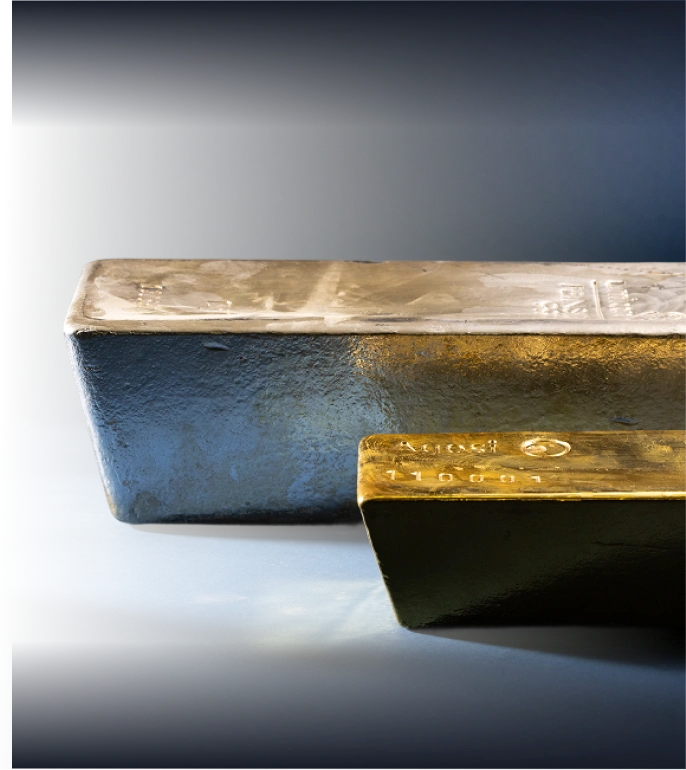
The gold/silver ratio is a guideline that investors use to determine whether now is a good time to buy gold or silver. It enables investors to look beyond daily prices and assess the relative value of gold compared to silver.
Live gold/silver ratio

Disclaimer: The gold/silver ratio is a tool and not a predictor. It offers context, not certainty.
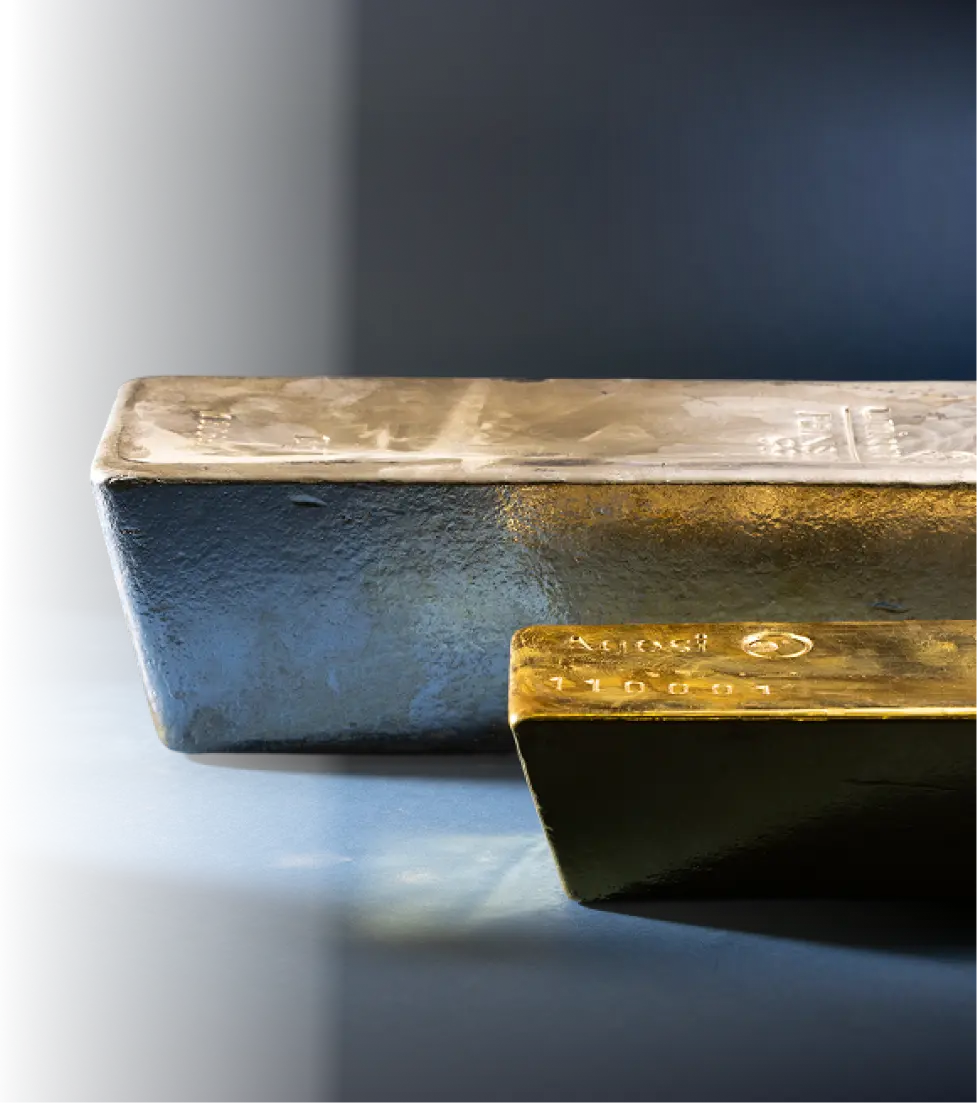
The gold/silver ratio is a mathematical ratio that shows how many troy ounces of silver are needed to buy one troy ounce of gold.
For example, when the gold price is at £3,411 and silver at £59, this results in a ratio of 57.8.
While this ratio was still fixed by the state at approximately 12:1 during the Roman Empire, it has been determined entirely by supply and demand since the abandonment of the gold standard in 1971.
It has become a popular benchmark that has been used for decades by experienced investors to determine the relative value of both precious metals.
.jpg)
Investors use the gold/silver ratio to determine whether it is a strategic moment to buy silver, or whether buying gold is more attractive at present.
Because gold and silver react differently to economic conditions, the ratio is constantly shifting.
High ratio (above 80-90)
This often indicates a relatively low silver price. In times of geopolitical tension or economic crises, investors typically flee to the safe haven of gold. Silver often lags behind in these scenarios, causing the ratio to rise. For instance, during the coronavirus pandemic in March 2020, the ratio reached a historic level of approximately 125.
Low ratio (below 50)
A falling ratio often indicates strong industrial demand or a speculative rally in silver. After all, silver plays a dual role: it is a precious metal, but also an indispensable raw material for products such as solar panels and semiconductors. When the gold/silver ratio falls, the gold price is relatively low.

80/50 rule
This rule has become a practical guideline for investors. Investors apply this rule by purchasing silver when the ratio is above 80 and swapping silver for gold when the ratio drops below 50.
For a long time, the gold/silver ratio remained fairly stable, but the last 50 years have seen more significant outliers. Below, we highlight several notable moments when the ratio was remarkably low or, conversely, exceptionally high.
Year

Gold/silver ratio
Context
1971
+/- 16:1
End of the gold standard; beginning of organic market forces.
1980
+/- 17:1
Silver Squeeze; an attempt by the Hunt brothers to drive up the silver price and force large financial institutions with short positions to settle their losses at high prices.
1991
+/- 100:1
A period of very low silver prices due to industrial surpluses and a strong preference for gold as a monetary reserve.
2008
+/- 80:1
The global financial crisis fuels widespread market fear.
2011
+/- 32:1
Silver makes a strong recovery following the crisis.
2020
+/- 125:1
Absolute peak during the outbreak of the coronavirus pandemic.
2025
+/- 55:1
Explosive demand from the tech sector drives the ratio down.
2026 (Present)
+/- 63-65:1
Stabilisation around the thirty-year average (1:60).
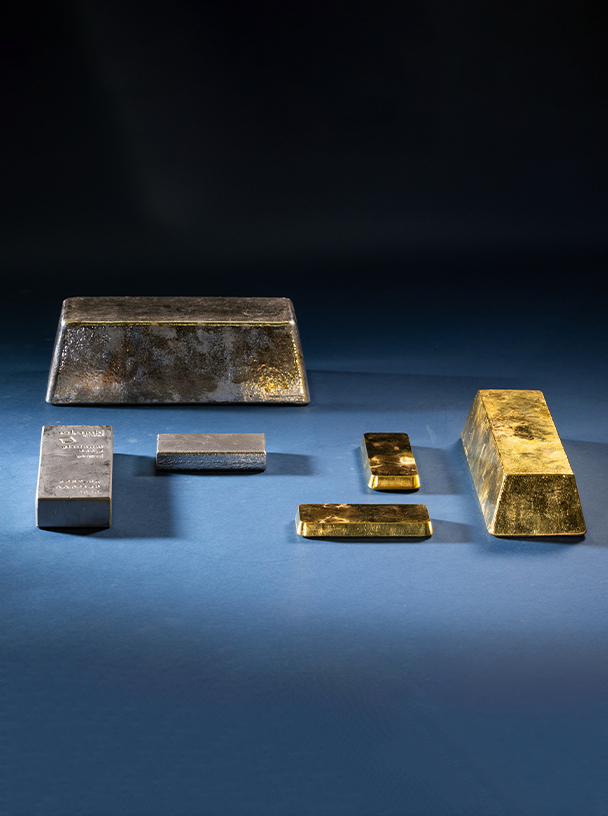
For 2026, market analysts expect the gold/silver ratio to stabilise or decline further, after it underwent a significant decline towards 60:1 in early 2026.
Although the ratio rose slightly again in spring 2026, institutions such as The Silver Institute point to a structural silver shortage and strong industrial demand, giving silver the potential to rise more sharply than gold.
The silver price forecasts vary, but are around $80 per troy ounce of silver in 2026.
Gold is expected to retain strong support around $4,500 per troy ounce in 2026, driven by central bank purchases and geopolitical uncertainty.
That means the gold/silver ratio is expected to come in at around 55:1 in 2026. In any case, the general expectation for 2026 is that silver will remain relatively "undervalued" compared to gold.

Forecast 2026
Last updated: 15 May, 14:06

A high ratio means that silver has historically been undervalued relative to gold. A high gold/silver ratio is usually spoken of when it exceeds 80. Investors often see this as a buy signal for silver, expecting the ratio to eventually fall back to the average.
A low gold/silver ratio means that silver is relatively expensive compared to gold, or that gold is undervalued. There is usually a low gold/silver ratio when it falls below 50. At that time, some investors choose to convert their silver into gold.
The Earth's crust contains about 15 to 19 times more silver than gold. For centuries, the ratio was set by governments at approximately 15:1. Since the decoupling from the gold standard in the 1970s, the average in the 20th and 21st centuries has been around 50:1 to 60:1.
In March 2020, during the panic caused by the coronavirus pandemic, the ratio briefly rose above 120:1. This was seen as a historically unique moment where silver was extremely cheap compared to gold.


Socials


