

Will America revalue its gold reserves to reduce its national debt? According to analyst Craig Tindale, that scenario is taking ever clearer shape. One reason is a series of recent appointments at the US Treasury and the Federal Reserve.
It is a story we hear regularly from outspoken gold bulls. The US national debt would eventually force Washington to give its gold reserves a central role once again.
That is, of course, music to gold investors' ears. The question, however, is how realistic the idea is. That is exactly what we will look at in this blog.
What is Tindale predicting?
Tindale's analysis combines three measures. America would put its gold reserves on the balance sheet at a higher value, issue bonds that can be redeemed in gold at maturity, and keep interest rates below inflation. These are ideas we have been hearing from gold bulls for years.
Recent appointments within the US government have, however, given that story extra weight. Judy Shelton, who has proposed gold-backed bonds in the past, became an advisor to Treasury Secretary Scott Bessent on October 9.
Her official remit is currency policy, with a particular focus on China. So nothing concrete about revaluing gold or gold-backed bonds.
In addition, Paul Winfree, who has written in the past about radical reform of the US central bank and gold-backed bonds, was brought in as a temporary advisor to Fed Chair Kevin Warsh.
These appointments are now generating enthusiasm among gold bugs such as Tindale. They do not, however, prove that Washington actually intends to go through with any of this. For now, then, these are mainly rumors that now have slightly firmer grounds.
A higher book value is not a higher gold price
A revaluation of gold by the United States sounds spectacular, but it probably won't change the gold price. After all, the market already values gold at $4,100 per ounce. That won't change if Washington starts doing the same tomorrow.
A revaluation does not, in itself, create any additional demand for gold.
That would be different if the government committed to buying gold at a set price or exchanging dollars for gold. That, however, would take much more than an accounting adjustment.
No miracle cure for the national debt
It is also an illusion to think that revaluing the gold reserves would solve the national debt problem. America owns roughly 261.5 million troy ounces of gold.
Those reserves are currently valued at $42.22 per ounce. If we assume a revaluation to $4,100 per ounce, the US gold reserves would be worth around $1.07 trillion.
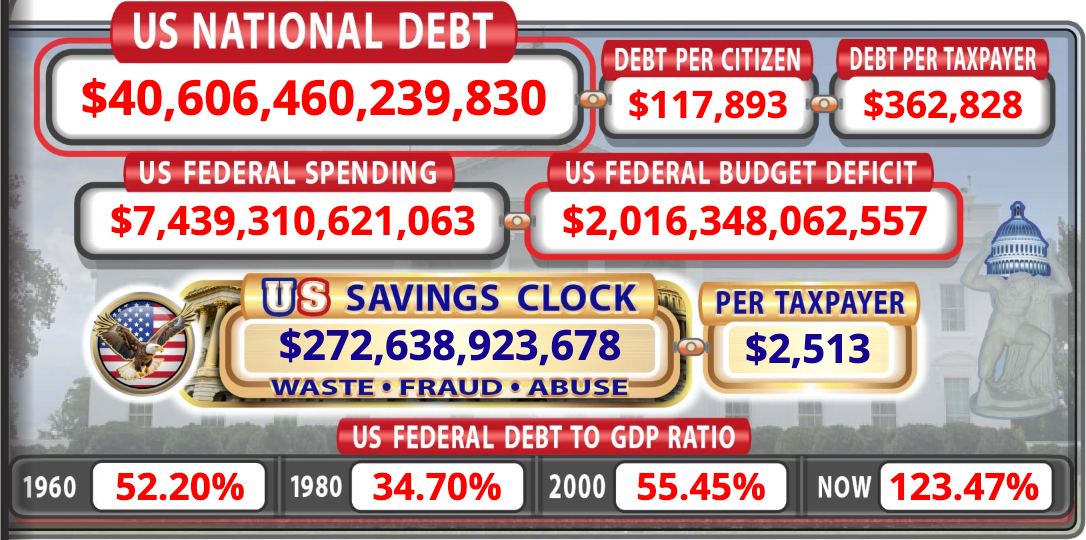
That is substantial, but nowhere near enough to pay off a national debt of more than $40 trillion. What's more, no new assets are created. The gold was already there. The question is how Washington could unlock that existing value.
A gold bond is not a gold standard
The recently appointed Judy Shelton once proposed issuing long-term government bonds where investors could choose at maturity between dollars and a predetermined amount of gold.
That would give gold an explicit role in supporting confidence in US government debt.
But a bond that can only be redeemed in gold in 50 years' time does not make the dollar immediately convertible. Nor would America necessarily have to buy more gold for this. It could use its existing reserves to issue these bonds.
So the effect on the gold price would not necessarily be positive. On the plus side, a bigger monetary role for gold could increase investor interest. At the same time, gold bonds could compete with physical gold and gold funds.
Interest rates matter more than the accounting
For the gold price, the third part of Tindale's analysis is the most relevant: interest rates that stay below inflation for a long time.
If you earn 2 percent interest while prices rise by 4 percent, you lose purchasing power. That makes saving and low-yielding bonds less attractive. Gold pays no interest, but that matters less in this scenario. In principle, it makes gold more attractive when interest rates are below inflation.
But bear in mind: for now, this is pure speculation. No policy in this direction has been announced yet.
Gold doesn't need a dream scenario
For now, there are simply no concrete signs that the United States will revalue its gold. The same goes for gold-backed government bonds. These are all rumors and speculative stories put into circulation by gold bulls.
Until we see concrete evidence, the scenario deserves attention, but also a degree of caution.
What's more, gold's appeal doesn't need to depend on a spectacular intervention from Washington at all. Within today's debt-based financial system, physical gold can already contribute to diversification within a portfolio.
Its natural scarcity makes gold a kind of insurance against monetary inflation. That is far more interesting than the idea or expectation that America will soon switch to a new monetary system.
The US may be considering a bigger role for gold in its monetary system. What would revaluing its gold reserves mean for the dollar and the gold price?

Thom Derks writes for GoldRepublic on gold, macro-economics and geopolitics. He studied Law in Leiden and Economics in Amsterdam. His personal fascination with scarcity and store of value through both bitcoin and gold brought him into the world of financial journalism. Through his own newsletter De Geldpers on Substack, he reaches over 5,800 subscribers with analyses on markets, geopolitics and the monetary system.