


Buying gold or silver: Which is the best investment?
This information is for general information only and does not constitute investment advice.
Anyone who decides to invest in precious metals quickly comes up against a classic question: should I gold whether buy silver? Both metals have a long history of protecting against inflation and economic uncertainty, but they usually play different roles within a portfolio.
Gold is considered the ultimate safe haven and is also described as the money of kings. Silver, on the other hand, moves more closely with the economic cycle and therefore has greater price fluctuations. On this page, we clearly list the most important differences, discuss which situations gold or silver is a better fit for, and explain why a combination of both is a logical choice for many investors.
The main differences between gold and silver
Starting with an overview of the main differences between gold and silver.
In short, gold is more stable and defensive, while silver is a more daring investment that moves more closely with the development of the economy.
Why choose gold?
Gold has been used for thousands of years to protect capital against inflation. It's no coincidence that central banks hold it as a strategic reserve, and investors around the world are turning to gold in times of financial stress.
Historically, gold has maintained its purchasing power remarkably well. In periods of high inflation, geopolitical tensions and financial crises, the precious metal often outperformed stocks and bonds. We saw this in the 1970s, during the 2008 credit crisis, and today, at a time when investors are increasingly questioning the sustainability of the US dollar as a global reserve currency.
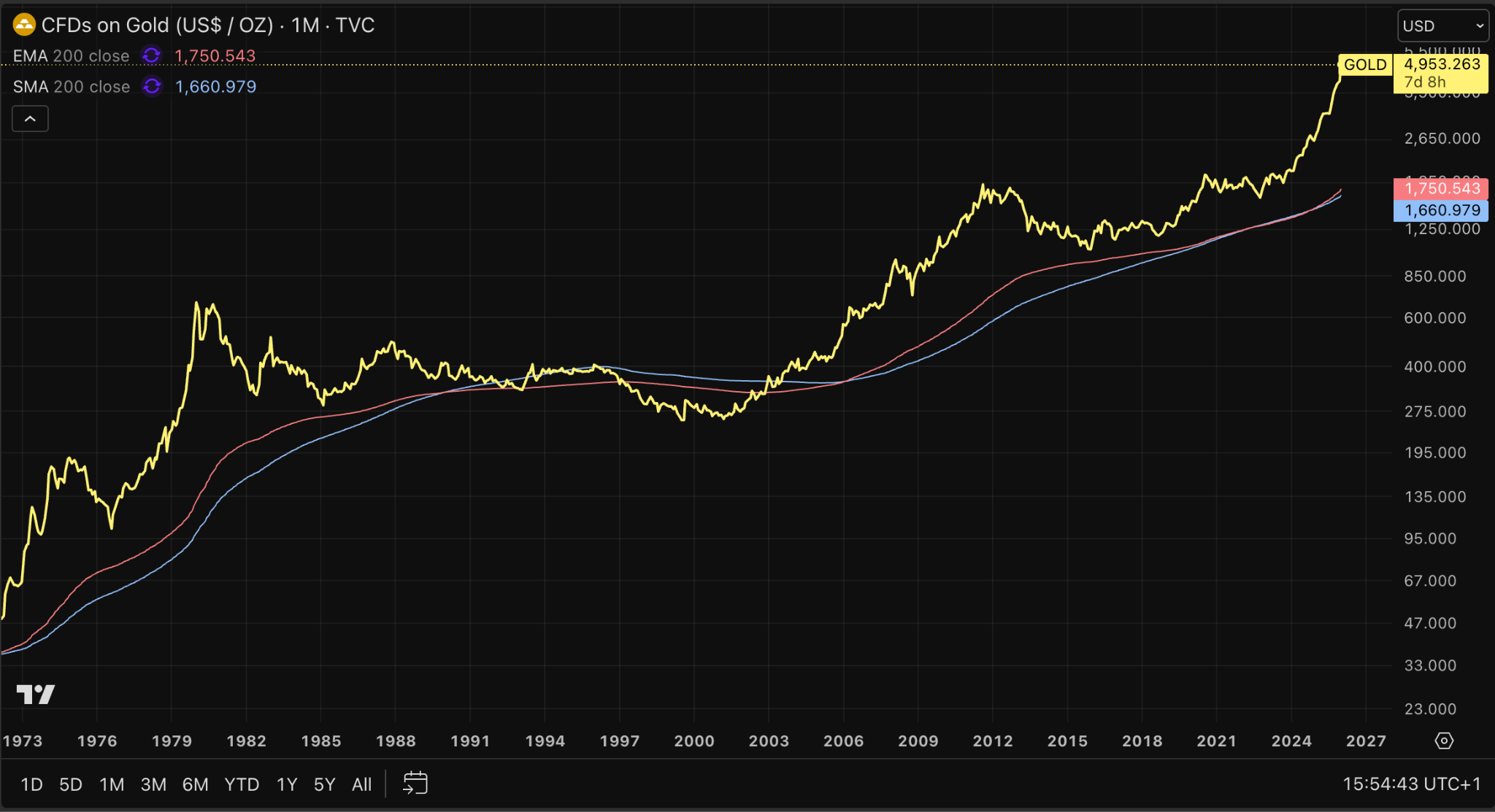
Gold’s returns are not only impressive on their own, but have also compared favourably with the S&P 500, the best-known stock market index in the United States. In the table below, we compare the average annual returns of gold and the S&P 500, measured in U.S. dollars. This provides a clearer view of what you can historically expect from the gold price.
Important reasons for choosing gold:
- Protection against inflation and depreciation.
- Low correlation with the stock markets: when stocks are struggling, gold often performs better and vice versa.
- Global recognition and highly liquid: you can sell gold at any time of the day, virtually anywhere in the world.
What should you pay attention to when buying gold?
If you are going to invest in gold, it is important to pay attention to a few things before you just park money somewhere:
- Storage: Is the gold safe and insured?
- Ownership structure: is it legally completely your gold? This is often not the case if you buy exposure to gold via an ETF.
- Liquidity: Is it easy to buy and sell?
Why choose silver?
Silver combines a monetary role with a strong industrial function. The metal is used in electronics, medical applications and solar panels, among others. At the moment, for example, silver is playing a major role in the AI revolution. As a result, the demand for investing in silver more strongly linked to economic growth and technological developments.
Historically, silver often moves more strongly than gold. In bull markets, silver can outperform gold by a large margin, but it often falls harder in economic downturns. This makes silver attractive for investors with a higher risk appetite. Although expectations for silver prices tend to be more volatile, they may also imply higher return potential.
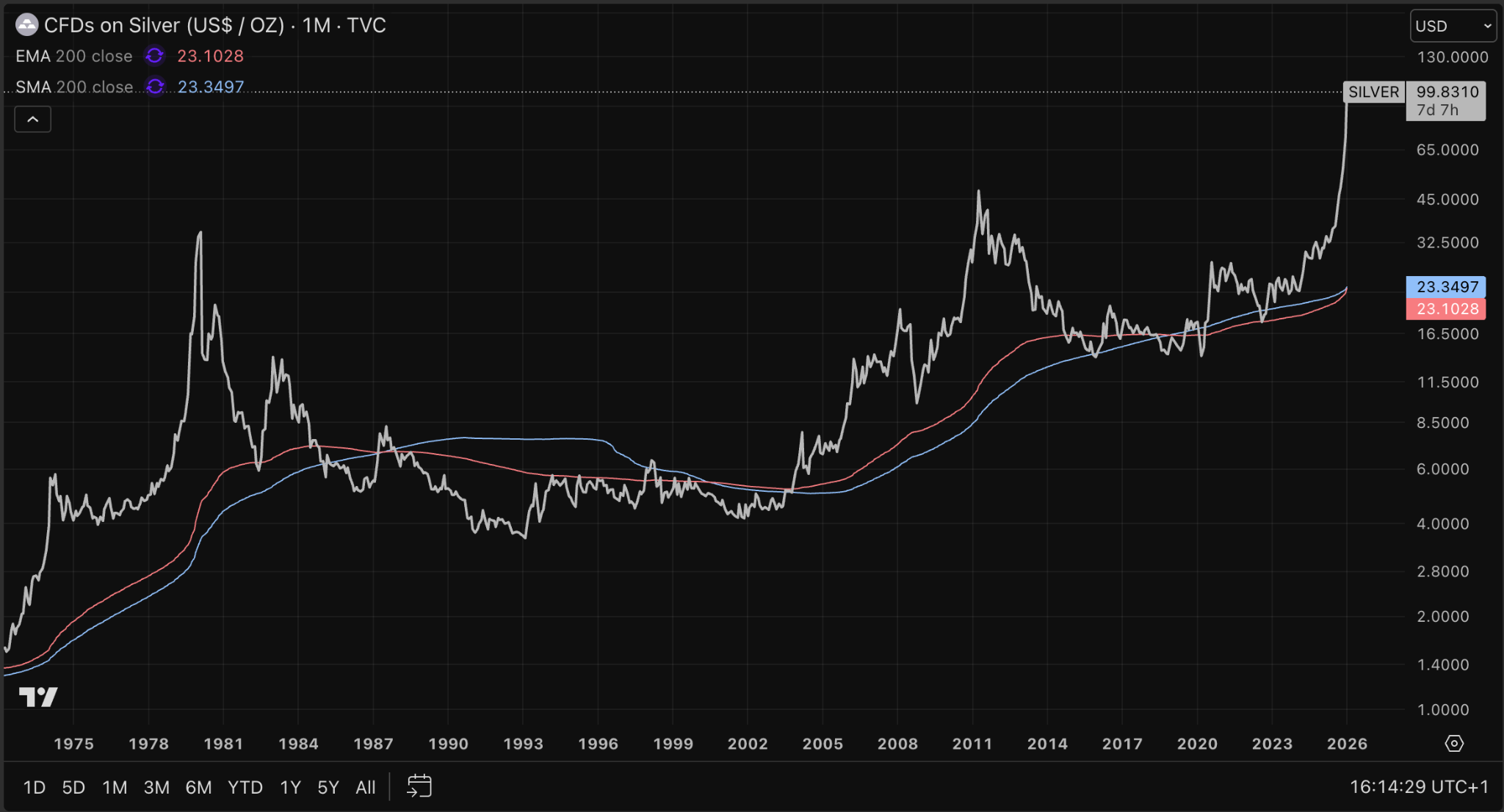
Important reasons for choosing silver:
- Growth potential in the event of economic expansion
- Industrial demand as an additional engine
- Relatively low entry price per ounce
What should you pay attention to when buying silver?
When playing silver, a few extra points of attention:
- Volatility: larger price fluctuations
- Storage costs: more volume needed for the same value
- Tax treatment: this can impact your overall return
In the United States, sales tax on silver varies by state. In many states, investment-grade silver may be exempt, while in others it can still be subject to sales tax depending on local regulations.
GoldRepublic offers an alternative structure. By storing silver in secure vaults in locations such as Zurich or Frankfurt, it may be held under conditions where no sales tax applies while in storage.
Why not gold and silver?
For many investors, the choice is not either/or, but yes-and. Gold and silver complement each other well. Gold dampens portfolio volatility, while silver can add additional upside potential.
In macroeconomic terms, gold often acts as insurance against systemic risk, while silver offers more exposure to growth, industry and technological trends. Combining both creates a more robust precious metal allocation.
Which relationship suits me?
The right ratio between gold and silver depends on your personal goals, investment horizon, and risk appetite. Below you can see some illustrative examples of what a portfolio can look like:
- More defensive: emphasis on stability
E.g. 80% gold/20% silver
- Balanced: combination of stability and growth potential
E.g. 70% gold/30% silver
- More offensive: more exposure to price fluctuations
E.g. 60% gold/40% silver
These examples are for illustrative purposes only and do not constitute investment advice. Your ideal distribution depends on your personal situation.
Gold, silver, or both?
Are you unsure between gold and silver? Then it is important to take your personal situation and preferences as a starting point. Gold is often associated with stability, while silver is usually more sensitive to price fluctuations and can therefore react differently to economic developments.
For many investors, a combination of the two precious metals can diversify a portfolio. It is also possible to gradually build up a position, for example by periodically investing smaller amounts.
VAT on silver (and GoldRepublic's solution)
An important point of attention when buying physical silver in the Netherlands is VAT. Silver bars are usually subject to 21% VAT, which can affect the return.
GoldRepublic offers an alternative structure for this. By storing silver in a customs warehouse, for example in Zurich or Frankfurt, it can be held VAT-free under certain conditions. You are the legal owner of the silver, while no VAT is due as long as the silver remains in the warehouse.
This can mean a difference compared to silver that you physically hold yourself, such as coins that you keep at home.
Conclusion: buy gold or silver?
Buying gold or silver doesn’t have to be an either-or decision. Both precious metals can play a role in a well-balanced portfolio. Gold is often associated with stability and protection, while silver can offer more dynamism and growth potential.
Would you like to explore which allocation may suit your situation? Discover the possibilities at GoldRepublic and easily build your own gold and silver portfolio.
This information is for general information only and does not constitute investment advice.
Are you unsure whether to buy gold or silver? Discover the main differences, risks, and benefits, and which combination best suits your portfolio.

Bart Brands is precious metals specialist at GoldRepublic and the face of the company towards customers and media. His interest in precious metals was sparked during the financial crisis and deepened through his background as a security expert and geopolitical analyst. He hosts the weekly podcast GoudKoorts with over 45,000 YouTube subscribers, regularly speaks at events on precious metals and authored the book Chaos zonder Goud!


