

Although GoldRepublic focuses exclusively on buying, selling and securely storing physical precious metals, this article explains exactly what gold futures are, how they work and which strategies traders use.
Disclaimer: Gold futures are known as complex financial instruments that also carry considerable risks. You may lose (part of) your investment, or even more than you invested. It is therefore advisable to consider carefully whether gold futures suit your risk appetite and investment goals.
What is a gold future?
A gold future (also known as a gold futures contract) is an agreement to buy or sell a fixed quantity of gold on a set date in the future, at a price agreed today.
With a gold future, investors can speculate on the future price movements of gold and make a profit when the gold price rises, but also when it falls.
Long position
With a long position in a gold future, the buyer commits to buying gold in the future at a price fixed today. The buyer takes this position when they expect the gold price to rise.
If the market price rises above the agreed price, the buyer makes a profit because they can buy the gold more cheaply.
Short position
With a short position in a gold future, an investor instead commits to selling gold in the future at a price fixed today. Investors take this position when they expect the gold price to fall.
If the market price falls below the agreed price, the investor makes a profit because they can sell the gold above the market price.
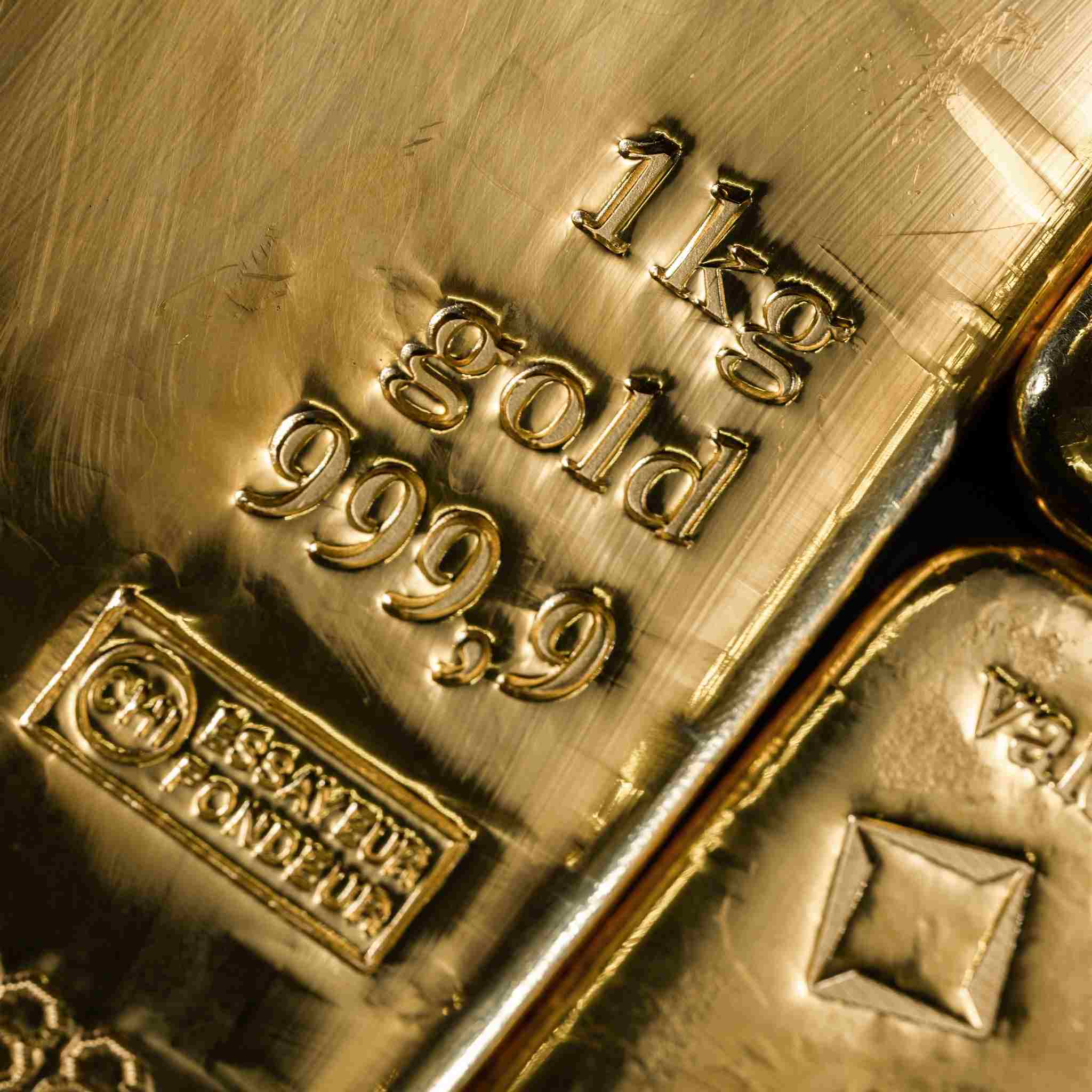
The standard contract for a gold future covers 100 troy ounces of gold; just over 3.1 kilograms. The value of such a contract can easily exceed $400,000, depending on the current gold price per troy ounce.
There are also smaller variants, such as the Micro Gold Future of 10 troy ounces.
Trading gold futures
Investors who want to trade gold futures must do so through a broker that gives them access to the exchange. Gold futures are traded on large, international, specialized exchanges such as COMEX (Commodity Exchange) in the United States. This New York exchange is part of Chicago-based CME Group and is by far the largest, leading exchange in the world for trading gold futures.
The standard exchange-traded gold futures contract usually covers 100 troy ounces of gold; just over 3.1 kilograms.
You do not have to pay the broker the full contract value of 100 troy ounces of gold, but usually only a few percent of it: the so-called margin. The margin is often around 5% to 9% of the total contract value when a position is held ‘overnight’. This means the position stays open after the end of the trading day and is carried over to the next trading day.
For day traders, brokers often apply a lower margin (day trading margin). This can be a fixed amount or a percentage.
If the gold price falls and your deposit drops below the required minimum, you must immediately add funds to prevent the broker from closing your position. This is called a margin call.
If, on the other hand, the gold price rises while you are investing with leverage, the exact financial opposite of a margin call happens. As gold rises in value, the underlying value of your position grows. Your total equity with the broker increases by the amount of the price rise multiplied by your leverage.
Gold futures strategies
There are a number of strategies for gold futures, all three of which require active management and sufficient market knowledge:
- Taking a long position or short position on the expected gold price is the most common strategy.
- Spread trading: simultaneously buying and selling contracts with different maturities to profit from the price difference. This strategy is mainly used by professional traders, as such price differences often disappear quickly and are difficult for private investors to exploit.
- Hedging an existing position in physical gold: this is how investors protect themselves against a falling gold price without selling their own physical gold. An investor does this by entering into a short futures contract on the exchange, which makes a profit if the gold price falls. Any loss on the physical gold is thus offset exactly by the profit on the contract, so total wealth remains the same.
Unlike many other investment methods, a gold future has an expiry date. As the expiry date approaches, there are three options:
- Close your position and take the result
- Roll over the position to the next contract period, with the associated transaction costs
- Take physical delivery (unusual and not always feasible)
Brokers usually close positions automatically before the delivery date to avoid physical delivery.
Differences between gold futures and physical gold
The difference between physical gold and gold futures lies mainly in ownership, purpose and risk. Whereas physical gold is a tangible ‘safe haven’ for the long term, a gold future is a financial contract for speculating or hedging in the short to medium term, and it carries a much higher risk.
Moreover, you can invest in physical gold with small amounts (from as little as €50 at GoldRepublic), whereas gold futures often require considerably higher entry amounts: at least $1,000 to $2,000 for Micro Gold Futures (which cover 10 troy ounces of gold), and many times more for standard contracts of 100 troy ounces.
Discover the strategies and risks of gold futures and how they differ from physical gold.

GoldRepublic is a leading European platform for physical precious metals, founded in 2010 as the first precious metal dealer licensed by the AFM (Dutch Authority for the Financial Markets). Our articles are written by a team of specialists in macroeconomics, precious metals and geopolitics.